


Interdependent Thoughts – by Ton Zijlstra
Still, many questions have global aspects. Our information networks, our trade routes, our dependencies are truly global. Because of it many of our issues, including climate emergencies, are global in both their roots and consequences. We all suffer from small earth syndrome these days, as I phrased it in 2010 at the SHiFT Conference, where everything anyone of us does reverberates around the world because we are continuously bumping into real global limits, Club of Rome style.
Le paradoxe de la mondialisation de la Chine
Traduction française du billet de blog "China’s globalisation paradox. How can China dominate abroad while becoming less export-dependent?" de Richard

The New Gulf War: Epic Fubar Goes Global
Why there is much more at stake here than rising prices

annotations: La globalisation, la fragmentation et le système monétaire international
Traduction française de "Globalisation, fragmentation, and the international monetary system" de Barry Eichengreen
interfluidity » The great game of global public goods provision
War is bad. Excuses should not be made for it. All sides should work to end this and every war as quickly as possible and shift to modes of bargaining and competition that are not profoundly destructive.
Toward a Critical Technical Practice
This is a chapter in Geof Bowker, Les Gasser, Leigh Star, and Bill Turner, eds, Bridging the Great Divide: Social Science, Technical Systems, and Cooperative Work, Erlbaum, 1997.
Toward a Critical Technical Practice
This is a chapter in Geof Bowker, Les Gasser, Leigh Star, and Bill Turner, eds, Bridging the Great Divide: Social Science, Technical Systems, and Cooperative Work, Erlbaum, 1997.
Global Coordination | Windfall Policy Atlas
How can international cooperation ensure the benefits of AI are shared globally?
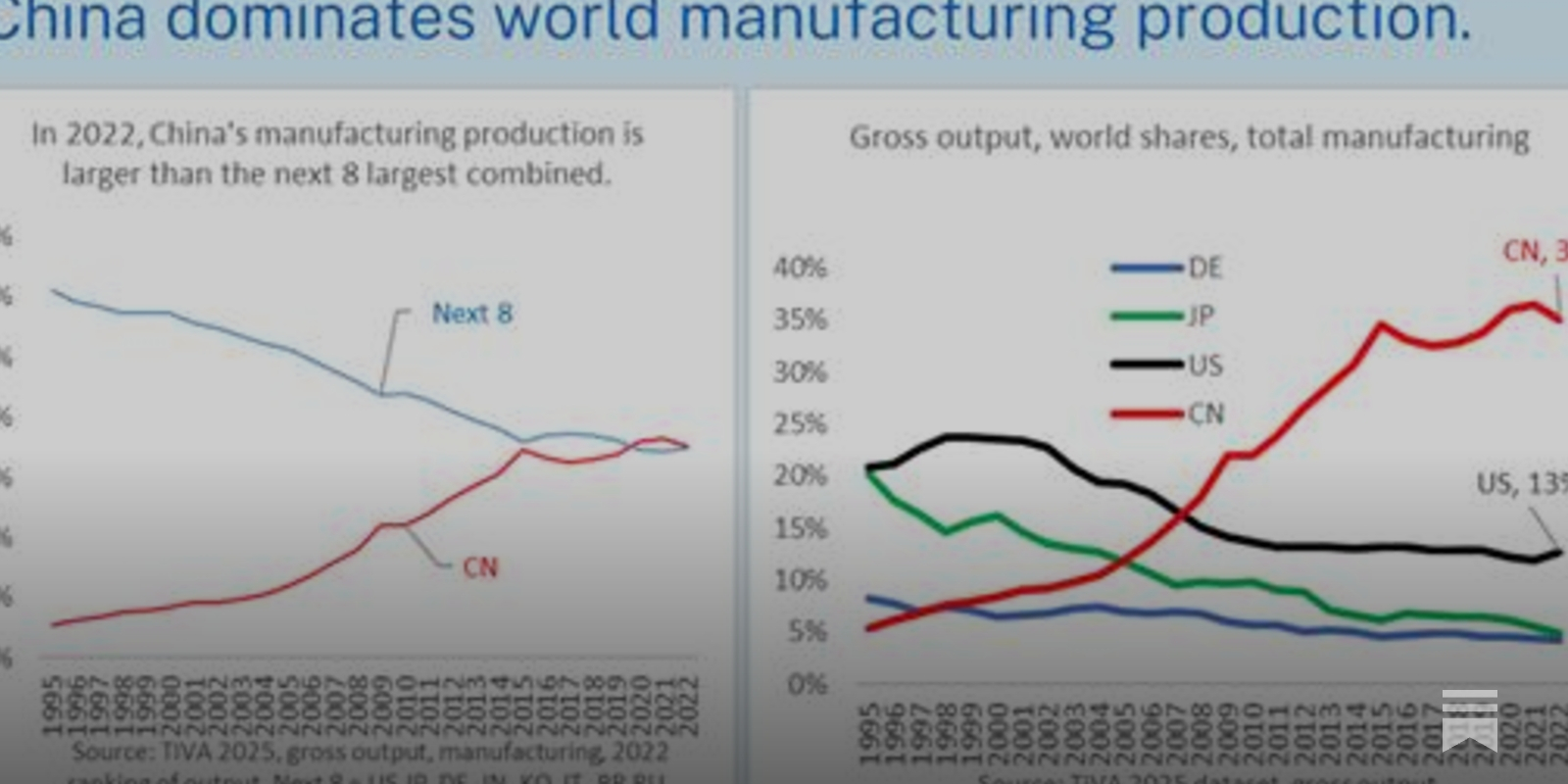
China’s globalisation paradox.
How can China dominate abroad while becoming less export-dependent?
Climate solutions most likely to reach ‘positive tipping points’ revealed by scientists
Global shift towards clean electricity could trigger ‘cascade’ of progress, helping reduce air pollution, cut waste and revive oceans

The Next Great Divergence: How AI could split the world again if we don’t intervene | Brookings
Michael Muthukrishna and Philip Schellekens argue that AI, like past general-purpose technologies, could drive a new global divergence unless deliberate action ensures its benefits are broadly shared rather than geographically concentrated.

(PDF) The Precariat and Class Struggle *
PDF | The world economy is in the midst of a Global Transformation that is producing a new global class structure. A new class is emerging – the... | Find, read and cite all the research you need on ResearchGate

Money & Macro
Why Centralized AI Is Not Our Inevitable Future
This talk was given at the O’Reilly AI Codecon on September 9th. Here’s a recording of the talk as delivered. Here’s the official recording (which had a slight technical glitch day of). https://common.tools/talks/why-centralized-ai-is-not-our-inevitable-future points here —--- Hi, I'm Alex Komoro...

been a long time coming me formulating my thoughts on the "global profile" discussion in a single place so hereee

Identities, accounts and profiles
nelind.leaflet.pub