

Atlassian's sustainability report details our environmental, social, and governance progress over the past fiscal year.
WP Sustainability Team Roadmap 2024
The WordPress Sustainability Team has defined a roadmap for their activities during the final months of 2024. It touches on the 3 topics the team is prioritizing: environmental, social and financia…

SustainOSS: The Report
On June 19th, 2017, one hundred people gathered in San Francisco to create a cultural shift in how we think about the sustainability of…

Culturalizing sustainability
Policy-makers and scientists dominate high-level sustainability debates but any decision that follows has consequences for ordinary people in their local communities and environments. We asked experts to reflect on the importance of embracing a culturally informed, bottom-up approach to the sustainability discourse and action.

A System for Sustainable FOSS
Disclaimers: This system is still a work in process. I look forward to reading (and incorporating!) y...

Towards an eco-social contract: the Living Stewardship Agreement
How can we understand our role in the ecosystem and our commitments with its many actors? We explore with our Living Stewardship Agreement

Environment strategy: transformative changes for sustainability
This is an independent report by Professor Valerie Nelson on behalf of the Scottish Government to inform the development of the forthcoming Scottish Government Environment Strategy.

Sustainability is not enough: we need regenerative cultures
By Daniel C. Wahl

Open source sustainability | TechCrunch
Open source sustainability has been nothing short of an oxymoron. Engineers around the world pour their sweat and frankly, their hearts into these passion

Investigating a company's integrity and real action toward sustainability | Notion
Curated by Joshua Stehr

Underestimating the Challenges of Avoiding a Ghastly Future
We report three major and confronting environmental issues that have received little attention and require urgent action. First, we review the evidence that future environmental conditions will be far more dangerous than currently believed. The scale of the threats to the biosphere and all its lifeforms — including humanity — is in fact so great that it is difficult to grasp for even well-informed experts. Second, we ask what political or economic system, or leadership, is prepared to handle the predicted disasters, or even capable of such action. Third, this dire situation places an extraordinary responsibility on scientists to speak out candidly and accurately when engaging with government, business, and the public. We especially draw attention to the lack of appreciation of the enormous challenges to creating a sustainable future. The added stresses to human health, wealth, and well-being will perversely diminish our political capacity to mitigate the erosion of ecosystem services on which society depends. The science underlying these issues is strong, but awareness is weak. Without fully appreciating and broadcasting the scale of the problems and the enormity of the solutions required, society will fail to achieve even modest sustainability goals.

Sustain
Sustain brings together practitioners, sustainers, funders, researchers and maintainers of the open source ecosystem. We have conversations about the health and sustainability of the open source community. We learn about the ins and outs of what ‘open source’ entails in the real world. Open source means so much more than a license; we're interested in talking about how to make sure that the culture of open source continues, grows, and ultimately, sustains itself. Newsletter
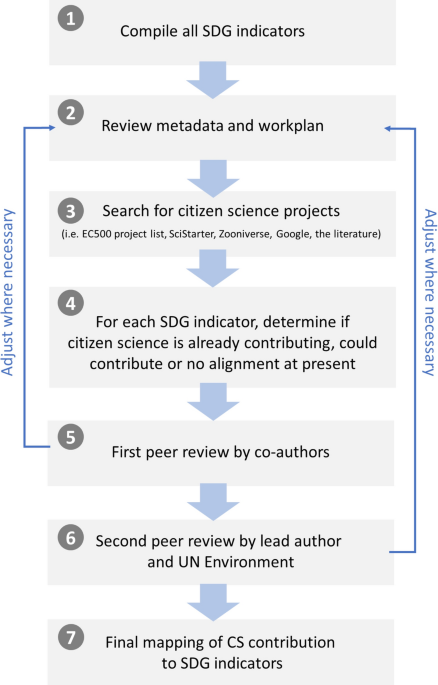
Mapping citizen science contributions to the UN sustainable development goals
The UN Sustainable Development Goals (SDGs) are a vision for achieving a sustainable future. Reliable, timely, comprehensive, and consistent data are critical for measuring progress towards, and ultimately achieving, the SDGs. Data from citizen science represent one new source of data that could be used for SDG reporting and monitoring. However, information is still lacking regarding the current and potential contributions of citizen science to the SDG indicator framework. Through a systematic review of the metadata and work plans of the 244 SDG indicators, as well as the identification of past and ongoing citizen science initiatives that could directly or indirectly provide data for these indicators, this paper presents an overview of where citizen science is already contributing and could contribute data to the SDG indicator framework. The results demonstrate that citizen science is “already contributing” to the monitoring of 5 SDG indicators, and that citizen science “could contribute” to 76 indicators, which, together, equates to around 33%. Our analysis also shows that the greatest inputs from citizen science to the SDG framework relate to SDG 15 Life on Land, SDG 11 Sustainable Cities and Communities, SDG 3 Good Health and Wellbeing, and SDG 6 Clean Water and Sanitation. Realizing the full potential of citizen science requires demonstrating its value in the global data ecosystem, building partnerships around citizen science data to accelerate SDG progress, and leveraging investments to enhance its use and impact.
Bioeconomy
An open access, interactive textbook with videos and Q&As on sustainability and social change in the emerging field of bioeconomy in second edition.
Scaling Civic Tech
This report summarizes insights with the intention of advancing a more consistent, collaborative and rigorous fieldwide conversation about sustainability of the civic tech sector. We hope that the findings will be instructive for startups and funders, and that the report promotes a more sophisticated discussion about business models.

Transformational Pathways to Sustainability Through Polycrisis
Keep up to date with our latest news, events, and other IIASA activities. Sign up.
Open Source Sustainability is Really a People Problem - Slashdot
Matt Asay, a former COO of Canonical now working at AWS, argues that the question of open source sustainability "is really a people problem." But to make the case, he cites comments by Tobie Langel, formerly W3C's testing lead (and a former member of Facebook's Open Source and Web Standards Team) ...
