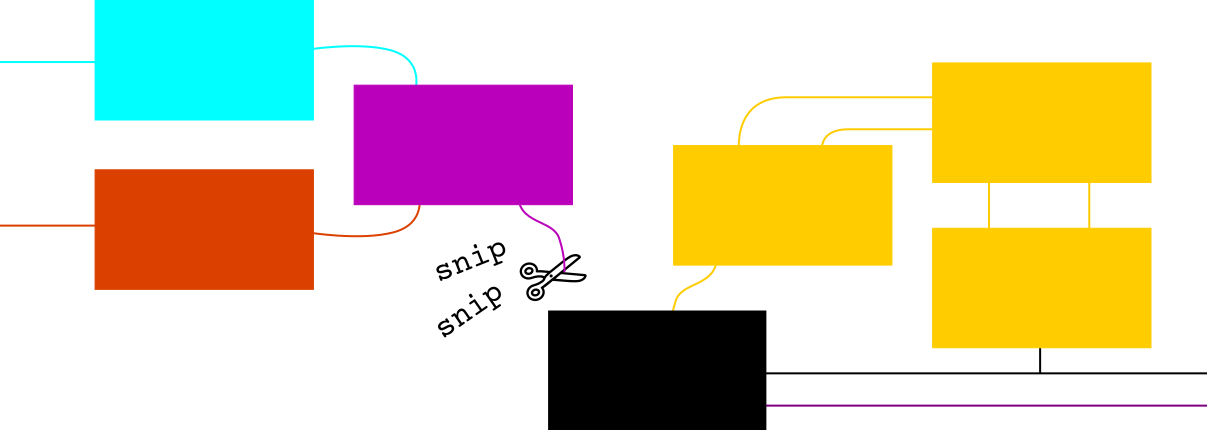
Much of what I do, in multiple fields, could be reduced to one skill: troubleshooting. I’ll define troubleshooting as systematically determining the cause of unwanted behaviour in a system, and fixing it. Troubleshooting is often learned tacitly, in the process of explicitly learning “the skill”. Troubleshooting is rarely discussed
The traits of a proficient programmer
Bridging the gap between competence and proficiency

How AI Impacts Skill Formation
AI assistance produces significant productivity gains across professional domains, particularly for novice workers. Yet how this assistance affects the development of skills required to effectively supervise AI remains unclear. Novice workers who rely heavily on AI to complete unfamiliar tasks may compromise their own skill acquisition in the process. We conduct randomized experiments to study how developers gained mastery of a new asynchronous programming library with and without the assistance of AI. We find that AI use impairs conceptual understanding, code reading, and debugging abilities, without delivering significant efficiency gains on average. Participants who fully delegated coding tasks showed some productivity improvements, but at the cost of learning the library. We identify six distinct AI interaction patterns, three of which involve cognitive engagement and preserve learning outcomes even when participants receive AI assistance. Our findings suggest that AI-enhanced productivity is not a shortcut to competence and AI assistance should be carefully adopted into workflows to preserve skill formation -- particularly in safety-critical domains.
How to do hard things
A fully general system for learning to do things you currently find difficult, only somewhat tongue-in-cheek.
What Exactly is Acquired During Skill Acquisition? | Request PDF
Request PDF | What Exactly is Acquired During Skill Acquisition? | In this paper we propose that the term skill acquisition, as commonly used in traditional psychology, and the philosophy, education, movement... | Find, read and cite all the research you need on ResearchGate

How I stopped worrying and learned to love the easy fix
On the balance between perfect solutions and pragmatic fixes in software engineering
Repair Culture: Learning to Fix Instead of Replace – Wayfinders Now – Living small to gain abundance.
Repair culture is the growing mindset of choosing to fix what’s broken instead of immediately replacing it. It challenges a habit that has become almost automatic in modern life: when something stops working, we discard it. A new phone, a new appliance, a new chair, a new everything. Repair culture asks a quieter question: What […]
Prompting Science Report 4: Playing Pretend: Expert Personas Don't Improve Factual Accuracy
<span> <p><span>This is the fourth in a series of short reports that help business, education, and policy leaders understand the technical details of working with AI through rigorous testing. Here, we ask whether assigning personas to models improves performance on difficult objective multiple-choice questions. We study both domain-specific expert personas and low-knowledge personas, evaluating six models on GPQA Diamond (Rein et al. 2024) and MMLU-Pro (Wang et al. 2024), graduate-level questions spanning science, engineering, and law. </span></p> <p><span>We tested three approaches:</span></p> <p><span>• In-Domain Experts: Assigning the model an expert persona (“you are a physics expert”) matched to the problem type (physics problems) had no significant impact on performance (with the exception of the Gemini 2.0 Flash model).</span></p> <p><span> • Off-Domain Experts (Domain-Mismatched): Assigning the model an expert persona (“you are a physics expert”) not matched to the problem type (law problems) resulted in marginal differences.</span></p> <p><span> • Low-Knowledge Personas: We assigned the model negative capability personas (layperson, young child, toddler), which were generally harmful to benchmark accuracy. </span></p> <p><span>Across both benchmarks, persona prompts generally did not improve accuracy relative to a no-persona baseline. Expert personas showed no consistent benefit across models, with few exceptions. Domain-mismatched expert personas sometimes degraded performance. Low-knowledge personas often reduced accuracy. These results are about the accuracy of answers only; personas may serve other purposes (such as altering the tone of outputs), beyond improving factual performance.</span></p></span>

skill-deslop/references/structures.md at main · stephenturner/skill-deslop
De-AI-ify scientific writing. Contribute to stephenturner/skill-deslop development by creating an account on GitHub.
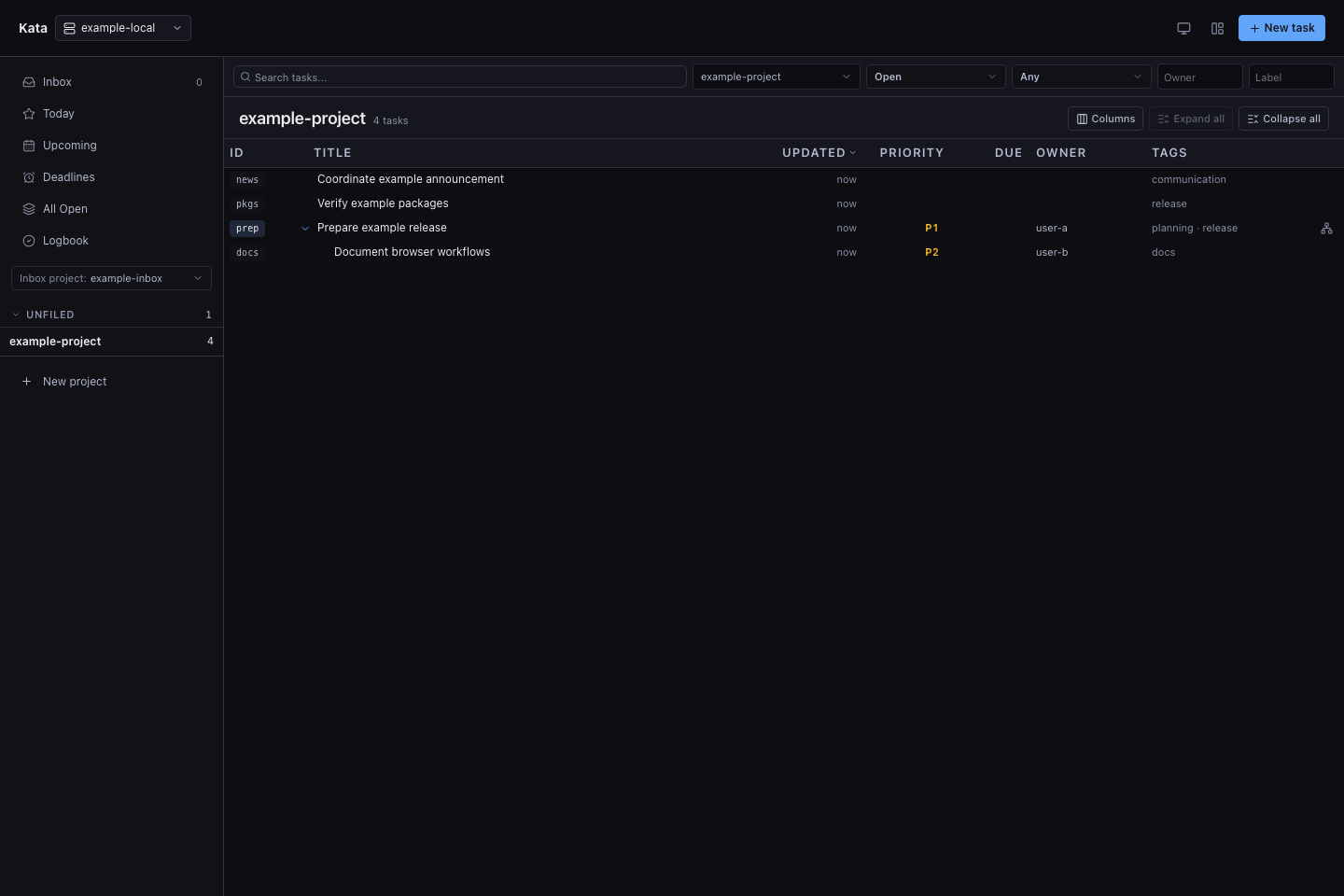
The issue tracker that runs inside the loop.
A local-first issue tracker for coding agents and the humans steering them. Queries in 4ms, on your own machine.
Learn anything with the /teach skill
Developers spend most of their time figuring the system out
I am often asked what I mean when I say that developers spend most of their time figuring the system out. Let’s unpack the statement.
Avoiding Skill Atrophy in the Age of AI
How to use AI coding assistants without letting your hard-earned engineering skills wither away.
What do professional software developers need to know to succeed in an age of Artificial Intelligence?
Generative AI is showing early evidence of productivity gains for software developers, but concerns persist regarding workforce disruption and deskilling. We describe our research with 21 developers at the cutting edge of using AI, summarizing 12 of their work goals we uncovered, together with 75 associated tasks and the skills & knowledge for each, illustrating how developers use AI at work. From all of these, we distilled our findings in the form of 5 insights. We found that the skills & knowledge to be a successful AI-enhanced developer are organized into four domains (using Generative AI effectively, core software engineering, adjacent engineering, and adjacent non-engineering) deployed at critical junctures throughout a 6-step task workflow. In order to "future proof" developers for this age of AI, on-the-job learning initiatives and computer science degree programs will need to target both "soft" skills and the technical skills & knowledge in all four domains to reskill, upskill and safeguard against deskilling.
Pupils in England are losing their thinking skills because of AI, survey suggests
Two-thirds of secondary school teachers report a decline in core abilities such as writing and problem-solving