

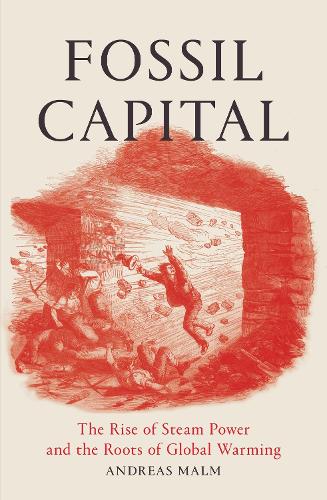
The more we know about the catastrophic implications of climate change, the more fossil fuels we burn. How did we end up in this mess?In this masterful new…
Anthropocène? Capitalocène? Quels enjeux? - les économistes atterrés
Si l’anthropocène est aujourd’hui d’usage courant pour désigner la période présente marquée par les transformations qui affectent de plus en plus notre planète, une autre tendance se fait jour chez […]
Marx et l’histoire de la nature
À propos de : Frédéric Monferrand, La nature du capital. Politique et ontologie chez le jeune Marx, Éditions Amsterdam
‘The damage is done’: global oil crisis has changed fossil fuel industry for ever, IEA chief says
Exclusive: International Energy Agency’s Fatih Birol, the world’s leading energy economist, also says UK should largely forgo North Sea expansion
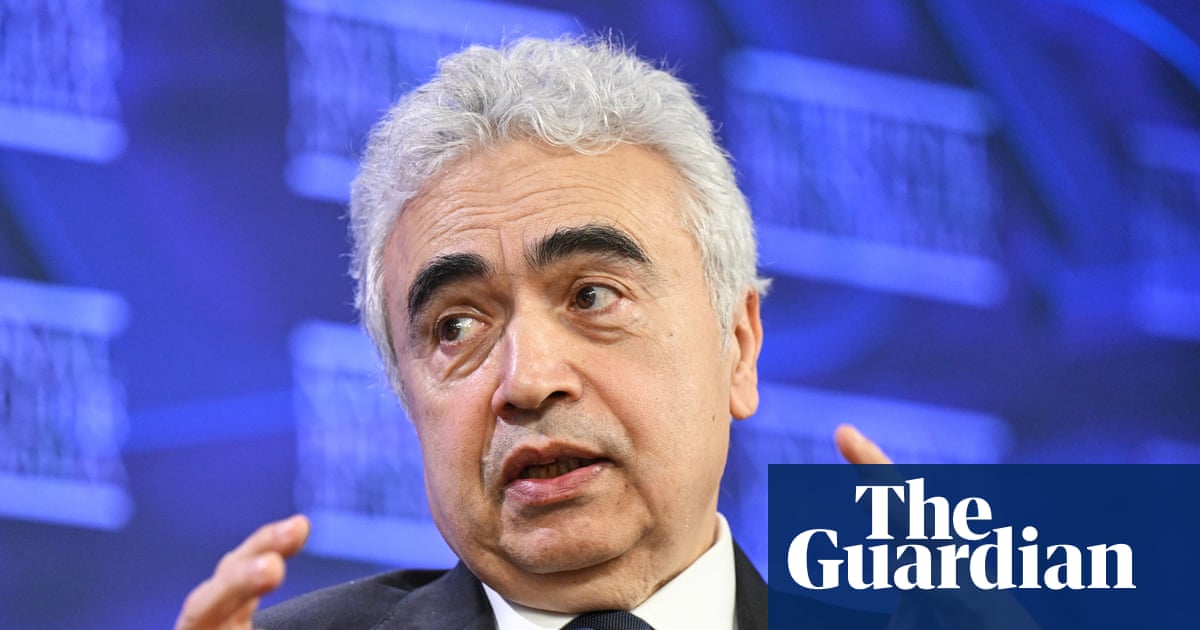
More and More and More
It has become habitual to think of our relationship with energy as one of transition: with wood superseded by coal, coal by oil, oil by nuclear and then at some future point all replaced by green sources. Jean-Baptiste Fressoz’s devastating but unnervingly entertaining book shows what an extraordinary delusion this is. Far from the industrial era passing through a series of transformations, each new phase has in practice remained almost wholly entangled with the previous one. Indeed the very idea of transition turns out to be untrue. The author shares the same acute anxiety about the need for a green transition as the rest of us, but shows how, disastrously, our industrial history has in fact been based on symbiosis, with each major energy source feeding off the others. Using a fascinating array of examples, Fressoz describes how we have gorged on all forms of energy – with whole forests needed to prop up coal mines, coal remaining central to the creation of innumerable new products and oil still central to our lives. The world now burns more wood and coal than ever before. This book reveals an uncomfortable truth: ‘transition’ was originally itself promoted by energy companies, not as a genuine plan, but as a means to put off any meaningful change. More and More and More forces its readers to understand the modern world in all its voracious reality, and the true nature of the challenges heading our way.
Le capitalocène : un concept utile mais disparate
Parmi les concepts maintenant diffusés dans le débat public – au-delà donc simplement du milieu académique, voire militant – pour rendre compte de la crise écologique dans ses multiples aspects (notamment épuisement des ressources, érosion de la biodiversité, pollutions, acidification des océans, déforestation et changement du climat), celui de capitalocène commence à

Self-Burn
Thanks to Trump, people around the world are scrambling to get out of fossil fuels.

Capital in the Twenty First Century
What are the grand dynamics that drive the accumulation…

A clean break꞉ leaving fossil volatility for clean tech security
Shifting from the vulnerability of fossil fuel dependency toward home-grown manufacturing and more resilient clean tech imports
Climate Change: Global Crisis To Local Action By Kevin Anderson
A Reality Check on Our ‘Energy Transition’ | The Tyee
To our peril, there’s been no green revolution. Just green addition to rising fossil fuel use.
Sustainability is not enough: we need regenerative cultures
By Daniel C. Wahl

The ‘wicked trinity’ of late capitalism: Governing in an era of stagnation, surplus humanity, and environmental breakdown
Scholars within the fields of political ecology, environmental political theory, and international political economy tend to evaluate the prospects of state-led environmental transitions in general terms – enquiring as to the capitalist state’s inherent properties and their environmental implications. Less attention has been paid to how the state’s green capacities are conditioned by contemporary evolutions in the form and pace of capital accumulation. Capitalism’s directional pattern of historical development poses unique challenges for green state projects. Its drive to raise labour productivity metabolises nature on a growing scale, while generating conditions of overproduction and rendering a progressively larger portion of the population superfluous to the production process.Thus, the question is not simply whether the state can rise to the challenge of climate change, but rather how states are scrambling to govern the intersecting crises of climate catastrophe, economic stagnation, and surplus humanity. This ‘wicked trinity’ compounds the tensions at the heart of the capitalist state, resulting in an increasing inability to perform its role while sustaining its liberal form. This governance trilemma is illustrated by the case of the solar photovoltaic boom, where the spectacular increase in the productivity and scale of solar panel manufacturing have generated oversupply and falling profitability. States have reacted by indefinitely providing subsidies, financing automation technologies thatexacerbate labour superfluity, and relocating solar panel manufacturing to places with authoritarian labour regimes. The case of photovoltaics is a microcosm of the general predicament faced by states as they struggle to govern capitalism’s secular developmental tendencies.
The geopolitical fight to come over green energy
The struggle for sustainable energy will soon put China, the US and Europe on a geopolitical collision course. But moving away from fossil fuels is a Herculean task, and a greener politics will not transcend tragedy.
Jason Hickel on Twitter / X
The climate crisis reveals that our civilization has never really been organized around science, contrary to the usual Enlightenment narrative. It is organized around capital. Science is embraced when it serves the interests of capital, and is often ignored when it does not.— Jason Hickel (@jasonhickel) January 6, 2022
Knowledge infrastructures for the Anthropocene
The technosphere metabolizes not only energy and materials, but information and knowledge as well. This article first examines the history of knowledge about large-scale, long-term, anthropogenic environmental change. In the 19th and 20th centuries, major systems were built for monitoring both the environment and human activity of all kinds, for modeling geophysical processes such as climate change, and for preserving and refining scientific memory, i.e. data about the planetary past. Despite many failures, these knowledge infrastructures also helped achieve notable successes such as the Limited Test Ban Treaty of 1963, the ozone depletion accords of the 1980s, and the Paris Agreement on climate change of 2015. The article’s second part proposes that knowledge infrastructures for the Anthropocene might not only monitor and model the technosphere’s metabolism of energy, materials and information, but also integrate those techniques with new accounting practices aimed at sustainability. Scientific examples include remarkable recent work on long-term socio-ecological research, and the assessment reports of the Intergovernmental Panel on Climate Change. In terms of practical knowledge, one key to effective accounting may be ‘recycling’ of the vast amounts of ‘waste’ data created by virtually all online systems today. Examples include dramatic environmental efficiency gains by Ikea and United Parcel Service, through improved logistics, self-provision of renewable energy, and feedback from close monitoring of delivery trucks. Blending social ‘data exhaust’ with physical and environmental information, an environmentally focused logistics might trim away excess energy and materials in production, find new ways to re-use or recycle waste, and generate new ideas for eliminating toxic byproducts, greenhouse gas emissions and other metabolites.