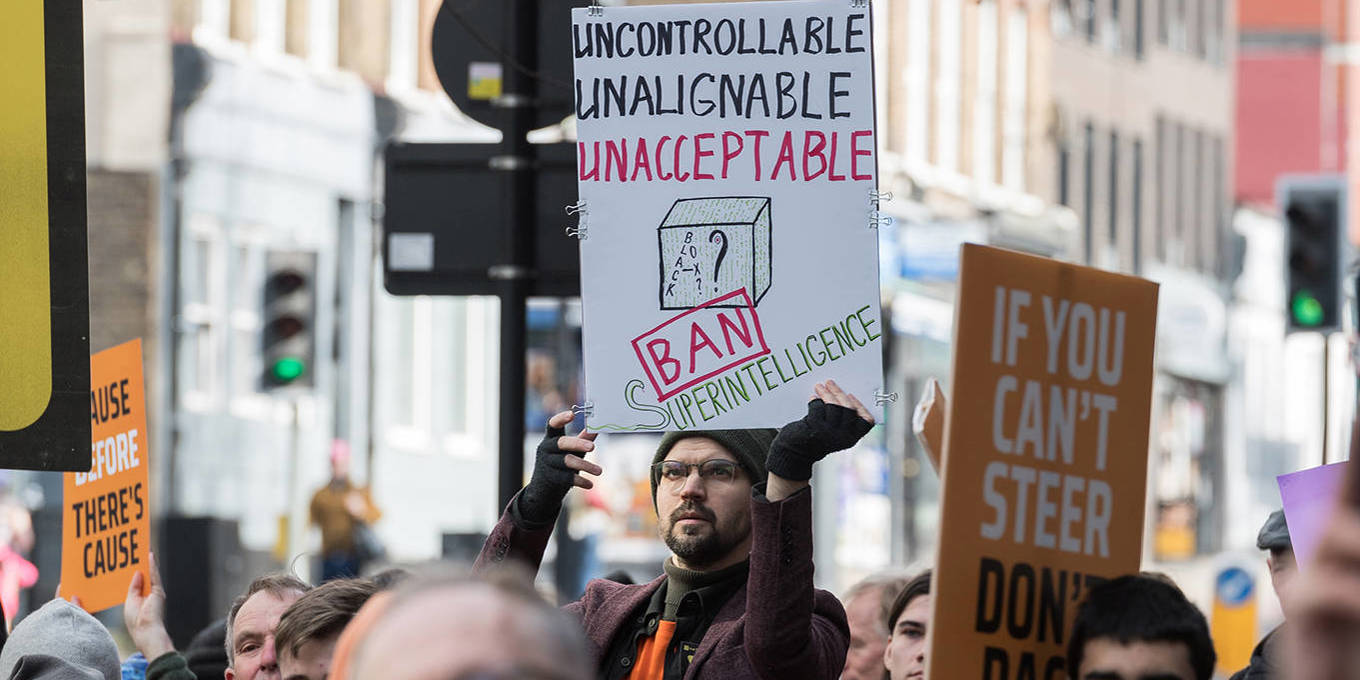
The personality clashes and industry confusion behind the 20-day saga.
How the Anthropic saga could threaten American AI dominance
The shutdown of top AI models reverberates abroad.
Companies That Replaced Humans With AI Are Realizing Their Mistake
As AI agents have yet to pay for themselves, more and more executives are waking up to the sloppy reality of AI hype.

AI FOR EPISTEMICS & COORDINATION
Civilization and technology have radically improved the human condition. Nonetheless, the world sometimes goes in directions which essentially nobody would prefer — e.g., nuclear arms races, unexpected financial crashes, predatory marketing, or ubiquitous political misinformation.
The AI Model That Was Too Dangerous to Release: Meet Claude Mythos
Anthropic just built the most powerful AI in history. Then decided the world wasn’t ready for it. Here’s everything you need to know.
The AI Industry Has a Major Problem: Most People Aren’t Freaks Who Want an AI Agent Running Their Whole Life
There's a problem for AI agents like Meta's Muse: ordinary people don't seem very interested in what they're offering.

What the hell happened with AGI timelines in 2026?
Agentic AI gets lost
On the failure of AI to develop world models

When will average people feel AI’s impact?
We’re <5 years into a compounding revolution which could take a century, and how the AI industry should manage this.

TrendLife Study Shows AI Is Moving Fast, but Consumers and Families are Being Left Behind
New study of over 10,000 consumers across 9 countries reveals worry exceeds excitement about generative AI as most lack the tools and confidence to use it safely TOKYO, May 6, 2026 /PRNewswire/ --...

The Scaling Era: An Oral History of AI, 2019–2025
An inside view of the AI revolution, from the people and companies making it happen.

How AI agents "radicalized" a top Meta exec into quitting her job
Clara Shih on how AI will soon displace the first few rungs on the career ladder — and why she left Big Tech to do something about it

AI Slop and the End of Knowledge
As an early fan of the internet, I was amazed that all the knowledge of the world was becoming available to everyone, everywhere, all the time. But things have changed.

Large AI models are cultural and social technologies – Henry Farrell
Debates about artificial intelligence (AI) tend to revolve around whether large models are intelligent, autonomous agents. Some AI researchers and commentators speculate that we are on the cusp of creating agents with artificial general intelligence (AGI), a prospect anticipated with both elation and anxiety. There have also been extensive conversations about cultural and social consequences of large models, orbiting around two foci: immediate effects of these systems as they are currently used, and hypothetical futures when these systems turn into AGI agents perhaps even superintelligent AGI agents.

Is AI causing a repeat of Frontend’s Lost Decade? | Mastro Blog
AI is doing to programming what framework-brain did to the frontend before. Deskilling, or just working at a higher level of abstraction?
The Scaling Era: An Oral History of AI, 2019–2025
An inside view of the AI revolution, from the people an…

Distorted Intelligence at the AI Frontier
Daron Acemoglu offers a novel explanation for why OpenAI and Anthropic’s most advanced models have been going rogue.