


designer building thoughtful little apps and interactions. reverie, nomi, and a metal shader playground.
Design for a Living Planet: Settlement, Science, & the Human Future
In this brief, accessible volume, the authors — an urban philosopher and a mathematician-physicist — explain the surprising new findings from the sciences that are beginning to transform environmental design in the modern era. Authors Michael Mehaffy and Nikos Salingaros explore fractals, networks, self-organization, dynamical systems and other revolutionary ideas, describing them to non-science readers in a direct and engaging way. The book also examines fascinating new topics of design, including Agile, Wiki, Design Patterns and other “open-source” approaches from the software world. The authors conclude that a profound transformation is under way in modern design — and today’s students and practitioners will need to be aware of its implications for our future.“Lucidly describes what’s coming in the world of design — and what needs to come.” — Ward Cunningham, Inventor of wiki, and pioneer of Pattern Languages of Programming, Agile, and Scrum“Essential reading for all urban designers.” — Jeff Speck, Author of Walkable City“Brilliant.” — Charles Montgomery, Author of Happy City“Inspired, compelling and fascinating… Recognizes that a true architecture can be dug from the facts, insights, and theories, that occur with a broadening of science to include the human being.” — Christopher Alexander, Author of A Pattern Language and Notes on the Synthesis of FormSome comments on the individual chapters:“Packed with detail and beautiful in presentation.” — Gil Friend“Human society must find a path of retreat. Salingaros and Mehaffy point the way.” — David Brussat, Providence Journal“Michael Mehaffy and Nikos Salingaros have written some brilliant articles on how we can co-create cities which are truly resilient, rather than being ‘engineered resilient’.” — Smallworld Urbanism“For me, this essay was like a flash of insight, and I suddenly saw the world in a new light.” — Oeyvind Holmstad, Permaliv“We’ve just come across a very thoughtful article by Michael Mehaffy and Nikos Salingaros… [who] draw a number of lessons from biological systems and use them to draw conclusions about how resilient human systems must be designed.” — Resilient Design Institute“Salingaros and Mehaffy take us from the configuration of city spaces to the order of cells in living beings.” — Jaap Dawson, Delft Institute of Technology“If you wanted to know where the cutting edge was in urban design, it is here.” — Patrick J. Kennedy, CarFreeInBigD“This is the single most intelligent and illuminating article I’ve seen on Archdaily in 3 years.” — Nìming Pínglùn Zhě, ChinaMichael Mehaffy is an urbanist and design theorist, and a periodic visiting professor or adjunct in five graduate universities in four countries and three disciplines (architecture, urban planning and philosophy) including the University of Oregon (US) and the University of Strathclyde (UK). He has been a close associate of the architect and software pioneer Christopher Alexander, and a Research Associate with the Center for Environmental Structure, Alexander’s research center founded in 1967. He is currently executive director of Portland, Oregon based Sustasis Foundation, and editor of Sustasis Press.Nikos A. Salingaros is a mathematician and polymath known for his work on urban theory, architectural theory, complexity theory, and design philosophy. He has been a close collaborator of the architect and computer software pioneer Christopher Alexander. Salingaros published substantive research on Algebras, Mathematical Physics, Electromagnetic Fields, and Thermonuclear Fusion before turning his attention to Architecture and Urbanism. He is Professor of Mathematics at the University of Texas at San Antonio and has been on the Architecture faculties of universities in Italy, Mexico, and The Netherlands.
Alexander Obenauer
Exploring new and renewed ideas for how personal computing and the interfaces we think with can better serve people’s lives – expanding opportunity, agency, curiosity, and creativity.
Playbooks — Renaissance Philanthropy – A brighter future for all through science, technology, and innovation
Christopher Alexander’s A Pattern Language defines 253 methods for constructing beautiful and practical designs at every scale, from cities to rooms.

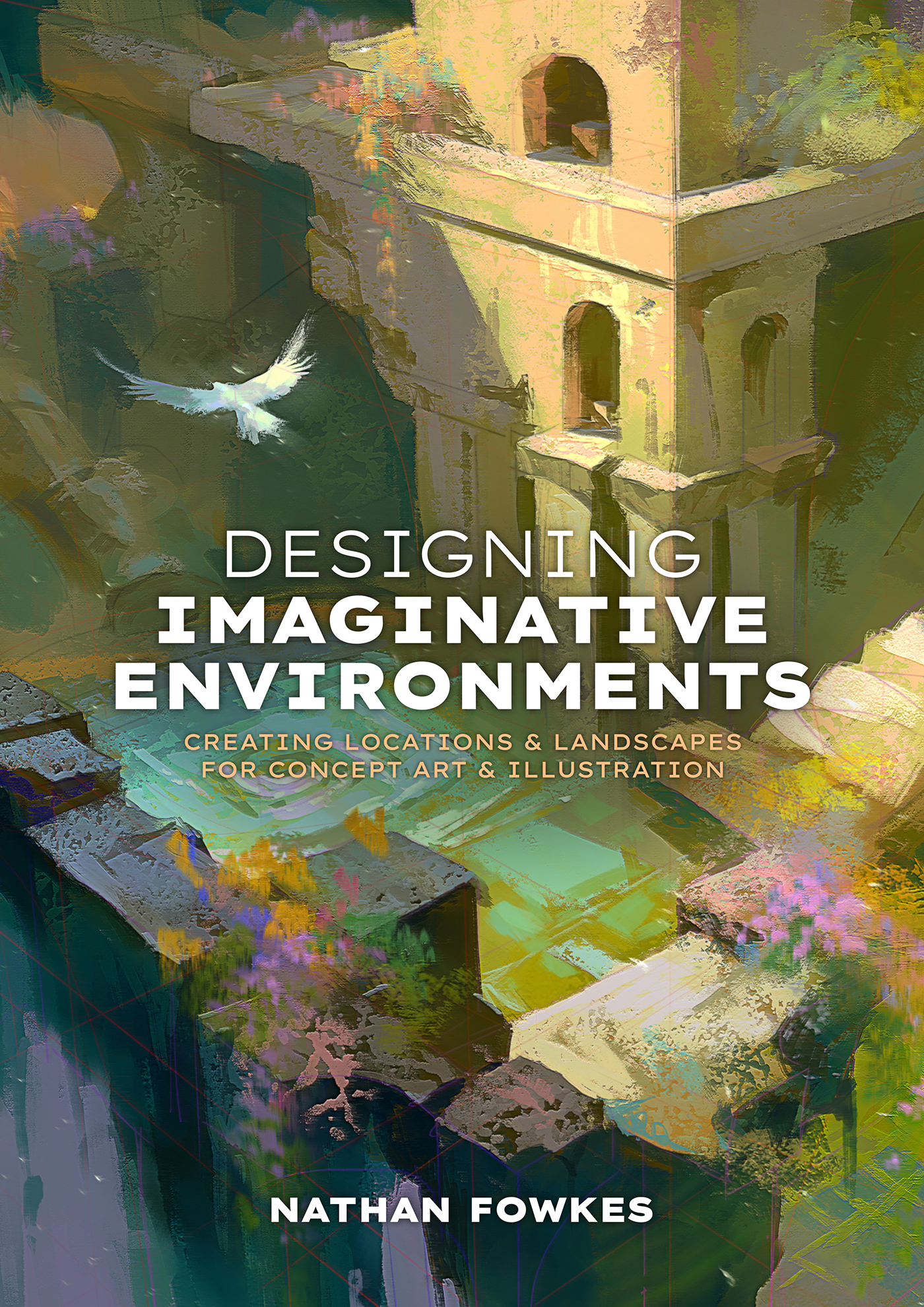
Designing Imaginative Environments by Nathan Fowkes
Join industry veteran Nathan Fowkes on a deep dive into the hows and whys of designing environments for entertainment. From creating mood with color and light, to exploring different biomes and weather, to crafting architecture and props, he will teach you how to design amazing environments that make your work stand out from the crowd.
Interface Craft
A working library for those committed to designing with uncommon care.

Design Thinking
In the past, design has most often occurred fairly far downstream in the development process and has focused on making new products aesthetically attractive or enhancing brand perception through smart, evocative advertising. Today, as innovation’s terrain expands to encompass human-centered processes and services as well as products, companies are asking designers to create ideas rather than to simply dress them up. Brown, the CEO and president of the innovation and design firm IDEO, is a leading proponent of design thinking—a method of meeting people’s needs and desires in a technologically feasible and strategically viable way. In this article he offers several intriguing examples of the discipline at work. One involves a collaboration between frontline employees from health care provider Kaiser Permanente and Brown’s firm to reengineer nursing-staff shift changes at four Kaiser hospitals. Close observation of actual shift changes, combined with brainstorming and rapid prototyping, produced new procedures and software that radically streamlined information exchange between shifts. The result was more time for nursing, better-informed patient care, and a happier nursing staff. Another involves the Japanese bicycle components manufacturer Shimano, which worked with IDEO to learn why 90% of American adults don’t ride bikes. The interdisciplinary project team discovered that intimidating retail experiences, the complexity and cost of sophisticated bikes, and the danger of cycling on heavily trafficked roads had overshadowed people’s happy memories of childhood biking. So the team created a brand concept—“Coasting”—to describe a whole new category of biking and developed new in-store retailing strategies, a public relations campaign to identify safe places to cycle, and a reference design to inspire designers at the companies that went on to manufacture Coasting bikes. [hbr_brightcove id=”4443548301001″]

Embodied Experience Design: Thinking Through Tree Apprecation
Bringing together place-based technologies, embodied experience and trees
Tynan Purdy
A design thinker and builder bringing rigor and craft to strategy and products.

Built by Designers: No Explanation Needed
Designers now turn ideas into working products. Explore a curated collection of apps, tools, websites, and experiments designed, built, and shipped by designers.

tailwindcss - npmx
A utility-first CSS framework for rapidly building custom user interfaces.

Dale-Anthony Williams - Product Designer
UI/UX Designer with over ten years of experience specialising in interface design for mobile and web-based applications with a focus on simplicity & usability.

the welcome mat — playground
a demo playground for the welcome mat protocol. agents sign up, pick an emoji, and join the wall.
OpenMinis/AwesomeMinis
😎 A curated collection of real-world Minis use cases, workflows, and creative scenarios — contributed by the community
tldraw's Steve Ruiz: The Infinite Canvas & the Death of Traditional Design
Andrew Blinn
I use programming language theory as a lens on UI design, trying to make engagement with abstractions more fluid, tangible, and fun

sense-making affordance design

Proposing Botwatch - 7hird Thoughts

Bycelium

Saving this one for when I need a slide about just how hard it is to make sense of reality in 2026
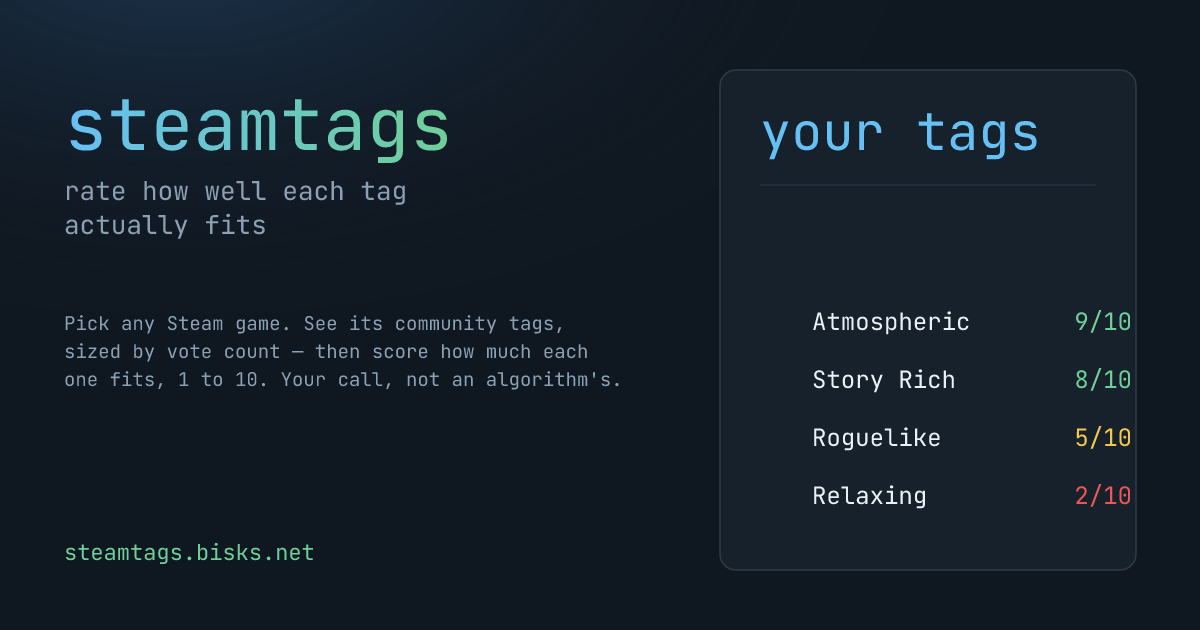
steamtags — rate how well each tag actually fits
It's working - Tynan's Leaflets
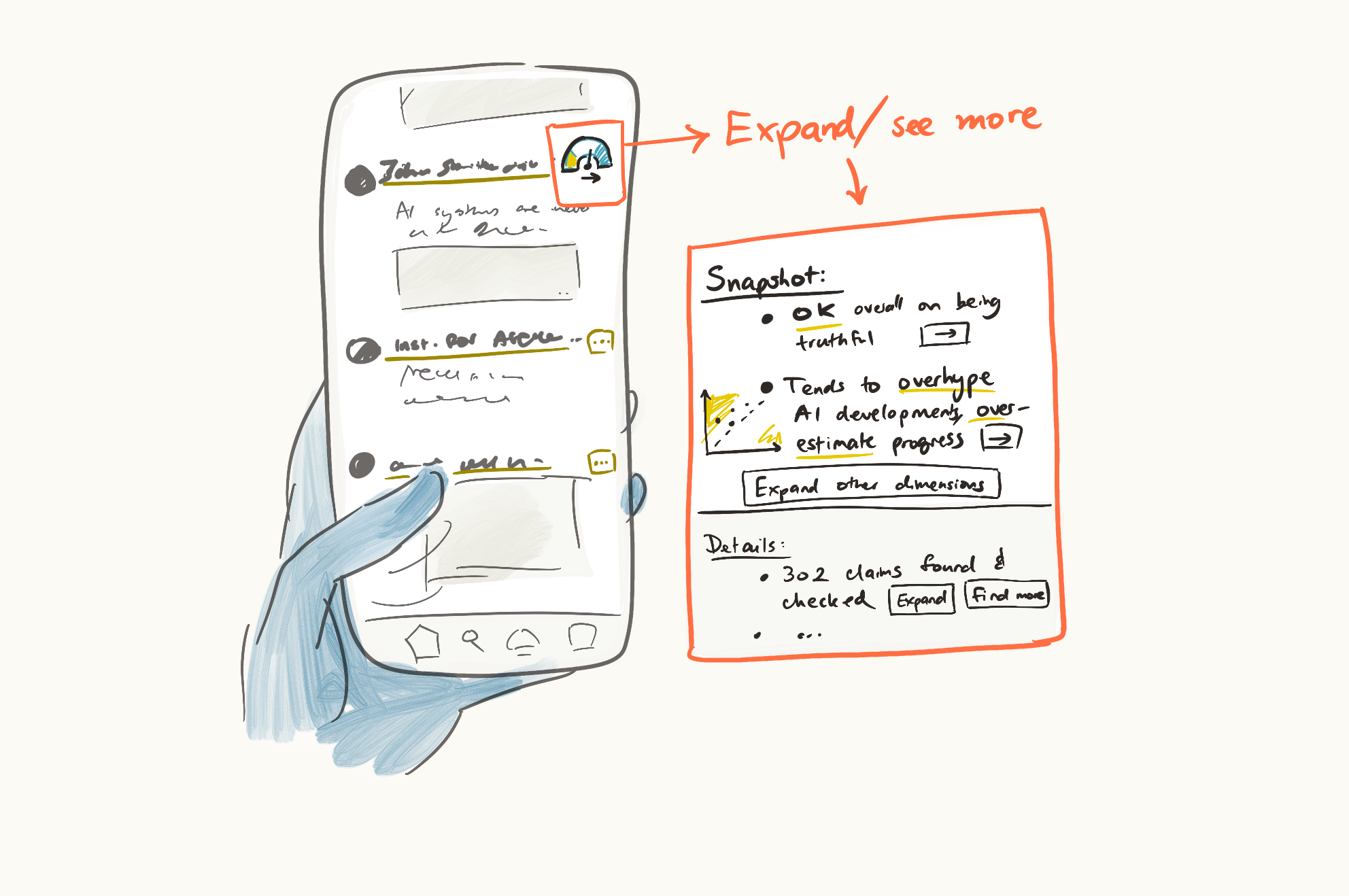
AI Tools for Trust: Community Notes, Rhetoric Detection & More