Writing at the end of the world, from Hveragerði, Iceland
Different modes of thinking
Writing at the end of the world, from Hveragerði, Iceland
The old world of tech is dying and the new cannot be born
Writing at the end of the world, from Hveragerði, Iceland
The story of this blog so far: 'AI', the death of web dev, and feeling like an outsider
Writing at the end of the world, from Hveragerði, Iceland
Software developers are not okay
Writing at the end of the world, from Hveragerði, Iceland
Poisoning for propaganda: rising authoritarianism makes LLMs more dangerous
Writing at the end of the world, from Hveragerði, Iceland
Writings and rehearsals by Nathan Schneider
Welcome. I’m a professor of media studies at the University of Colorado Boulder, where I direct the Media Economies Design Lab and teach and learn from our students. I’ve written a book each on online democracy, cooperative enterprise, the Occupy movement, and God, and I’ve edited ones about solidarity economies, crypto, and co-ops. Reporting articles for both magazines and academic journals keeps my notebooks filled. Working with others to build a democratic economy keeps me accountable.
136 facts every web dev should know before they burn out and turn to landscape painting or nude modelling
Writing at the end of the world, from Hveragerði, Iceland
Trusting your own judgement on ‘AI’ is a huge risk
Writing at the end of the world, from Hveragerði, Iceland
The Evolution of Creativity
Writing about the big beautiful mess that is making things for the world wide web.
Fast Capitalism | Mavs Open Press Open Access Journals | University of Texas at Arlington
Fast Capitalism is an academic journal aimed at describing the current moment of capitalism. We publish peer reviewed scholarship and essays about the impact of rapid information and communication technologies on self, society and culture in the 21st century. Our authors examine how heretofore distinct social institutions, such as work and family, education and entertainment, have blurred to the point of near identity in an accelerated, post-Fordist stage of capitalism. This makes it difficult for people to shield themselves from subordination and surveillance. The working day has expanded; there is little down time anymore. People can 'office' anywhere, using laptops and cells to stay in touch. But these invasive technologies that tether us to capital and control can also help us resist these tendencies. People use the Internet as a public sphere in which they express and enlighten themselves and organize others; information technologies afford connection, mitigate isolation, and even make way for social movements. We are convinced that the best way to study an accelerated media culture and its various political economies and existential meanings is dialectically, with nuance, avoiding sheer condemnation and ebullient celebration. We seek to shape these new technologies and social structures in democratic ways. We look at technology, Artificial Intelligence (AI), global flows, political economy, culture and cultural studies, social theory, political theory, intersectionality, and the envionrment.
Topics — Real Life
ABOUT TOPICS: Since we began Real Life in the summer of 2016, we’ve run many essays across a range of topics, with a particular focus on the personal and cultural implications of living with technology. Our aim is not to track the news cycle so much as the longstanding social issues that inform and transcend it. We wanted to make it easier to read and explore Real Life beyond our chronological archive, so we’ve created these Topics to gather in one place the work we’ve published on some key themes. More Topics will be added to this page over time.

Welcome to the next Renaissance
"We'd love a byline in Big Media. But we'll also be everything from baristas, booksellers, Etsy artists, and TikTok news creators to dog walkers, ice cream scoopers, copywriters, and marketers."

The Press Release Is Dead — Use This Instead – Mike Butcher
I’m QUITE TIRED of dealing with MILLIONS of tech entrepreneurs (these days there are a HELL of a lot of you) and (some) PR people who have ZERO clue how to pitch me/TechCrunch/the media. Their pitches are long-winded and rambling. They ask if they could ‘send some more information’. Listen, I have no idea if it’s interesting or not until you send it! Many just ask me out to lunch or coffee. (Thanks, but I prefer hanging out with my *actual friends*). Even worse, they haven’t read this post or seen my presentation on how to deal with tech media. [2021 update: This is a basic outline for super-early startups. If you want something for Post Series A / later stage startups go here].
Medium: Read and write stories.
On Medium, anyone can share insightful perspectives, useful knowledge, and life wisdom with the world.
Creative Technologists are moving from the margins to the center
Once an obscure job title, creative technology is becoming a new way of working, and a core capability inside modern product teams. Soon…
Toward a durable writing stack – Writings and rehearsals by Nathan Schneider
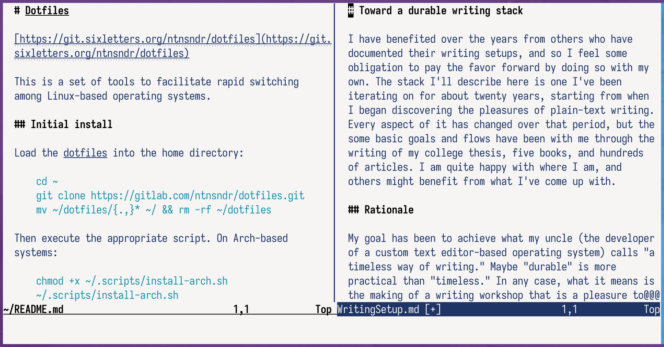
I have benefited over the years from others who have documented their writing setups, and so I feel some obligation to pay the favor forward by doing so with my own. The stack I’ll describe here is one I’ve been iterating on for about twenty years, starting from when I began discovering the pleasures of plain-text writing. Every aspect of it has changed over that period, but the some basic goals and flows have been with me through the writing of my college thesis, five books, and hundreds of articles. I am quite happy with where I am, and others might benefit from what I’ve come up with.