Writing at the end of the world, from Hveragerði, Iceland
Tech for... what, exactly?
How ‘tech for good’ launders the expertise, interests, and beliefs of technologists.
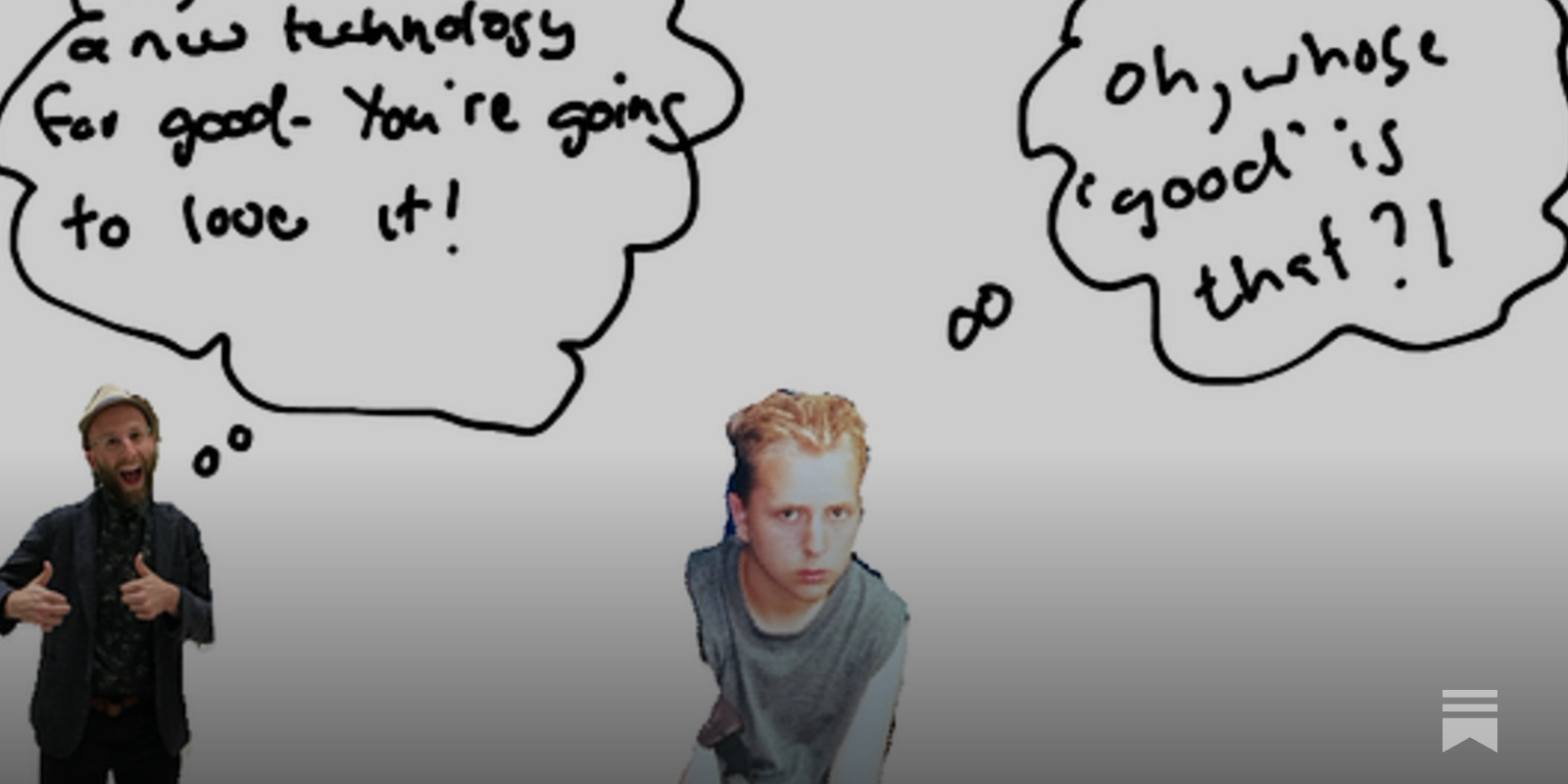
Why I (Still) Love Tech: In Defense of a Difficult Industry
Technology is just another human creation—like religion or government or sports or money. It's not perfect, and it never will be. But it's still a miracle.

Why Is Everyone In Tech So Sad?
A lot of people seem to be realizing that knowledge work is mostly pointless. AI might give us the pleasure of finding out what happens if an entire class of workers loses faith in their careers.

Curse of knowledge
The curse of knowledge, also called the curse of expertise[1] or expert's curse, is a cognitive bias that occurs when a person who has specialized knowledge assumes that others share in that knowledge.[2]
Where Warren’s Wrong
Senator Warren’s proposal about how to regulate tech is wrong about history, the source of tech giant’s power, and the fundamental nature of technology itself. That doesn’t mean t…

Technopoly: The Surrender of Culture to Technology
A witty, often terrifying that chronicles our transform…

🧩 Don't make Tech your entire personality.
This is one of those articles that I wanted to write for many days, but I kept delaying it until, a...

Avoiding Digital Productivity Traps - Cal Newport
Last week in this newsletter, I summarized some interesting results from a study that analyzed the behavior of 164,000 knowledge workers. It found that introducing ... Read more

The Irrational Decision: How We Gave Computers the Power to Choose for Us | Critical AI | Duke University Press
Jathan Sadowski is an associate professor in the Faculty of Information Technology at Monash University in Melbourne, Australia. He is the author of two books on technology and capitalism, Too Smart (2020) and The Mechanic and the Luddite (2025). He also cohosts the podcast This Machine Kills.
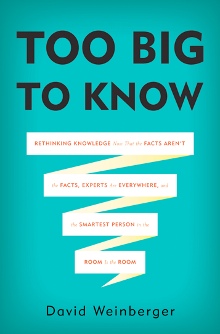
Too Big to Know
Too Big to Know: Rethinking Knowledge Now That the Facts Aren't the Facts, Experts Are Everywhere, and the Smartest Person in the Room Is the Room is a non-fiction book by the American technology writer David Weinberger published in 2012 by Basic Books.
The Whale and the Reactor: A Search for Limits in an Age of High Technology, Second Edition
“In an age in which the inexhaustible power of scientific technology makes all things possible, it remains to be seen where we will draw the line, where we will be able to say, here are possibilities that wisdom suggest we avoid.” First published to great acclaim in 1988, Langdon Winner’s groundbreaking exploration of the political, social, and philosophical implications of technology is timelier than ever. He demonstrates that choices about the kinds of technical systems we build and use are actually choices about who we want to be and what kind of world we want to create—technical decisions are political decisions, and they involve profound choices about power, liberty, order, and justice. A seminal text in the history and philosophy of science, this new edition includes a new chapter, preface, and postscript by the author.

The old world of tech is dying and the new cannot be born
Writing at the end of the world, from Hveragerði, Iceland
Care at the Edge of Automation – Topos Institute
Technologies don’t just solve problems, they change us. We invent technologies, and they invent us in turn, shaping our lives and worlds. This is the phenomenon that Terry Winograd and Fernando Flores, in Understanding Computers and Cognition (1986), called “ontological design.” It matters now more than ever—along with a second lesson they saw clearly. Technological research is always guided (and sometimes misguided) by deep ontological assumptions about, e.g., the nature of cognition, agency, and communication. If we are to create technologies that truly serve human flourishing and care, we must bring these hidden assumptions into the open and question them at their roots.

How Technology is Hijacking Your Mind — from a Former Insider
Where does technology exploit our minds’ weaknesses?

Tech billionaires aren't juvenile science-fiction nerds, they just can't read
Tech billionaires aren't juvenile science-fiction nerds, they just can't read

The Use of Knowledge in (AGI) Society
How to build to break the intelligence curse