


JP Morgan and Brookings research shows women face higher risks from AI due to lower representation, slower adoption, and job exposure.
Women treat AI with greater skepticism than men do, study suggests
Women perceive artificial intelligence (AI) as riskier than men do, according to a study. Beatrice Magistro and colleagues hypothesized that women are both more exposed to risk from AI and are more averse ...

New ILO data confirm women face higher workplace risks from generative AI than men
A new report finds that women face higher risks, as they are concentrated in tasks more prone to automation and remain underrepresented in technology and science fields.

Women Are Avoiding AI. Will Their Careers Suffer? | Working Knowledge
Women are adopting generative AI technology at a significantly lower rate than men, in many cases because women question whether it's ethical to use the tools, according to research by Rembrand Koning and colleagues. If women are shying away from AI, could the gender gap in pay and job opportunities continue to widen?
Women in tech and finance at higher risk from AI job losses, report says
‘Mid-career’ female workers also being sidelined by rigid hiring processes, says City of London Corporation
Don't Let Women Get Left Behind: Why the Future of AI Upskilling Must Be Inclusive
Women still lag in AI adoption at work. The risk is we'll leave talented women behind and hurt business performance. Tips to close the gap.

Women are at risk of being left behind in the generative AI workplace revolution.
Women are already falling behind on generative AI in the workplace. The good news? Companies have the power to change that.
Why women are more skeptical of AI than men, according to a new study
Drawing on survey data, the study finds that women consistently perceive AI as riskier, especially when its economic effects are uncertain.

Explaining women’s skepticism toward artificial intelligence: The role of risk orientation and risk exposure
Abstract. This article examines the gender gap in attitudes toward the adoption of AI in the workplace, with a focus on how gender differences in risk orie
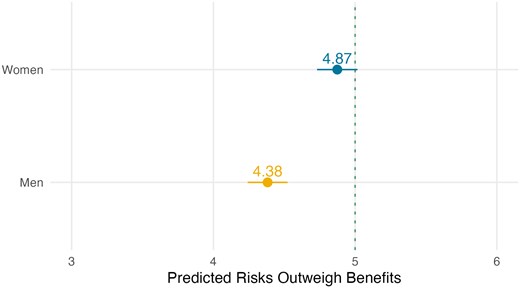
Explaining women’s skepticism toward artificial intelligence: The role of risk orientation and risk exposure
Abstract. This article examines the gender gap in attitudes toward the adoption of AI in the workplace, with a focus on how gender differences in risk orie
The AI Gender Trap: Why Women Face Triple the Automation Risk in the Digital Age
As generative AI transforms the workplace, women face a disproportionate risk of automation—revealing deep inequalities in who builds, controls, and benefits from artificial intelligence.
We’re at risk of a two-tier AI economy if we don’t bridge the AI gender gap, expert says | Fortune
Women are more skeptical of AI. Their hesitation will make AI safer, says Harvard researcher Mara Bolis.

The Beauty of AI and Why AI Needs More Women
While women remain underrepresented in the Artificial Intelligence (AI) and tech workforce, their participation is considered crucial for developing the right AI for tomorrow.

Women Who Use AI At Work Face A Predictable ‘Competence Penalty’
Women who use AI are seen as less competent than men who use AI, even when producing identical work. This reflects a common gender bias known as the "competence penalty."

AI Development Needs More Women. Here’s What Leaders Can Do About It
Only 31% of professionals in AI development are women—learn how female talent can drive accountability, improve accuracy and improve AI's societal impact.

Why We Need More Women In The AI Revolution
Research suggests that women make up less than a third of AI professionals and only 18% of AI researchers globally.

Paid Program: Why More Women Are Needed in AI
When the world of AI isn’t inclusive, it creates biases in what the data shows and how it’s used.
