

In this blog post we're coming back to indexed sequence CRDTs - we already discussed some operation-based approaches in the past. This time we'll cover YATA (Yet Another Transformation Approach): a delta-state based variant, introduced [https://www.google.com/url?sa=t&rct=j&q=&esrc=s&source=web&cd=
Kyle Mathews on Twitter / X
D2TS enables really powerful streaming joins, aggregations, etc. and will be powering a lot of Electric features in the future!This is an early preview but very cool tech. First Typescript implementation of Differential Dataflow afaik. https://t.co/i4qSJnVZWV— Kyle Mathews (@kylemathews) February 28, 2025
The CRDT Dictionary: A Field Guide to Conflict-Free Replicated Data Types - Ian Duncan
A comprehensive guide to CRDTs and their tradeoffs, from counters to sequences. Written in the spirit of the Typeclassopedia, exploring how different CRDTs solve the distributed consensus puzzle.
pg_crdt - an experimental CRDT extension for Postgres
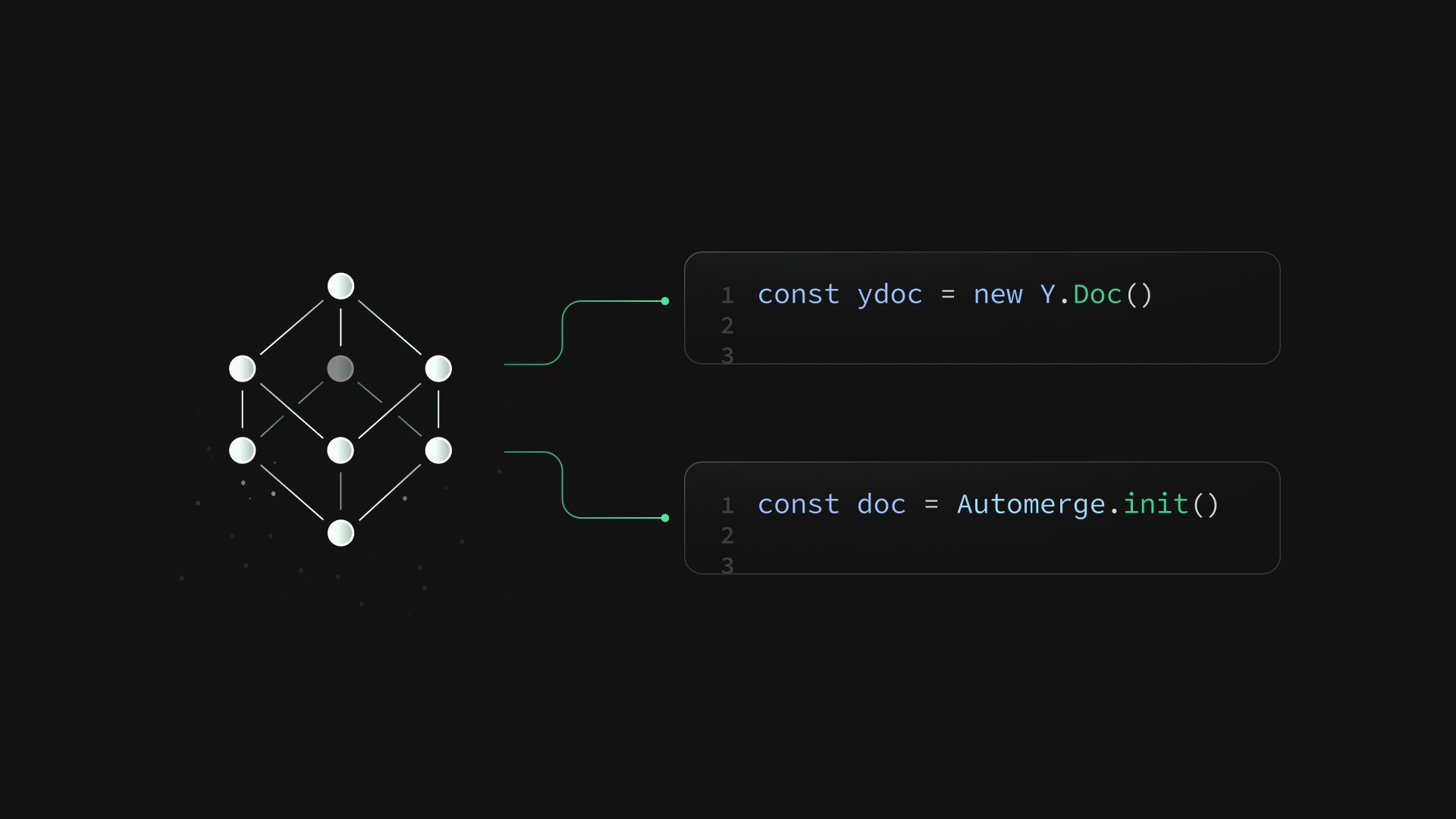
Embedding Yjs and Automerge into Postgres for collaborative applications.
FlowLog - Efficient and Extensible Datalog | FlowLog
FlowLog: Efficient and Extensible Datalog via Incrementality
Engineering High-Performance Parsers with Data-Oriented Design
Notes from building Yuku: the AST is flat arrays of u32 indices instead of a pointer tree, and memory layout, allocation, strings, unicode, and serialization all follow from that one decision.
CompactLTJ: Space & Time Efficient Leapfrog Triejoin on Graph Databases
Leapfrog Triejoin (LTJ) is arguably the most practical and popular worst-case-optimal (wco) algorithm for solving basic graph patterns in graph databases. Its main drawback is that it needs the database triples (subject, predicate, object) represented as paths in a trie, for each of the six orders of subject, predicate, and object. The resulting blowup in space makes most systems disregard LTJ or implement it only partially, which makes their corresponding algorithms non-wco. In this paper we show that, by using compact data structures, it is possible to build an index that at the same time matches the query time performance of the fastest classic wco index, and uses a fraction of the space of non-wco indices (which are much slower). Concretely, we make use of compact tree representations to store functional tries using one bit per trie edge, instead of one pointer, and further reduce the space by storing partial tries. Our most compact variant uses 5–6 times less space than classic wco implementations and 2–3 times less than classic non-wco systems. At solving queries, it is on par with the fastest classic wco system, and 30–40 times faster than non-wco systems. We further incorporate improved query resolution strategies into CompactLTJ variants, which makes it considerably faster than classic wco systems as well, on queries that do not output too many results. Finally, we show how CompactLTJ can incorporate dynamism without altering its performance, even under very demanding update regimes. We leave a public fully-functional implementation of CompactLTJ that can be directly used by practitioners.

Delta Lenses over Inductive Types
Existing bidirectional languages are either state-based or operation-based, depending on whether they represent updates as mere states or as sequences of edit operations.In-between both worlds are delta-based frameworks, where updates are represented using alignment relationships between states.In this paper, we formalize delta lenses over inductive types using dependent type theory and develop a point-free delta lens language with an explicit separation of shape and data.In contrast with the already known issue of data alignment, we identify the new problem of shape alignment and solve it by lifting standard recursion patterns such as folds and unfolds to delta lenses that use alignment to infer meaningful shape updates.
CRDT Papers • Conflict-free Replicated Data Types
Resources and community around CRDT technology — papers, blog posts, code and more.
Indexing Standard Site - AT Protocol
This guest post from Steve Simkins, creator of Sequoia and docs.surf, outlines the strategy he used to index standard.site records.

The Kaitchup Index: A Leaderboard for LLMs and Their Quantized Versions
Comparing formats like GGUF, GPTQ, and AWQ, with different bitwidths

YC Has Changed | Y Combinator
As YC grows, founders are wondering how it’s improved over time. This is a valid line of questioning – clearly much has changed about YC over 13 years. We have new leadership [http://www.ycombinator.com/people/], much larger batch sizes [https://blog.ycombinator.com/category/batch-stats/], we invest more money [http://www.ycombinator.com/deal/], we have a growth fund [http://www.ycombinator.com/continuity/], a series A program [https://blog.ycombinator.com/introducing-yc-series-a-batches/], a ma
Paul Copplestone - e/postgres on Twitter / X
we've released a CRDT extension for Postgres (experimental and open source)why? A CRDT is a special data type used for collaboration - think of a Google Doc. The changes are merged even as people are typing simultaneouslythese CRDTs are then serialized on a server and then… pic.twitter.com/WJDJlK733D— Paul Copplestone - e/postgres (@kiwicopple) November 21, 2025
Binary, Hanoi, and Sierpinski, part 2
Fast regex search: indexing text for agent tools · Cursor
How we're building indexes for regular expression search so agents can find text in large monorepos without the 15-second ripgrep waits.

Cosmik Lab Notes 003: Semble Updates - Discover, Collection Preview, Sorting, and more - Cosmik Labs
An overview of some recent enhancements to Semble (with a poll for next features!)
y-atproto - npmx
A [Yjs](https://yjs.dev/) CRDT provider that syncs documents over the [AT Protocol](https://atproto.com/). Documents are stored as ATProto records and real-time updates are delivered via [Jetstream](https://github.com/bluesky-social/jetstream).
