


Could right now be the most influential time ever? Richard Fisher looks at the case for and against – and why it matters.
Three Big Things: The Most Important Forces Shaping the World
An irony of studying history is that we often know exactly how a story ends, but have no idea where…


Divergence with a Vengeance
The 19th century was more important than I previously thought
Goliath's curse: the history and future of societal collapse
A vast and unprecedented survey of societal collapse -- stretching from the Bronze Age to the age of silicon -- that digs through the ruins of fallen societies to understand the root causes of their downfall and the most dire consequences for our future. Stepping back to look at our precariously interdependent global society of today -- with the threat of nuclear war ever present and the world heating up faster than it did before the Great Permian Extinction, which wiped away 80-90 percent of life on Earth -- one couldn't be blamed for asking : Will we make it? Addressing this question with the seriousness it demands, Cambridge scholar Luke Kemp conducts a historical autopsy that stretches across five millennia, and more than 440 societal lifespans, from the first Egyptian dynasty to the modern-day United Kingdom, using the latest discoveries from archaeology and anthropology to reveal profound and often counterintuitive insights into why exactly societies fail. While books like Jared Diamond's Collapse zoom in on only a few case studies, Kemp's embrace of a 'deep systems' approach, availing himself of the largest dataset possible, allows him to discover the broader trends, and deeper causes, of collapse that pose future risks -- without abandoning the gripping historical narratives that bring these pages alive. Goliath's Curse is a stark reminder that there are both bright and dark sides to societal collapse -- that it is not necessarily a reversion to chaos or a dark age -- and that making a more resilient world may well mean making a more just one

Can Longtermism Save Us All?
William MacAskill, author of What We Owe the Future, and Robert Wright debate longtermism.
The Climate of History in a Planetary Age
For the past decade, historian Dipesh Chakrabarty has been one of the most influential scholars addressing the meaning of climate change. Climate change, he argues, upends long-standing ideas of history, modernity, and globalization. The burden of The Climate of History in a Planetary Age is to grapple with what this means and to confront humanities scholars with ideas they have been reluctant to reconsider—from the changed nature of human agency to a new acceptance of universals. Chakrabarty argues that we must see ourselves from two perspectives at once: the planetary and the global. This distinction is central to Chakrabarty’s work—the globe is a human-centric construction, while a planetary perspective intentionally decenters the human. Featuring wide-ranging excursions into historical and philosophical literatures, The Climate of History in a Planetary Age boldly considers how to frame the human condition in troubled times. As we open ourselves to the implications of the Anthropocene, few writers are as likely as Chakrabarty to shape our understanding of the best way forward.
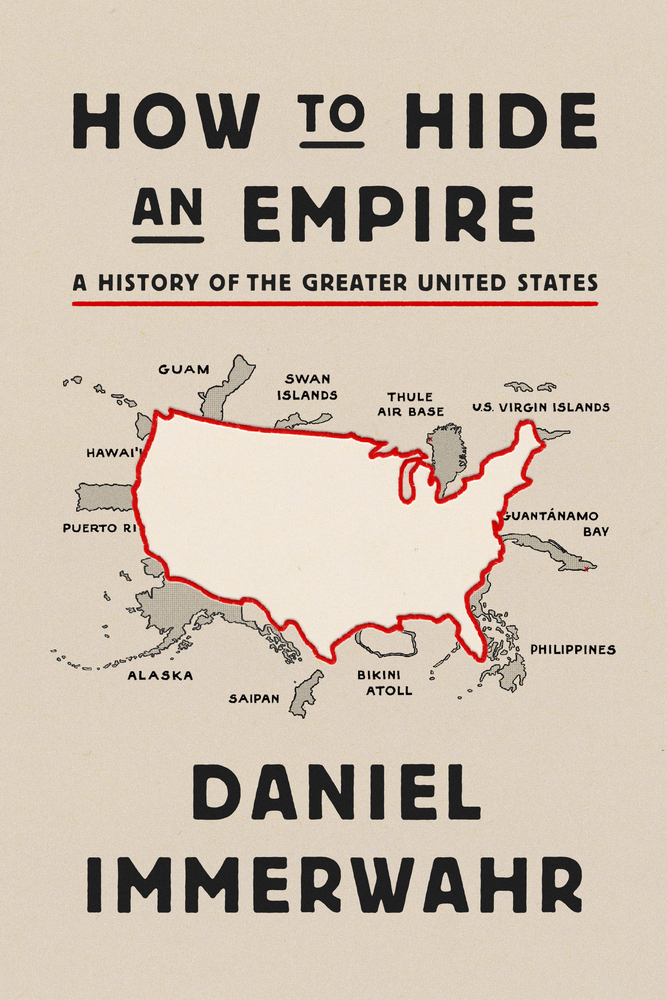
How to Hide an Empire: A History of the Greater United …
A pathbreaking history of the United States' overseas p…
The world’s most influential economist is oddly unconvincing
Daron Acemoglu is revered. Why?

Governance Archaeology: Research as Ancestry
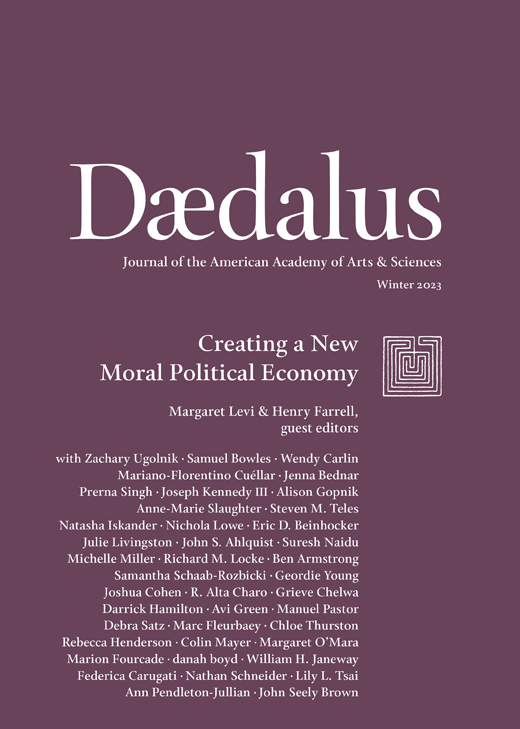
Abstract. This essay presents the idea of governance archaeology, an approach to learning from the past to inform the politics of the future. By reporting on a prototype historical database, we outline a strategy for co-producing a global commons of collective governance practices that can inspire institutional learning and experimentation, particularly in the face of rapid technological change and vexing global crises. Embedded in our approach is an orientation of ancestry whereby practitioners cultivate relationships of accountability and responsibility to the legacies they learn from, recognizing the harm from past patterns of exploitation. By taking seriously a wide range of historical governance practices, particularly those outside the Western canon, governance archaeology seeks to expand the options available for the design of more moral political economies.
The Myth of Allied Technological Inferiority
World War II, The Free Press, and the Problematic Use of History in Contemporary Media

The History of Information - Chris Haughton
disinformation, chris haughton, information, noam chomsky

Theorizing the Human Sciences in the Age of Absolute Disruption: Historical Criticism and Its Remainders | The Journal for Cultural and Religious Theory | JCRT
Adam DJ Brett reads Jason Ānanda Josephson-Storm’s trilogy — The Myth of Disenchantment, Metamodernism, and The Genealogy of Genealogy — as one project asking whether a thing exists, how it arose, what grounds our claims

The Great Reckoning - The Ideas Letter
The world feels unsettled, as if history itself were changing tempo. The familiar landmarks of the modern age are blurring, slipping away, and the stories we once told ourselves about…

The Great Reckoning - The Ideas Letter
The world feels unsettled, as if history itself were changing tempo. The familiar landmarks of the modern age are blurring, slipping away, and the stories we once told ourselves about…
Sapiens [Tenth Anniversary Edition]: A Brief History of Humankind
New York Times Readers’ Pick: Top 100 Books of the 21st CenturyThe tenth anniversary edition of the internationally bestselling phenomenon that cemented Yuval Noah Harari as one of the most prominent historians of our time—featuring a new afterword from the author.One hundred thousand years ago, at least six human species inhabited the earth. Today there is just one. Us. Homo sapiens. How did our species succeed in the battle for dominance? Why did our foraging ancestors come together to create cities and kingdoms? How did we come to believe in gods, nations, and human rights; to trust money, books, and laws; and to be enslaved by bureaucracy, timetables, and consumerism? And what will our world be like in the millennia to come?In Sapiens, Professor Yuval Noah Harari spans the whole of human history, from the very first humans to walk the earth to the radical—and sometimes devastating—breakthroughs of the Cognitive, Agricultural, and Scientific Revolutions. Drawing on insights from biology, anthropology, paleontology, and economics, and incorporating full-color illustrations throughout the text, he explores how the currents of history have shaped our human societies, the animals and plants around us, and even our personalities. Can we ever free our behavior from the legacy of our ancestors? And what, if anything, can we do to influence the course of the centuries to come?Bold, wide-ranging, and provocative, Sapiens integrates history and science to challenge everything we thought we knew about being human: our thoughts, our actions, our heritage...and our future.