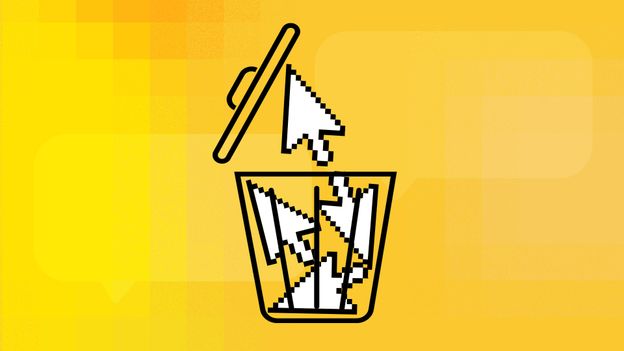
Your clicks have immense power. Collectively, just moments of our attention can lift or sink a site. But our browsing is changing, and it could reshape the internet you know and love.
The Zero Click Internet
The internet is undergoing the biggest change since its inception. It's huge. And there is no going back. The web is changing into the Zero Click Internet,...

Funding The Web: A Wise Choice
The Web is slow-motion collapsing for multiple reasons, but at the heart of it all is a little known system: the Search/Browser Levy. Let's fix it!
Funding The Web: From Cartel to Covenant
The Web is slow-motion collapsing for multiple reasons, but at the heart of it all is a little known system: the Search/Browser Levy. Let's fix it!
Click Browser on Twitter / X
How do you keep up with the web?I'm a news hound, and I find social feeds too noisy. So I'm experimenting with something new in Click—a completely private feed reader, that lets you follow blogs, newsletters / substacks, YouTube channels, Bluesky creators, subreddits, and more.… pic.twitter.com/jjNO2x6614— Click Browser (@clickbrowser) February 4, 2026

My journey to the heart of the forgotten internet
Slowly but surely, huge swaths of the internet are vanishing. But the artefacts of the early web are still out there, and they have lessons for the future.

How We Can Make the Internet Helpful Again
Amid an infodemic of misinformation and manipulation, it feels like the Internet uses us more than we use it. Taking back control is possible.

Here’s What Your Browser is Telling Everyone About You
Your browser sends a lot of information with each website you visit. That can be used to track you across the internet.

Google’s broken link to the web
With AI search results coming to the masses, the human-powered web recedes further into the background
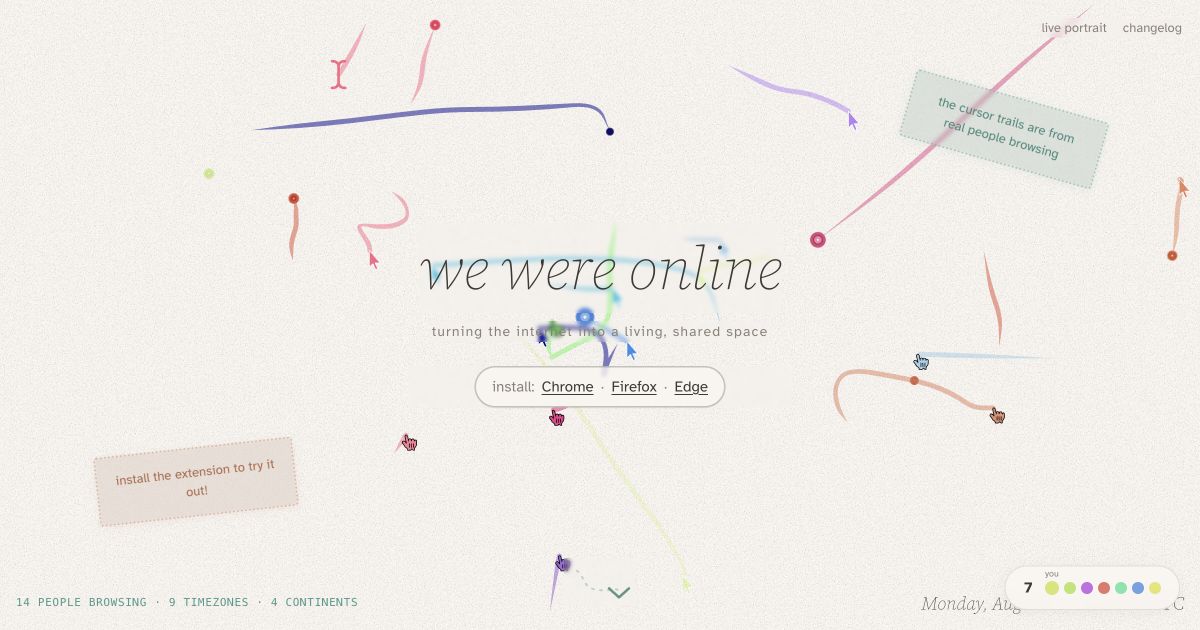
we were online
Turn the internet into a living, shared space with real-time traces of people browsing.

The Boring Internet
The internet you grew up on isn't dying. A commercial veneer glued on top of it is.
The Boring Internet
The internet you grew up on isn't dying. A commercial veneer glued on top of it is.
Open tabs are cognitive spaces
Nobody actually wants to use a web browser. It becomes evident the second you open your browser and notice that you don’t have internet connection. What we like about browsers is what they offer on the other side. What they connect us to. In that sense, browsers are transitory spaces - similar to airports, planes and train stations. Most of us have lost our childish curiosity towards these spaces - we go there because we want to arrive somewhere else. Arriving somewhere else with early browsers was quite one-dimensional - you clicked your way from one website to the next, in the same window. You surfed. You bookmarked the pages that you wanted to return to. Later, as the web became richer, you sometimes had more than one browser window open. I vividly remember having seven Internet Explorer windows open, thinking to myself “this is way too much to keep track of!”. Right now, my Firefox has 477 tabs open. How could this happen? Tabs are externalized cognition
Cloudflare CEO warns AI and zero-click internet are killing the web's business model
It's been known for some time that the web is changing into the Zero-Click Internet, the name for when users no longer need to click on links...

Accelerating dynamics of collective attention
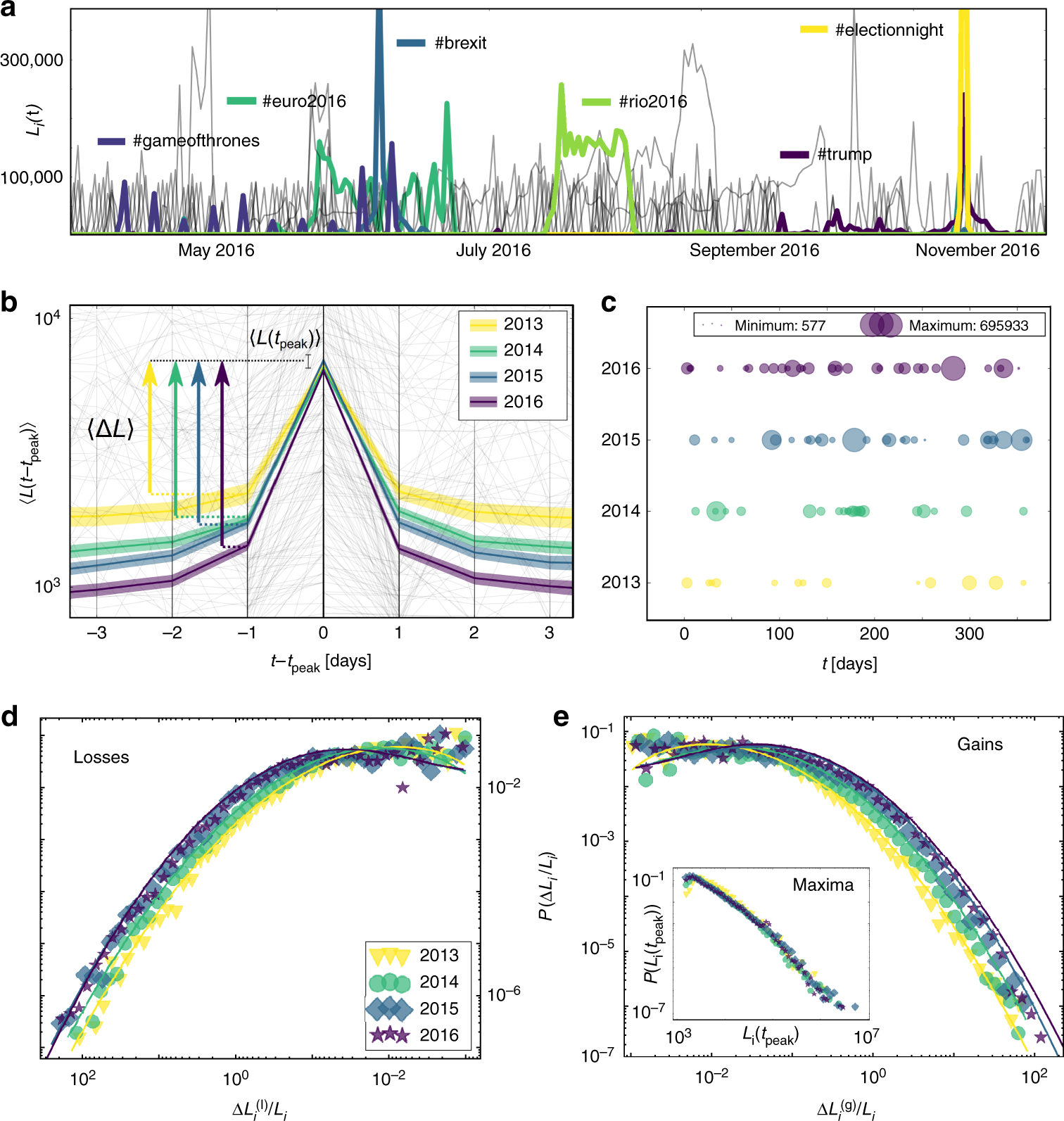
With news pushed to smart phones in real time and social media reactions spreading across the globe in seconds, the public discussion can appear accelerated and temporally fragmented. In longitudinal datasets across various domains, covering multiple decades, we find increasing gradients and shortened periods in the trajectories of how cultural items receive collective attention. Is this the inevitable conclusion of the way information is disseminated and consumed? Our findings support this hypothesis. Using a simple mathematical model of topics competing for finite collective attention, we are able to explain the empirical data remarkably well. Our modeling suggests that the accelerating ups and downs of popular content are driven by increasing production and consumption of content, resulting in a more rapid exhaustion of limited attention resources. In the interplay with competition for novelty, this causes growing turnover rates and individual topics receiving shorter intervals of collective attention.