

Officials say the restrictions are for public safety, but businesses and the public are feeling the impact.
Opinion | These A.I. Policies Will Hurt Our Business. We Should Do Them Anyway.
The risks posed by A.I. are too great to forgo any regulation, even for those who stand to gain tremendously from the technology’s rise.

Online Safety Bills Are Fueling a New Wave of Internet Censorship
State and federal bills seek to limit minors’ access to social media, but civil liberties advocates warn that the resulting online censorship threatens constitutional rights without delivering real safety.

One Response to the Cambridge Analytica Scandal: Block Facebook's
With Facebook in a dominant position in hosting a huge portion of the world’s social conversation, we’ve been worried about the incredible power the company has accumulated and the risks that poses

Debate: Social media in children and young people – time for a ban? Weighing up the implications and limitations of age-based social media restrictions
Recent legislation in Australia banning social media accounts for children under 16, alongside similar proposals worldwide, has ignited debate about whether age-based restrictions are an effective way to protect young people's mental health. While the intent of such bans is to reduce exposure to harmful content, their feasibility and effectiveness remain unclear. Enforcement requires robust age verification, often relying on sensitive data such as government-issued identification or facial scans, which raises privacy concerns and can be circumvented through the use of VPNs. Moreover, social media use is diverse. Although it can intensify harms such as bullying, it also provides vital opportunities for connection and support, particularly for marginalised adolescents. Removing access to accounts may limit risks within platforms, but does not prevent exposure to harmful content elsewhere, nor does it guarantee increased offline engagement. Importantly, blanket bans fail to address unsafe design features embedded within social media or to equip adolescents with the skills needed to navigate online environments. More targeted, evidence-based regulation that promotes safer platform design and accountability may provide a more effective pathway to protecting young people's well-being.

The Illusion of Protection: Why Canada’s Growing Push to Ban Social Media for Kids Won’t Work - Michael Geist
The momentum behind a social media ban for Canadian minors has been building for months. The federal Liberals voted at their April policy convention to back a minimum age of 16 for social media accounts and AI chatbots, the government’s expert panel on online safety is studying the issue, protesters have now rallied on Parliament Hill calling for it, and on Saturday night, Manitoba Premier Wab Kinew told a Winnipeg fundraiser that his government will be the first in Canada to ban social media and AI chatbots for kids. Kinew did not specify which kids, when it would happen, or how it would be enforced, none of which appeared to matter to the audience. The political appeal of a ban is obvious, since concerns about social media’s effects on young users are widely shared. Yet the policy itself is a terrible idea that will not work. This post examines at least six reasons why an outright age-based ban, particularly one that extends to AI chatbots, is the wrong response to a serious issue.
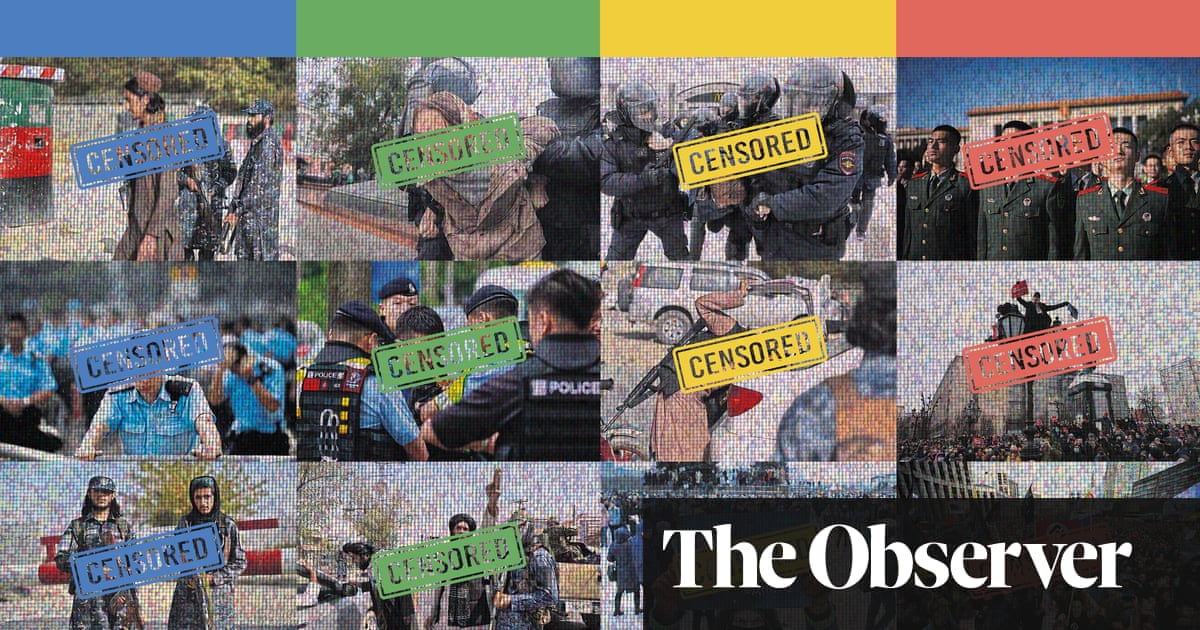
Revealed: Google facilitated Russia and China’s censorship requests
An investigation has exposed the tech firm’s cooperation with autocratic regimes to remove unfavourable content
Four Functional Quadrants for Trust & Safety Tools: Detection, Investigation, Review & Enforcement (DIRE) <div> <br> </div>
Public discourse and regulatory debates about online trust and safety have long been dominated by a focus on rules, not tools: preoccupied mostly by the questio

Banning under-16s won’t fix social media
The toxic ecosystem we have today can be better addressed with competition than regulation

The "Segregate-and-Suppress" Approach to Regulating Child Safety Online
<div> In an effort to protect children online, regulators around the country and the world are enacting laws that compel Internet publishers to age-authenticat
‘Now we don’t have a safe place’: sex workers’ social media site Switter shuts down amid legal fears
Platform says government changes to online safety and defamation laws in Australia, UK and US made it ‘impossible’ to comply
The Internet Coup: A Technical Analysis on How a Chinese Company is Exporting The Great Firewall to Autocratic Regimes | InterSecLab
This research reveals groundbreaking findings on how Geedge Networks is selling an extensive suite of next-generation digital repression tools to client governments around the world.

Eaten by the Internet
This book makes internet infrastructure visible as a force of political power, which is transforming the social world, from the bottom up—through fifteen chapters contributed by a global set of researchers, activists, and techies. We are living a unique moment: internet technologies are the default infrastructure for society, not just how we communicate but also how we organise our social life, politics, and economy, all the way down to our material environments, like cities. Our world is eaten by the internet. This means that those who control the internet control the bounds of public speech, economic production, social cohesion, and politics, making its infrastructure a core political terrain in the networked age. The book’s chapters cover a wide set of topics, spanning from the global politics of content moderation by internet infrastructure to the colonialism inherent in the race to plug the moon, from the harms wrought by blockchain companies in rural America to the particularities of online censorship across Asia. The chapters take on thorny topics, discussing power consolidation in the advertisement and cloud industry, the role of internet infrastructure in the war in Ukraine, and tech’s environmental impact—amongst others. In doing so, this book roots contemporary technology debates in the politics of internet infrastructure and urges us to ask how can we ensure our infrastructures sustain us, rather than consume us?
Infrastructural Regulation and the New Utilities
From too-big-to-fail financial firms to net neutrality to internet platforms and the water crisis in Flint, Michigan, we now face a variety of legal and public
Social Media Ban Repository – information labs
Is a ban a plan? Academics, rights organisations, and policymakers across Europe and beyond are warning against blanket social media bans for minors.

Is this a viable theory of change that points to an actual coherent vision for the future of a safe internet? There’s a lot of poor theories of change in current legislation on both sides of the aisle. Who is championing public utility moderation as an alternative to panopticon age gating?

Tynan Purdy ⁂
More and more I think moderation as a whole should be publicly funded. Lots of institutions providing lots of diverse moderation services would unlock product creators and communities to thrive safely.
'Safety as Public Infrastructure? The Future of Moderation in the Open Social Web' Talk by Saskia Welch, Aditya Singh and Sebastian Vogelsang More info: ctalx.c-base.org/fediday-2026/talk/MGDNUN/ Click your tickets here: berlinfedi.day ⁂ […] berlin.social/@berlinfediday/11724669250279…
