

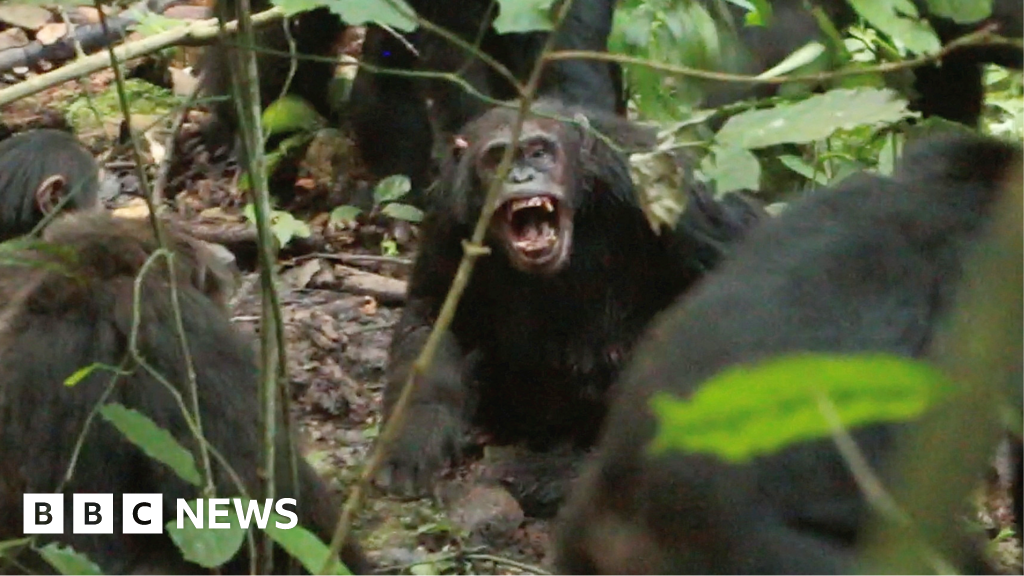
The once close-knit community of Ngogo chimpanzees have been at loggerheads for the last eight years.
Why some young Black Christians are practicing hoodoo
The ancestral religious practices of the African diaspora were forced underground by the White...

Fanning the Flames
Since the conflict between the Sudanese Armed Forces (SAF) and the Rapid Support Forces (RSF) began in Sudan in April 2023, countless civilians have been killed, millions have been internally displaced, and millions face famine. There is a large and growing body of credible evidence documenting how, during their conduct in the conflict, the warring parties have committed widespread war crimes, crimes against humanity, and serious human rights violations, including in the Darfur region. For example, Human Rights Watch, among others, has documented devastating ethnic cleansing in West Darfur. Given the prevalence of such atrocities in the conflict, Human Rights Watch has called for the renewal and expansion of the existing arms embargo on Darfur to the rest of Sudan to prevent warring parties acquiring weapons or equipment likely to be used to perpetuate serious violations of international human rights and humanitarian law, harming civilians.

Diverse Locations and a Long History: Historical Context for Urban Leopards (Panthera pardus) in the Early Anthropocene From Seoul, Korea
While the urban landscapes of the early Anthropocene may appear hostile to large carnivores, humans and leopards (Panthera pardus) are known to co-inhabit major urban centres like Mumbai (India), Nairobi (Kenya) and Johannesburg (South Africa). We provide evidence that the presence of leopards in urban landscapes is not, however, a new phenomenon and has occurred repeatedly over the early history of the Anthropocene. Using records of Amur leopards (P. p. orientalis) in Seoul, Korea, at the end of the 19th century, a capital city and major urban centre with a high human population density, we explore socio-cultural, political and ecological factors that may have facilitated human-leopard co-occurrence in an urban landscape and the factors that eventually led to the leopards' extirpation. We suggest that, in the absence of unsustainable levels of persecution by humans, leopards are able to persist in urban landscapes which contain small patches of dense vegetation and have sufficient alternative food supplies. In light of the continued expansion of urban landscapes in the 21st century and increasing conservation focus on the presence of large carnivore populations there, this paper provides historical context to human co-existence with leopards in urban landscapes during the Anthropocene – and what we can learn from it for the future.

Sky News on Twitter / X
Sky's Africa correspondent @YousraElbagir examines the situation in Sudan after almost three years since the conflict there began, with ongoing drone warfare and refugees being deported back en masse.Read more: https://t.co/YnqK4tyuCj pic.twitter.com/Agi05elTeO— Sky News (@SkyNews) March 12, 2026

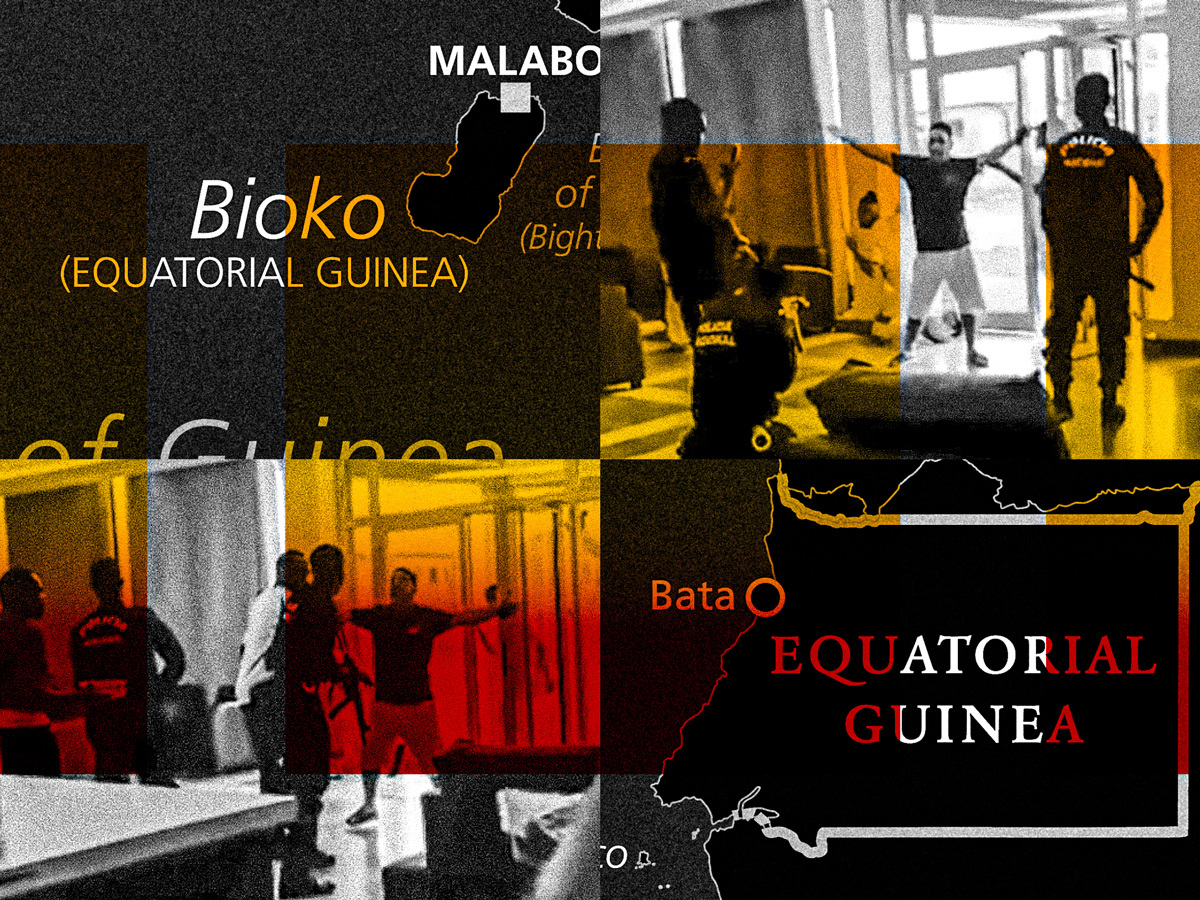
‘Shoot Him!’: Police Threaten Third-Country Nationals Imprisoned in African Hotel
‘I’m fighting for my life,’ said Ahmed Soliman after the latest in a string of abusive incidents in Equatorial Guinea, where ICE expelled him five months ago.
Mutual Aid: A Factor of Evolution
From Mutual Aid In the animal world we have seen that the vast majority of species live in societies, and that they find in association the best arms for the struggle for life: understood, of course, in its wide Darwinian sense — not as a struggle for the sheer means of existence, but as a … Continued
Military Drone Proliferation Marks Destabilizing Shift in Africa’s Armed Conflicts
A revolution in unmanned drone systems is reshaping conflicts in Africa, providing militaries tactical advantages but also risks.

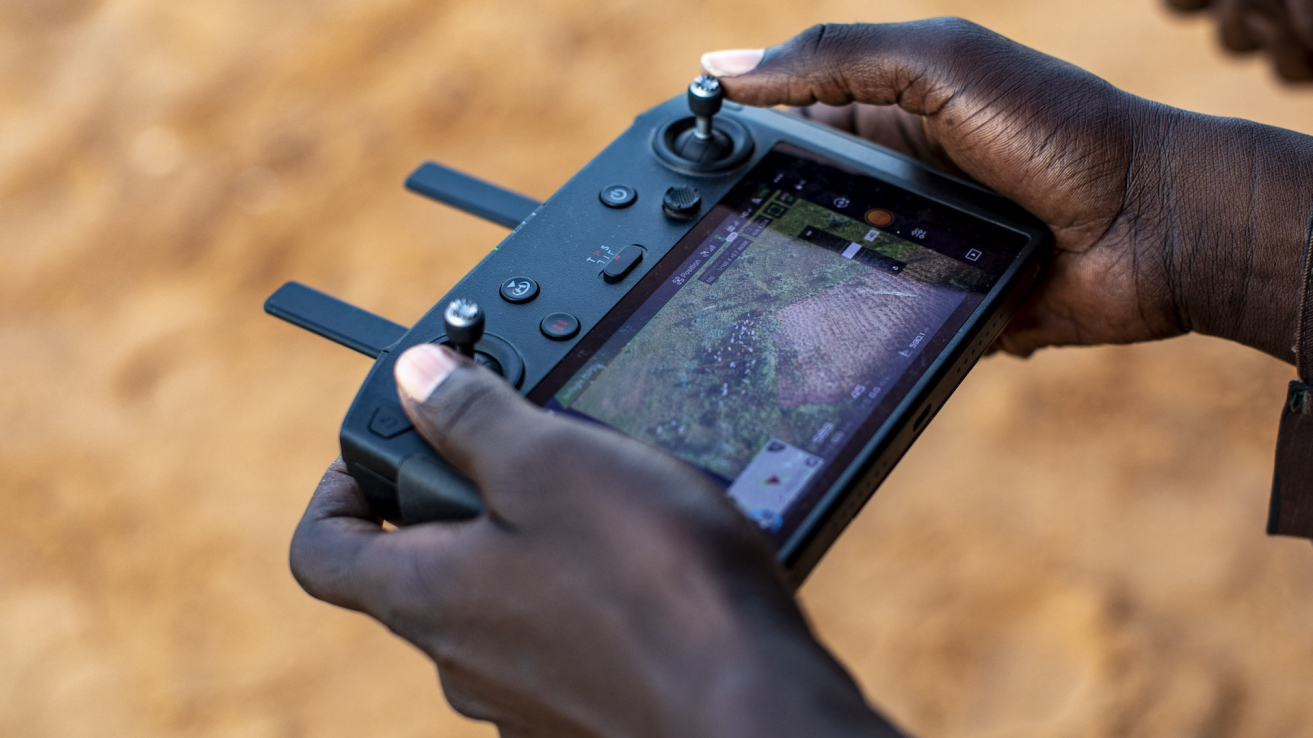
Sahel militants turn civilian drones into deadly weapons | ISS Africa
As armed groups shift away from direct confrontations with the military, commercial drones are increasingly used to carry out attacks.
The living hell of Equatorial Guinea’s missing prisoners and their families
The living hell of Equatorial Guinea’s missing prisoners and their families

Embers of society: Firelight talk among the Ju/’hoansi Bushmen
Much attention has been focused on control of fire in human evolution and the impact of cooking on anatomy, social, and residential arrangements. However, little is known about what transpired when firelight extended the day, creating effective time for social activities that did not conflict with productive time for subsistence activities. Comparison of 174 day and nighttime conversations among the Ju/’hoan (!Kung) Bushmen of southern Africa, supplemented by 68 translated texts, suggests that day talk centers on economic matters and gossip to regulate social relations. Night activities steer away from tensions of the day to singing, dancing, religious ceremonies, and enthralling stories, often about known people. Such stories describe the workings of entire institutions in a small-scale society with little formal teaching. Night talk plays an important role in evoking higher orders of theory of mind via the imagination, conveying attributes of people in broad networks (virtual communities), and transmitting the “big picture” of cultural institutions that generate regularity of behavior, cooperation, and trust at the regional level. Findings from the Ju/’hoan are compared with other hunter-gatherer societies and related to the widespread human use of firelight for intimate conversation and our appetite for evening stories. The question is raised as to what happens when economically unproductive firelit time is turned to productive time by artificial lighting.

Are We Smart Enough to Know How Smart Animals Are?
Check out Are We Smart Enough to Know How Smart Animals Are? - Hailed as a classic, Are We Smart Enough to Know How Smart Animals Are? explores the oddities and complexities of animal cognition--in crows, dolphins, parrots, sheep, wasps, bats, chimpanzees, and bonobos--to reveal how smart animals really are, and how we've underestimated their abilities for too long. Did you know that octopuses use coconut shells as tools, that elephants classify humans by gender and language, and that there is a young male chimpanzee at Kyoto University whose flash memory puts that of humans to shame? Fascinating, entertaining, and deeply informed, de Waal's landmark work will convince you to rethink everything you thought you knew about animal--and human--intelligence. by Dr Frans de Waal on Bookshop.org US!
Sapiens [Tenth Anniversary Edition]: A Brief History of Humankind
New York Times Readers’ Pick: Top 100 Books of the 21st CenturyThe tenth anniversary edition of the internationally bestselling phenomenon that cemented Yuval Noah Harari as one of the most prominent historians of our time—featuring a new afterword from the author.One hundred thousand years ago, at least six human species inhabited the earth. Today there is just one. Us. Homo sapiens. How did our species succeed in the battle for dominance? Why did our foraging ancestors come together to create cities and kingdoms? How did we come to believe in gods, nations, and human rights; to trust money, books, and laws; and to be enslaved by bureaucracy, timetables, and consumerism? And what will our world be like in the millennia to come?In Sapiens, Professor Yuval Noah Harari spans the whole of human history, from the very first humans to walk the earth to the radical—and sometimes devastating—breakthroughs of the Cognitive, Agricultural, and Scientific Revolutions. Drawing on insights from biology, anthropology, paleontology, and economics, and incorporating full-color illustrations throughout the text, he explores how the currents of history have shaped our human societies, the animals and plants around us, and even our personalities. Can we ever free our behavior from the legacy of our ancestors? And what, if anything, can we do to influence the course of the centuries to come?Bold, wide-ranging, and provocative, Sapiens integrates history and science to challenge everything we thought we knew about being human: our thoughts, our actions, our heritage...and our future.
Heterospecific social behavior in primates: insights into the evolutionary roots of pet-keeping
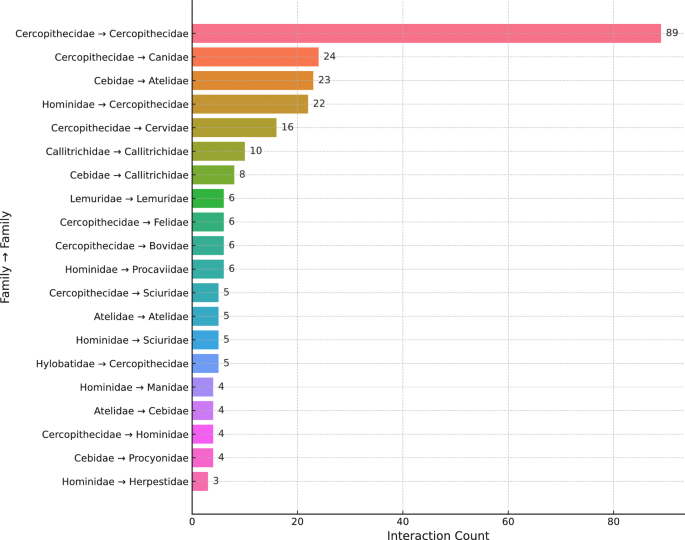
Primate interspecific interactions with both other primates and non-primate species range from predator–prey dynamics to affiliative behaviors such as grooming, play, and carrying. While many primates participate in interspecific associations or commensal relationships, to our knowledge interspecific social interactions have never been systematically synthesized. Here, we present the first comprehensive review of such interactions, compiling 427 cases from the literature, media sources, and a global survey of primatologists. These involved 88 primate species and 127 non-primate species (including mammals, birds, reptiles, amphibians, malacostracans, and insects) across wild (n = 311) and captive (n = 111) contexts. The most frequent interactions occurred within or between primate families (e.g., Cercopithecidae–Cercopithecidae, Cebidae–Atelidae), though affiliative behaviors were also directed toward distantly related taxa such as dogs and birds. Play (n = 139) and grooming (n = 136) were most common. Juveniles and infants predominantly engaged in play, while adult females were more likely to groom. Adult males were less affiliative overall. Contrary to expectations, affiliative behaviors were not more often directed toward immature than adult heterospecifics. Primates were the initiators in most interactions. These findings offer new insights into the diversity and contexts of heterospecific sociality in primates and suggest that some behavioral tendencies relevant to later forms of human–animal companionship – such as caregiving, tolerance, and exploratory play – may be more widespread among primates than previously recognized.

Links between the discovery of primates and anatomical comparisons with humans, the chain of being, our place in nature, and racism
- For more than a millennium humans knew more about the internal anatomy of a single monkey species than about that of their own bodies, because Galen used monkeys to infer human anatomy, in line wit...

(PDF) Hunters and Guides: Multispecies Encounters between Humans, Honeyguide Birds and Honeybees
PDF | This paper discusses the relationship between humans and honeyguide birds (Indicator indicator) in the Adamaoua Region of Cameroon. Throughout... | Find, read and cite all the research you need on ResearchGate
