[Provisions relevant to the enactment of this regulation: Environmental Management Act, S.B.C. 2003, c. 53, ss. 75 and 138.]
As Europe swelters, Paris judges say consumers aren’t to blame — TotalEnergies is
A Paris judicial tribunal has just ruled on a case brought against TotalEnergies by environmental groups and the City of Paris. The judgment does not halt the company's fossil-fuel expansion. But it does something the industry has spent half a century resisting: it holds TotalEnergies legally responsible not just for the emissions from its operations, but for the emissions produced when the oil and gas it sells are ultimately burned.

When the natural gas industry used the playbook from Big Tobacco
As early as the 1970s, research showed that gas stoves produced indoor air pollution.

The fallout from the AI-fuelled dash for gas
A supply crunch in giant turbines for gas-powered plants threatens environmental and geopolitical consequences

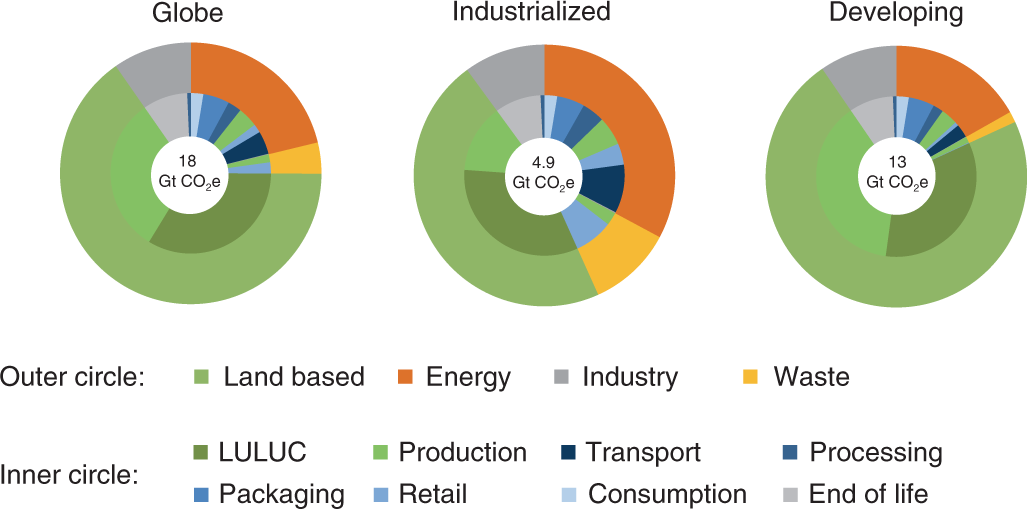
Food systems are responsible for a third of global anthropogenic GHG emissions
We have developed a new global food emissions database (EDGAR-FOOD) estimating greenhouse gas (GHG; CO2, CH4, N2O, fluorinated gases) emissions for the years 1990–2015, building on the Emissions Database of Global Atmospheric Research (EDGAR), complemented with land use/land-use change emissions from the FAOSTAT emissions database. EDGAR-FOOD provides a complete and consistent database in time and space of GHG emissions from the global food system, from production to consumption, including processing, transport and packaging. It responds to the lack of detailed data for many countries by providing sectoral contributions to food-system emissions that are essential for the design of effective mitigation actions. In 2015, food-system emissions amounted to 18 Gt CO2 equivalent per year globally, representing 34% of total GHG emissions. The largest contribution came from agriculture and land use/land-use change activities (71%), with the remaining were from supply chain activities: retail, transport, consumption, fuel production, waste management, industrial processes and packaging. Temporal trends and regional contributions of GHG emissions from the food system are also discussed.
Assessment of next steps to promote the energy performance and sustainability of data centres in EU, including the establishment of an EU-wide rating scheme
This document represents the deliverable 'Second Technical Report' for the project Study on Technical Assistance in support of implementing Article 12(5) of Directive 2023/1791 on the energy performance and sustainability of data centres, and has been produced by EY, AIT and Borderstep for the European Commission. The technical report assesses data centre energy efficiency and sustainability, and the reporting scheme of the Delegated Regulation 2024/1364. It uses reported data, supplemented where necessary, and evaluates energy performance via sustainability and key performance indicators. The report also addresses data quality/completeness and proposes reporting scheme improvements, including information/indicators and user experience.
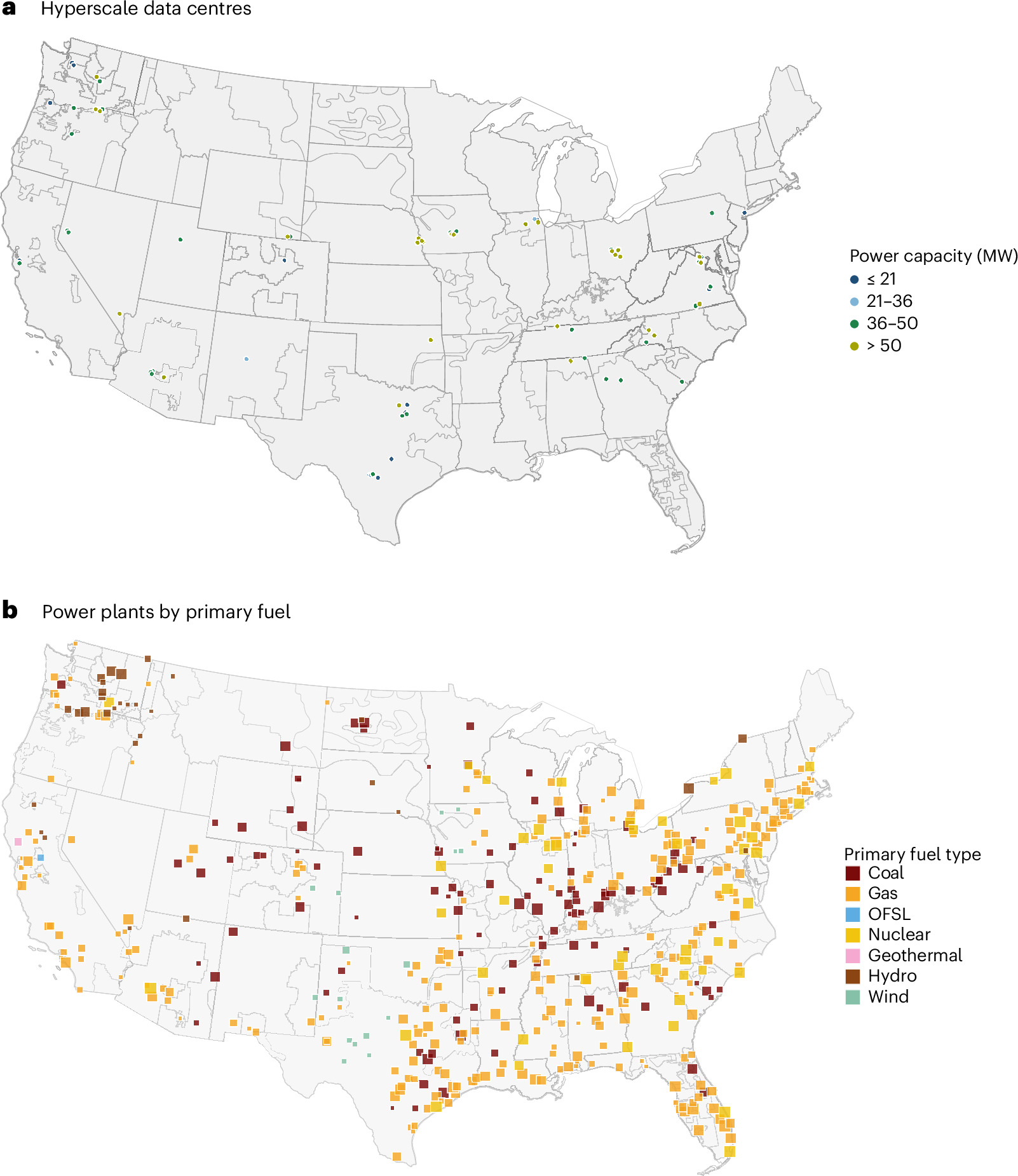
Assessing the carbon emissions and energy consumption of US hyperscale data centres
The rapid proliferation of hyperscale data centres (HDCs) in the USA—mainly driven by the adoption of artificial intelligence—has raised concerns about this industry’s carbon footprint. We compiled facility-level information on 403 US hyperscale data centres operating between May 2024 and April 2025 and estimated their electricity consumption, electricity sources and attributable CO2 emissions. Across facility-load scenarios, these HDCs consumed approximately 68–99 TWh of electricity and were associated with approximately 21–31 million metric tons of CO2 under a location-based, total-output balancing-authority attribution method. Under the central scenario, HDC electricity demand was approximately 82 TWh, corresponding to about 1.8% of total US electricity consumption, and attributable CO2 emissions were approximately 25.7 Mt. Roughly 54% of attributed generation was supplied by fossil-fuel sources. The HDC electricity-weighted total-output carbon intensity was approximately 314 gCO2 kWh−1, compared with a US total-output average of approximately 348 gCO2 kWh−1. Our approach provides a facility-resolved attributional framework for assessing the carbon footprint of hyperscale data centres using plant-level electricity-generation and emissions data.
Trump’s EPA Will Let Power Companies Unleash Unlimited Greenhouse Gas Pollution
Trump's EPA announced new changes that will eliminate federal limits on greenhouse gas emissions produced by power plants.
Global Carbon Budget Means Canada’s Fossil Fuels a Risky Investment | The Narwhal
In its latest report the Intergovernmental Panel on Climate Change (IPCC) gave global greenhouse gas emissions a worldwide limit, know as the global

‘Smoking gun proof’: fossil fuel industry knew of climate danger as early as 1954, documents show
Documents show industry-backed Air Pollution Foundation uncovered the severe harm climate change would wreak

Assessment of the energy performance and sustainability of data centres in EU: first technical report.
This document represents the deliverable ‘First Technical Report’ for the project Study on Technical Assistance in support of implementing Article 12(5) of Directive 2023/1791 on the energy performance and sustainability of data centres, and has been produced by EY, AIT and Borderstep for the European Commission. The technical report assesses data centre energy efficiency and sustainability, and the reporting scheme of the Delegated Regulation 2024/1364. It uses reported data, supplemented where necessary, and evaluates energy performance via sustainability and key performance indicators. The report also addresses data quality and completeness and proposes improvements for the reporting scheme, including in terms of the reported information and indicators and user experience.
Energy performance of data centres
The Commission’s energy efficiency package for data centres will complement existing EU rules for data centres under the Energy Efficiency Directive.

Self-Burn
Thanks to Trump, people around the world are scrambling to get out of fossil fuels.

G. B. National Grid status
Use by other organisations is strictly prohibited without prior consent
Will Canada’s gas tax holiday drive up emissions and help the rich? | The Narwhal
The Carney government is keeping its tax off at gas pumps to help with the cost of living, but critics call it a subsidy for the oil and gas industry that won’t help those who need it most

Energy Policy | The Australian Greens
All of our state policy principles and aims should be read alongside our relevant federal policy principles and aims, as well as our state campaigns and federal campaigns.