

Part 4 — Use of Recreation Sites, Recreation Trails, Interpretive Forest Sites and Wilderness Areas
National Park Service: Public Use of the National Park System (1872-2000): Chapter 9
The first part of this section reviews basic ideas for dispersing visitors outside the System. While merit is seen in some of these ideas, the conclusion is reached that at best they can make only a limited contribution to regulating mounting park travel because there is no substitute for a visit to a national park. The second part of this section then reviews concepts and methods for regulating public use inside the parks through park developments, land classification, including wilderness area designations, and vehicular controls, including new transportation systems.
State of Conservation Technology | WILDLABS
Explore insights from the first community-sourced assessment of the State of Conservation Technology

Protect our Living Legends - Woodland Trust
Many of our oldest and most special trees are not legally protected. Urge Government to change the law and prevent further tragedy.
Public trees
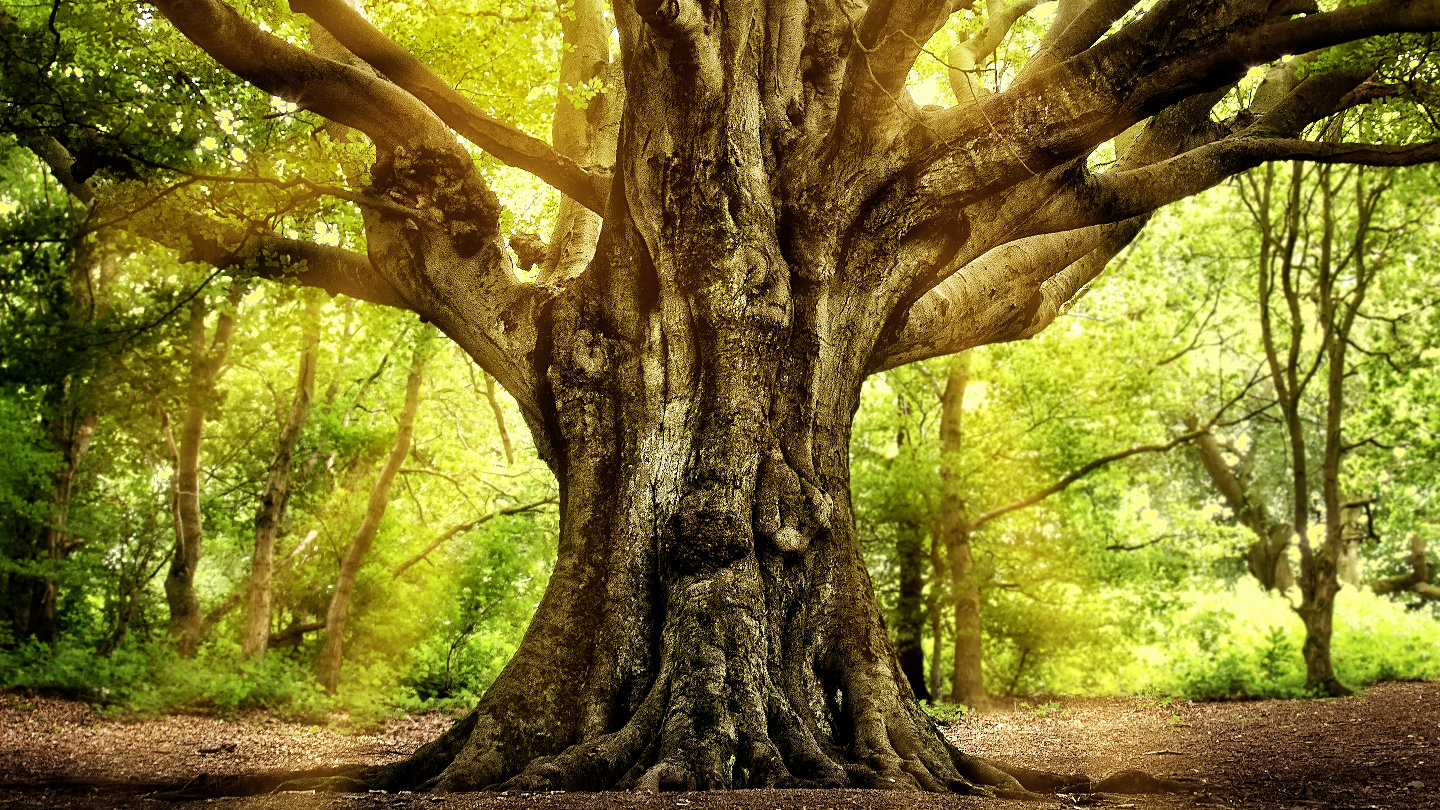
The public tree dataset includes a listing of public trees on boulevards and public trees in parks, in the City of Vancouver and provides data on tree coordinates, species and other related characteristics. Private trees are not included in the inventory.Tree records that do not have coordinates data will not show up in the list. Data currencyThe dataset refreshes daily on weekdays. Tree attributes are updated on a regular basis but it may be several years between updates for some attributes. Priorities and resources determine how fast a change in reality is reflected in the data. The coordinates were originally provided by the 2016 Geospatial Data for City of Vancouver Street Trees project. Data accuracyTree attributes are updated on a regular basis but it may be several years for some attributes. Note: 0 value in latitude and longitude fields mean there is no related information available Websites for further informationStreet Tree BylawCity trees

Measuring biodiversity: research into approaches
This report considers methodologies for measuring biodiversity at site-level for use in Scotland.

Volunteer
Back in 1952 a group of people formed the Victorian National Parks Association as part of a successful campaign for a national parks system that would ensure the protection of our precious wild places.
Guide to the Ronald F. Lee Papers (U.S. National Park Service)
Guide to the Ronald F. Lee Papers

Ivan Illich and Silence as a Commons | David Bollier
Scott Silver, executive director of Wild Wilderness, calls it the “corporate takeover of nature and the Disneyfication of the wild.” He’s referring the American Recreation Coalition, an industry trade association, and its new “Scenic Byways” website that proposes inserting “tonal patterns” into roadways as a new form of “innovative communication” (i.e., advertising). Kym Murphy, the former v.p. for environmental policy at the Walt Disney Company, explains:
EARTHKIN WILD
At Earthkin Wilderness School we hold that a deep relationship with nature, community, and self is essential to discovering one’s unique gifts so that cultural transformation rooted in earth-based ways can take place. We offer ancestral skills training, immersive experiences in the wild, deep nature connection programs, and primal movement practices for those looking for land-based learning and reconnection in the coast mountains of BC.
In Pictures: The Possibilities of Vancouver’s New Villages Plan | Sightline Institute
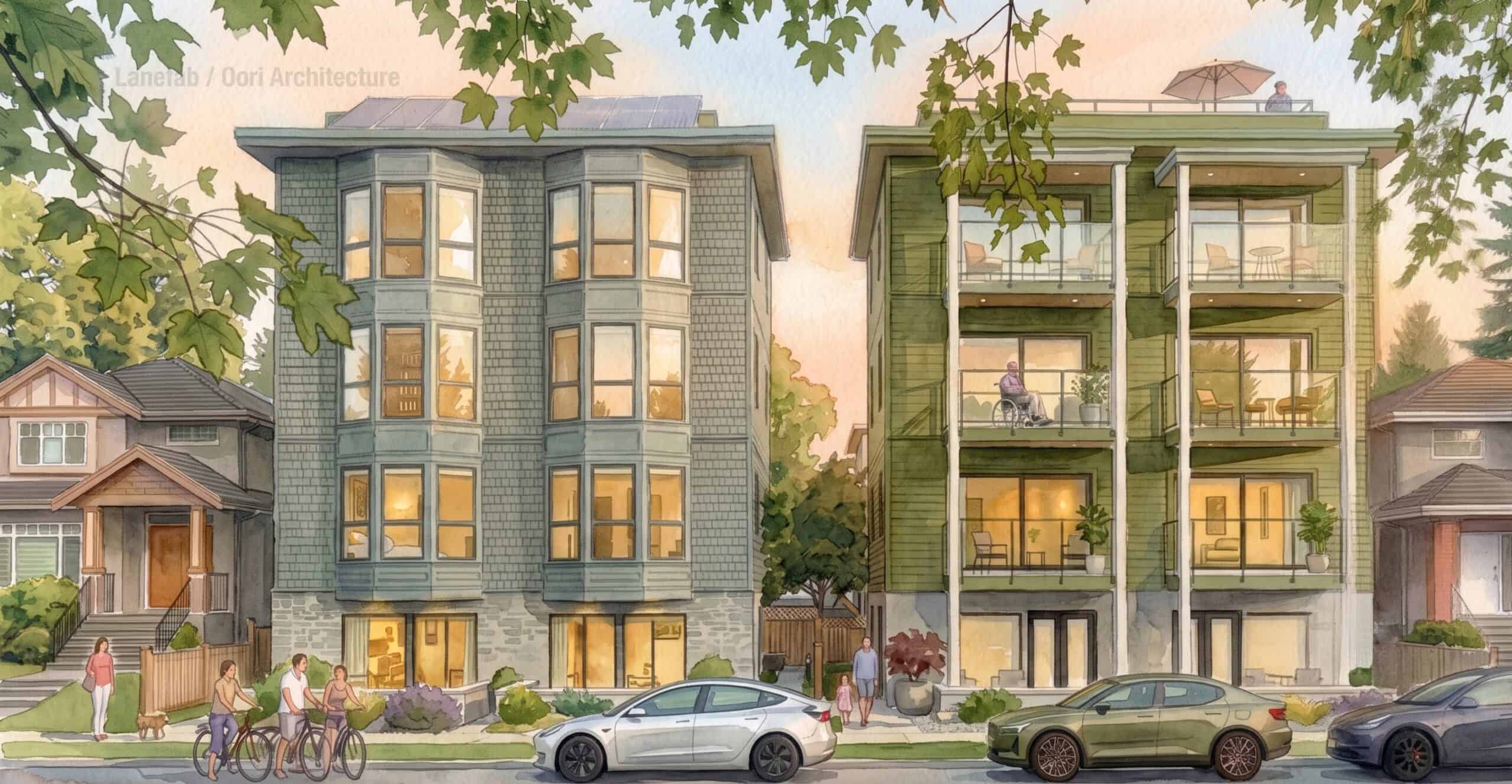
The Four/Five design prioritizes green space, daylight, affordability, and accessibility—all for greater connection and community.
Thinning
This page highlight research produced in British lumbia focused on tree thinnning as it relates to forestry practices.
Metrics for biodiversity and health policy integration
Despite over a decade of progressive commitments from parties to the Convention on Biological Diversity (CBD), integrated biodiversity and health indicators and monitoring mechanisms remain limited, hampering achievement of the sustainable development goals and improvements in health and well-being. Adoption of the Kunming-Montreal Global Biodiversity Framework (2022) and the Global Action Plan on Biodiversity and Health (2024) provide a renewed entry point to shape the way governments approach health and wellbeing and address the environmental burden of disease. This is a critical opportunity that scholars at the health-environment nexus should not miss. This Perspective outlines building blocks to mobilize the field, starting with essential terminology and a scope of metrics needed by governments. We then evaluate elements to be considered in the construction of integrated metrics, including concepts, overarching challenges, a review of scientific hypotheses from an ecological perspective, as well as a set of principles and characteristics for indicators. To raise awareness across parallel communities of practice working at the health-environment nexus, we then briefly examine four approaches to integrated metrics developed by: conservationists, Indigenous scholars, One Health experts, and planetary health experts. We conclude with actionable steps to enhance governance, mobilize funding, and apply integrated indicators in national and global strategies. A broad science community is needed to support national governments to meet global commitments to address biodiversity loss and the environmental burden of disease concurrently. The overall aim of this paper is to contribute to addressing biodiversity loss by effectively linking policy and transdisciplinary practice at the health-environment nexus.

Tackling the Nature Emergency - strategic framework for biodiversity: consultation
A consultation on Scotland’s Strategic Framework for Biodiversity, including the first 5-year Delivery Plan for the Scottish Biodiversity Strategy, and elements of the proposed Natural Environment Bill.
Local BC News Headlines - Curated by CivicInfo BC (@bcheadlines.bsky.social)
Links to stories about British Columbia local governments and First Nations, posted Mondays though Fridays, excluding holidays. Also on Mastodon.