

Rather than money accumulating into fewer private hands, not-for-profit businesses loop their profits back into the economy. Rather than money going into someone’s bank account, it comes back into the system. This is not the same as a non-profit, which may not have a business model. These are businesses that make a profit but do not extract that capital but rather circulate it
Denizen
What are some of the fundamental flaws of capitalism? How might we instantiate a market-based economy that is growth agnostic?
Putting Post Growth Theory Into Practice
The Post Growth Entrepreneurship Incubator helps founders break free from traditional business models and implement sustainable…

Denizen
What is out there, now, that represents a market-based economy beyond capitalism? Post Growth Institute Founder Donnie Maclurcan shares his views on what's working around the world today and his theory of change towards the next economy.
America's Growth Ponzi Scheme | Strong Towns
The American pattern of development creates the illusion of wealth. Today we are in the process of seeing that illusion destroyed…and with it the prosperity we have come to take for granted.
Entrepreneuring for a Post-Growth Economy: From Sustainable to Post-Growth Entrepreneurship
Earth's critical planetary boundaries are being exceeded and current economic development models are failing to provide adequate societal benefits. Urgent

Is America Encouraging the Wrong Kind of Entrepreneurship?
In a 1990 paper, “Entrepreneurship: Productive, Unproductive, and Destructive,” late economist William Baumol argued that not all entrepreneurs are equal: there are both “productive” and “unproductive” endeavors. Most people think of all entrepreneurship to be what Baumol referred to as the “productive” kind, where the companies that founders launch commercialize something new or better, benefiting society and themselves in the process. Baumol was worried, however, by a very different sort of entrepreneur, the “unproductive” ones who exploit special relationships with the government to construct regulatory moats, secure public spending for their own benefit, or bend specific rules to their will — in the process, stifling competition to create advantage for their firms. Two recent trends indicate that this may be happening in the U.S. today: rising profits, especially those earned by the largest businesses in the economy, and suggestive evidence of an increase in efforts to shape the rules of the game. Baumol may have been ahead of his time. If the U.S. is going to tackle its many problems, we are going to have to find ways to encourage would-be entrepreneurs to start innovative, productive businesses, rather than dedicating their efforts to co-opting government in order to secure economic advantage.
Revenue-based financing
Revenue-based financing (also known as royalty financing[1] or royalty-based financing[2]) is a type of financial capital provided to growing businesses in which investors inject capital (sometimes called an advance) into a business in return for a fixed percentage of ongoing gross revenues (called royalties), with payment increases and decreases based on business revenues, typically measured as monthly revenue.[1][3]
Revenue Models (2026): 19 Different Ways to Make Money [B2B & B2C] - Gust de Backer
So many different revenue models... But, which one fits your business? Over the past few decades, many new revenue models have proven to be profitable. That's why I'm going to show you 16 different revenue models so you can evaluate if there might be a better way to monetize the value you deliver to your customer. Let's start... What is…

Anthropic employees say they’ll give away billions. Where will it go?
A coming wave of Anthropic wealth could flood EA-aligned nonprofits with cash. Whether that’s good depends on who you ask

Uneconomic growth
Uneconomic growth is economic growth that reflects or creates a decline in the quality of life. The concept is used in human development theory, welfare theory, and ecological economics. It is usually attributed to ecological economist Herman Daly, though other theorists may also be credited for the incipient idea, According to Daly, "uneconomic growth occurs when increases in production come at an expense in resources and well-being that is worth more than the items made." The cost, or decline in well-being, associated with extended economic growth is argued to arise as a result of "the social and environmental sacrifices made necessary by that growing encroachment on the eco-system."

Capitalism and Degrowth: An Impossibility Theorem - Monthly Review
A slightly different version of this article was published under the title “Degrow or Die?” in the December/January 2011 issue of the UK journal Red Pepper, for which it was... READ MORE

The Profit Paradox
Philanthropy 2.0: What the Evolution of For-Profit Investment Tells Us About the Future of Giving
Gaps in philanthropic funding for era-defining science and discovery demand a new approach. In this piece, we look at how learning from venture capital is a game changer for catalytic philanthropy.

Philanthropy 2.0: What the Evolution of For-Profit Investment Tells Us About the Future of Giving
Gaps in philanthropic funding for era-defining science and discovery demand a new approach. In this piece, we look at how learning from venture capital is a game changer for catalytic philanthropy.
novel funding mechanisms

funding models that doesn't depend on VC. funding models that keep things accessible and open but yet provide enough incentive for people to pay
Post-growth & Regenerative Economics

Articles, podcasts, papers and books about alternative, pro-social models of finance and economics.
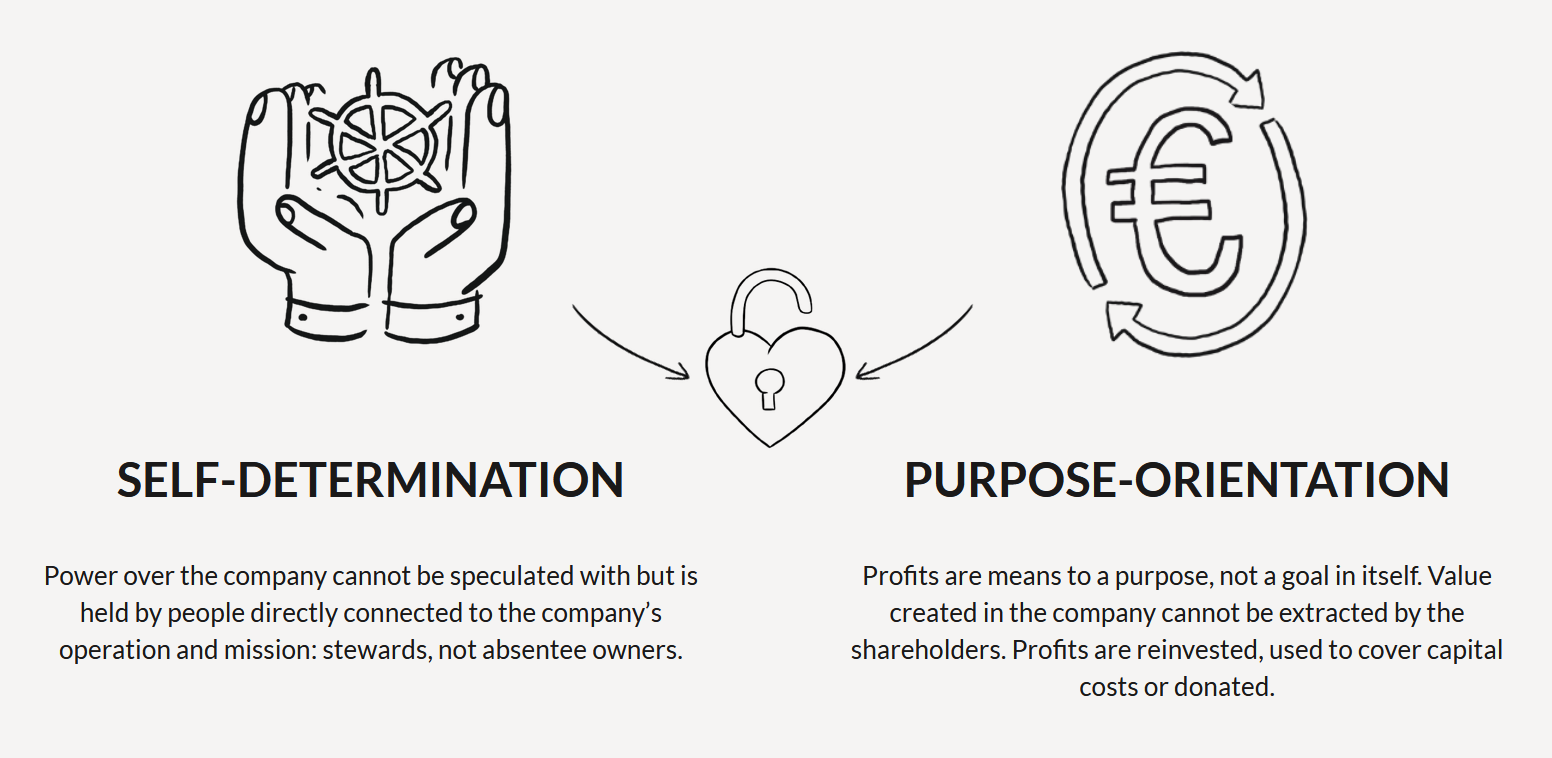
Company as a Commons

x402
Let's Talk Money - Interlinked

Home | Sovereign Tech Agency

The future is low-tech: lessons from the early 2000s ft. Jésabel DC | Config 2026
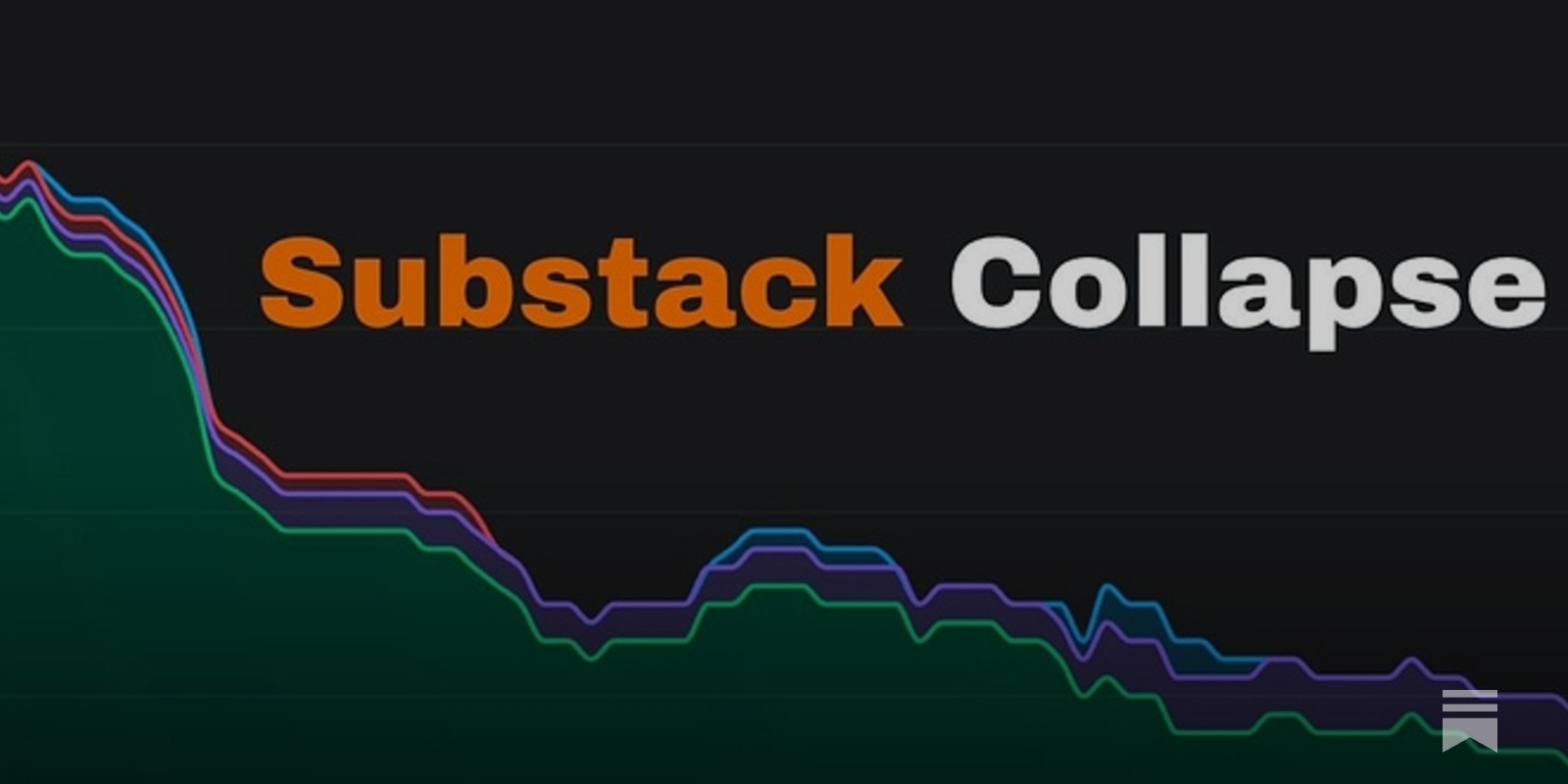
The Real Reason that Substack is Collapsing
www.sciencedirect.com

Post-growth: the science of wellbeing within planetary boundaries
SEED Founding

Making Business Personal
Think Like a Commoner | A Short Introduction to the Life of the Commons
Design principles for long-lived circular organization: An Ostromian perspective