The preprint ecosystem has expanded rapidly over the past decade, fundamentally altering science communication. Yet, the scholarly community’s attitudes toward this shift remain underexplored. Through a large-scale survey of US and Canadian biomedical scholars, we provide a comprehensive analysis of preprint utilization, perceived impact, and integration into academic credit systems. We find robust engagement across reading, citing, and submitting preprints; however, this activity is driven primarily by a desire for rapid dissemination rather than a foundational commitment to open science. Furthermore, while preprints are valued as networking assets, perceived career penalties during formal academic evaluations stifle broader cultural adoption. Crucially, to navigate the absence of formal peer review, scholars report a heavy reliance on author reputation as a primary heuristic to evaluate a preprint’s credibility and guide their reading and citation decisions. Notably, despite acknowledging preprints’ role in accelerating knowledge sharing, scholars express significant concerns regarding fraud and misinformation, particularly amid declining public trust in science and emerging threats to scientific integrity from artificial intelligence. To resolve these tensions, the preprint ecosystem must evolve beyond prioritizing speed to foster genuine academic dialogue. Simultaneously, evaluation frameworks must adapt to the realities of preprinting, and innovative quality-control mechanisms are urgently needed to balance rapid dissemination with rigorous scientific integrity.
A New Paradigm for Scientific Publishing, Peer Review, and Impact Assessment
Scientific publishing and peer review have evolved little in three centuries, while the demands placed on them have grown profoundly. The growing role of artificial intelligence has underscored deep, systemic shortcomings of an aging system that has largely evaded innovation, a system whose origins are appallingly closer to the invention of the printing press than to the internet. We can do better – much better. This article is intended as the beginning of a communal experiment: a living document that critically reviews the modern academic publishing and peer-review system and presents a concrete framework to address what bibliometrics experts¹ have characterized as "the pervasive misapplication of indicators to the evaluation of scientific performance". Building on the Leiden Manifesto, DORA, and a body of scholarship spanning many disciplines and decades, we present a community-governed, non-profit platform organized around three trust-weighted impact factors, for articles, authors, and reviewers, with full algorithmic transparency, an open development log, and structural decoupling of credibility scoring from content moderation and from monetization. We invite the community to discuss, critique, and help shape it.
The Discovery Engine: A Framework for AI-Driven Synthesis and Navigation of Scientific Knowledge Landscapes
Scientific progress relies on the effective accumulation, synthesis, and critical evaluation of knowledge. Traditionally, the well-documented, peer reviewed publication served as the primary standard for filtering and disseminating credible findings within the scientific community. Recently, however, we are witnessing an unprecedented acceleration in research output, a veritable explosion of scientific publications across all disciplines [1]. Yet, this very abundance creates a paradox: the sheer volume threatens to overwhelm the mechanisms designed for its assimilation and synthesis. Researchers, even within highly specialized subfields, face an almost insurmountable challenge in keeping abreast of relevant developments, integrating disparate findings, and identifying the truly novel signals amidst the noise [2]. This information overload contributes to disciplinary fragmentation, hindering the cross-pollination of ideas essential for disruptive innovation [3]. Furthermore, persistent concerns regarding "reproducibility crisis" [2], predatory journals, inflation of research areas[4], growing retractions and the potential influences of bibliometrics on research direction [5] highlight systemic challenges in validating and prioritizing scientific contributions to fundamental knowledge.
The Peer Review Crisis Demands Radical Reform: Why Reviewers Should Become Paid Professional Referees
The peer review system, fundamental to scientific quality control, faces a significant crisis. As journal editors, we often need to send up to 35 invitations just to secure two reviewers, confronting daily the collapse of voluntary participation. This reflects a critical imbalance: while publication pressure intensifies, willingness to evaluate diminishes, creating "literature elephantiasis", i.e., an overwhelming proliferation of papers exceeding human processing capacity. Current compensation models, relying on token recognition and database access, fail to incentivize quality engagement and may encourage ethically problematic practices like excessive self-citation. The unchecked infiltration of artificial intelligence into peer review, with minimal enforcement, further undermines system integrity. We propose transforming peer reviewers into professional referees, modeled on sports officiating. This radical solution involves formal training and certification for reviewers, equipping them to assess scientific merit, methodology, and ethics comprehensively. Like sports referees supported by assistants, scientific referees would collaborate with specialists - including statisticians, methodology experts, and reference checkers - ensuring thorough evaluation while distributing workload effectively. Funding would come from publishers or research funders, recognizing peer review as an essential, compensated component of the research lifecycle. Implementation faces challenges including publisher resistance and funding allocation, which we address through phased transition strategies. This professionalization addresses current inequities where conscientious scientists shoulder disproportionate reviewing burdens while others contribute minimally. Professional reviewers would view evaluation as valued career development rather than unwelcome obligation. Critics citing independence concerns overlook the sports analogy: referees maintain impartiality through professional standards despite league compensation. Quality scientific evaluation requires dedicated expertise, adequate training, and fair remuneration. Science deserves better than a system dependent on goodwill and guilt - it needs professional referees now.

Unequal Scientific Recognition in the Age of LLMs
Large language models (LLMs) are reshaping how scientific knowledge is accessed and represented. This study evaluates the extent to which popular and frontier LLMs including GPT-4o, Claude 3.5 Sonnet, and Gemini 1.5 Pro recognize scientists, benchmarking their outputs against OpenAlex and Wikipedia. Using a dataset focusing on 100,000 physicists from OpenAlex to evaluate LLM recognition, we uncover substantial disparities: LLMs exhibit selective and inconsistent recognition patterns. Recognition correlates strongly with scholarly impact such as citations, and remains uneven across gender and geography. Women researchers, and researchers from Africa, Asia, and Latin America are significantly underrecognized. We further examine the role of training data provenance, identifying Wikipedia as a potential sources that contributes to recognition gaps. Our findings highlight how LLMs can reflect, and potentially amplify existing disparities in science, underscoring the need for more transparent and inclusive knowledge systems.
Center for Open Science
At the Center for Open Science, our mission is to increase openness, integrity, and reproducibility of scholarly research. Promoting these practices within the research funding and publishing communities accelerates scientific progress

The Research Nexus vision for a more connected scholarly community
Crossref envisions “a rich and reusable open network of relationships connecting research organizations, people, things, and actions; a scholarly record that the global community can build on forever, for the benefit of society”. This Research Nexus expands on the importance of research objects being persistently and uniquely identified. The scholarly community has an established practice of connecting things such as citations to others’ work and it is increasingly critical to identify relationships beyond citations, bringing together published work, unpublished work, institutions, individuals, and identifying the actions that they take e.g., funding, publishing, creating, modifying, citing, and sharing. The Research Nexus brings together metadata and relationships to build a joined-up picture of the scholarly ecosystem and helps everyone identify these relationships and how they change through time. This vision is possible if all parts of the scholarly ecosystem (and beyond) work together, including various scholarly infrastructure organizations.

Scientific production in the era of Large Language Models
Large Language Models (LLMs) are rapidly reshaping scientific research. We analyze these changes in multiple, large-scale datasets with 2.1M preprints, 28K peer review reports, and 246M online accesses to scientific documents. We find: 1) scientists adopting LLMs to draft manuscripts demonstrate a large increase in paper production, ranging from 23.7-89.3% depending on scientific field and author background, 2) LLM use has reversed the relationship between writing complexity and paper quality, leading to an influx of manuscripts that are linguistically complex but substantively underwhelming, and 3) LLM adopters access and cite more diverse prior work, including books and younger, less-cited documents. These findings highlight a stunning shift in scientific production that will likely require a change in how journals, funding agencies, and tenure committees evaluate scientific works.

How contemporary academic structures constrain scientific creativity and hold back early-career researchers
We argue that contemporary scientific systems progressively constrain high-risk and conceptually innovative research while being increasingly structured around short funding cycles, productivity-based evaluation criteria and risk-averse frameworks that favour predictable and non-transformative research outputs. Drawing on recent empirical literature, we show how such systems can place disproportionate pressure on early-career researchers by incentivizing safe, tractable and easily evaluated outputs. Structural academic mechanisms such as peer review and funding, escalating publication costs and institutional inequalities interact with precarious employment and hierarchical dependencies. In this environment, we contend that strategic conformity becomes a rational career path. This risks suppressing creativity and critical thinking precisely at the stage when scientific independence could otherwise emerge. Consequently, the probability of substantive contributions by early-career researchers is declining, while talent may increasingly abandon academia or cluster within a limited number of well-resourced institutions and national systems. By adopting a systems-level perspective, we argue that scientific creativity is not merely an individual trait but an emerging property of a supportive academic landscape and that maintaining or restoring it may require substantial structural reforms. These include promoting stable research pathways, decentralized decision-making and evaluation frameworks that better recognize collaboration, originality, persistence and nonlinear career trajectories. Without systemic change, we risk stifling the potential of early-career researchers to go beyond the confines of existing methods and approaches and deliver transformative advances. This would limit their capacity to meaningfully change our understanding of the world or benefit society, with impacts that fall short of their potential.
AI and the Future of Science
Reformation of science publishing: the Stockholm Declaration
Science relies on integrity and trustworthiness. But scientists under career pressure are lured to purchase fake publications from ‘paper mills’ that use AI-generated data, text and image fabrication. The number of low-quality or fraudulent publications is rising to hundreds of thousands per year, which—if unchecked—will damage the scientific and economic progress of our societies. The result is editor and reviewer fatigue, irreproducible experiments, misguided experiments, disinformation and escalating costs that devour funding from taxpayers intended for research. It is high time to reevaluate current publishing models and outline a global plan to stop this unhealthy development. A conference was therefore organized by the Royal Swedish Academy of Sciences to draft an action plan with specific recommendations, as follows. (i) Academia should resume control of publishing using non-profit publishing models (e.g. diamond open-access). (ii) Adjust incentive systems to merit quality, not quantity, in a reputation economy where the gaming of publication numbers and citation metrics distorts the perception of academic excellence. (iii) Implement mechanisms to prevent and detect fake publications and fraud which are independent of publishers. (iv) Draft and implement legislations, regulations and policies to increase publishing quality and integrity. This is a call to action for universities, academies, science organizations and funders to unite and join this effort.
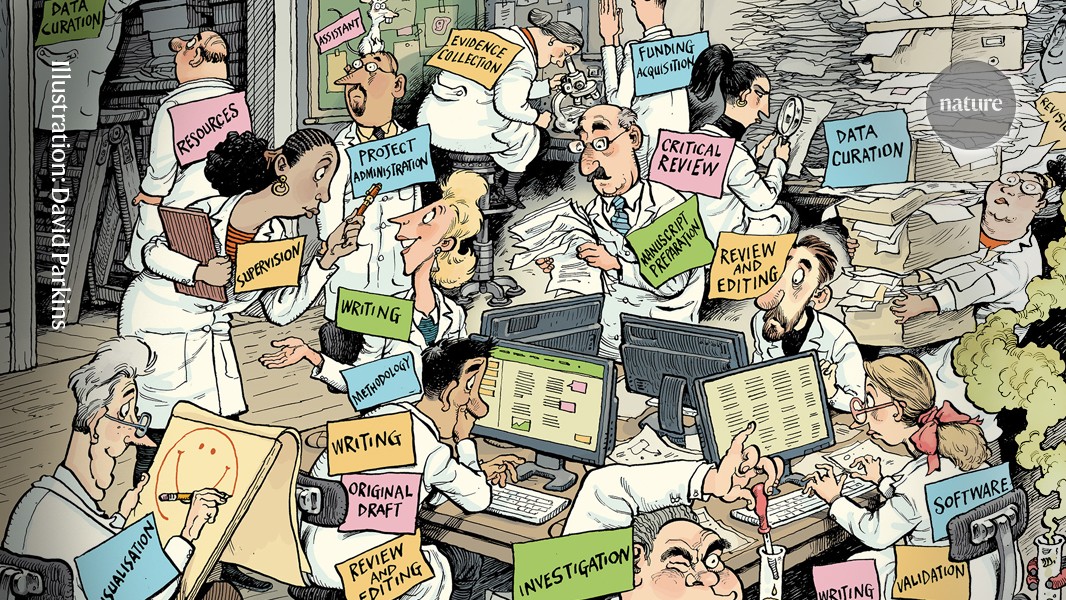
A ten-year drive to credit authors for their work — and why there’s still more to do
Nature - Information about the roles of each author of a paper can help to build trust, integrity and responsible research assessment. Coordinated efforts are needed to consolidate progress.
Peer Review at the Crossroads
Peer review has long been regarded as a cornerstone of scholarly communication, ensuring high quality and credibility of published research. Although academic journals trace their origins back three centuries, the procedures for evaluating submissions, particularly peer review, have undergone continuous evolvement. Peer review’s formal institutionalization in the mid-20th century represents a significant, yet natural, phase in this ongoing transformation of scholarly communication. By the early 21st century, there emerged an opinion that the conventional model of peer review faces systematic challenges, including inefficiency, bias, and institutional inertia. The study aims to synthesize the evolution, practices, and outcomes of both conventional and innovative peer review models in scholarly publishing. Through a mixed-methods approach combining interpretative literature review and process modeling (Business Process Model and Notation –BPMN), it identifies four frameworks: pre-publication peer review, registered reports, modular publishing, and the Publish-Review-Curate (PRC) model. While the PRC model, which integrates preprints with post-publication review, demonstrates advantages in transparency and accessibility, no single approach emerges as universally ideal. The choice of model depends on disciplinary context, resource availability, and institutional priorities. The analysis underscores the need for adaptable platforms that enable hybrid workflows, balancing rigor with inclusivity. Future research must address empirical gaps in evaluating these innovations, particularly their long-term impact on equity and epistemic norms.
Screening, sorting, and the feedback cycles that imperil peer review
Scholarly journals rely on peer review to identify the science most worthy of publication. Yet finding willing and qualified reviewers to evaluate manuscripts has become an increasingly challenging task, possibly even threatening the long-term viability of peer review as an institution. What can or should be done to salvage it? Here, we develop mathematical models to reveal the intricate interactions among incentives faced by authors, reviewers, and readers in their endeavors to identify the best science. Two facets are particularly salient. First, peer review partially reveals authors’ private sense of their work’s quality through their decisions of where to send their manuscripts. Second, journals’ reliance on traditionally unpaid and largely unrewarded review labor deprives them of a standard market mechanism—wages—to recruit additional reviewers when review labor is in short supply. We highlight a resulting feedback loop that threatens to overwhelm the peer review system: (1) an increase in submissions overtaxes the pool of suitable peer reviewers; (2) the accuracy of review drops because journals must either solicit assistance from less qualified reviewers or ask current reviewers to do more; (3) as review accuracy drops, submissions further increase as more authors try their luck at venues that might otherwise be a stretch. We illustrate how this cycle is propelled by the increasing emphasis on high-impact publications, the proliferation of journals, and competition among these journals for peer reviews. Finally, we suggest interventions that could slow or even reverse this cycle of peer-review meltdown.
Artificial intelligence tools expand scientists’ impact but contract science’s focus
Developments in artificial intelligence (AI) have accelerated scientific discovery1. Alongside recent AI-oriented Nobel prizes2–9, these trends establish the role of AI tools in science10. This advancement raises questions about the influence of AI tools on scientists and science as a whole, and highlights a potential conflict between individual and collective benefits11. To evaluate these questions, we used a pretrained language model to identify AI-augmented research, with an F1-score of 0.875 in validation against expert-labelled data. Using a dataset of 41.3 million research papers across the natural sciences and covering distinct eras of AI, here we show an accelerated adoption of AI tools among scientists and consistent professional advantages associated with AI usage, but a collective narrowing of scientific focus. Scientists who engage in AI-augmented research publish 3.02 times more papers, receive 4.84 times more citations and become research project leaders 1.37 years earlier than those who do not. By contrast, AI adoption shrinks the collective volume of scientific topics studied by 4.63% and decreases scientists’ engagement with one another by 22%. By consequence, adoption of AI in science presents what seems to be a paradox: an expansion of individual scientists’ impact but a contraction in collective science’s reach, as AI-augmented work moves collectively towards areas richest in data. With reduced follow-on engagement, AI tools seem to automate established fields rather than explore new ones, highlighting a tension between personal advancement and collective scientific progress.

A budding discipline around how science gets read and judged - Aris
Scholarly publishing spent thirty years arguing about access. It has barely begun arguing about what readers do with the paper once they have it. At Aris we call that second argument scholarly interface design. Mike Morrison's community calls it ScienceUX. Either way it is becoming a field, and here is why it is worth your attention.
Reclaiming scientific publishing: Our duty to make science freely accessible to all
When we (Camille Thomas and Romain Vaucher speaking) entered academia as graduate students in France and Switzerland, we were enthusiastic about the vast amount of research available with a simple click on our university computers. However, we also quickly felt disheartened by the significant amount of research work we couldn’t access when wrapping up our theses from home. Luckily, pirates existed. Empowered by Aaron Swartz’s Guerilla Open Access Manifesto, Alexandra Elbakyan created Sci-Hub in 2011, the greatest leak of scientific knowledge of the century. We felt right in the middle of an Open Access (OA) revolution that would finally make all scientific articles, old and new, accessible to everyone. Fifteen years later, our hopes as idealistic early-career researchers have been crushed by the oligopolistic model of scientific publishing and the subtle pressures of the “publish or perish” culture that reigns over our career development. In the meantime, publishers like Frontiers, MDPI and Springer Nature, to name a few, have exponentially expanded their number of titles. They have become increasingly exploitative of scholarly manpower, moving far away from the genuine accessibility they allegedly promised under the guise of this OA transformation. Open Access is to be praised, but the way it has been implemented through the mainstream Gold and Green OA models now primarily serves the status quo of large for-profit publishers. These entities hijack public money and voluntary editorial labour for their own profit and that of their shareholders (Butler et al., 2023; Shu and Larivière, 2024). In a nutshell, to offer reader accessibility, the Gold OA model requires authors to pay an Article Processing Charge (APC; around 2,000 $/€, rarely less, and often much more) covered by individual research funds, funding agencies or university library deals. The Green OA model allows authors to upload their accepted, non-formatted manuscripts to repositories after an embargo period. While both models allow compliance with funding agency mandates, true equity and accessibility are ultimately left behind. In an article we recently published (Vaucher and Thomas, 2026), we describe the mechanisms through which we, as researchers, inadvertently contribute to keeping research exclusive while driving the publishing model down an unsustainable path. Just like our broader economy, our publishing model and the ways science is evaluated fuelled a predatory system that demands more papers, funding and prestige at an ever-faster rate (Walter and Mullins, 2019), likely at the expense of quality, diversity and ethics (Frank et al., 2023; Heen and Vogt, 2024). These concerns aren’t entirely new. What is new, however, is the growing realisation among societies, universities and funding bodies that we must move away from this system. Initiatives like the European Diamond Capacity Hub, ALMASI and craft-OA are actively paving a way forward that we, as scientists, have yet to fully embrace. In the geosciences, a collective and concerted effort is currently being made by researchers to provide fairer, more sustainable alternatives through community-driven Diamond OA journals (which feature no APCs and completely free access to published articles). Volcanica (Farquharson and Wadsworth, 2018), Sedimentologika (Thomas et al., 2023), Tektonika (Fernández-Blanco et al., 2023), Seismica (Rowe et al., 2022), Geomorphica (Lefebvre et al., 2025), Open Paleontology (Drage et al., 2024), Advances in Geochemistry and Cosmochemistry (Pourret et al., 2025), Geodynamica, jSEDI and Planetary Research are all recently created, scholarly-run journals funded by university library investments to promote better ways of publishing. Their articles are peer-reviewed, free for readers to access, and free for authors to publish. They rely entirely on the voluntary involvement of scientists running open-source editorial platforms (such as Open Journal Systems), transparent workflows, copyediting, production and final dissemination. Diamond OA journals offer an alternative path for all of us to transform our broken publishing system and reclaim ownership of our own science. These efforts go hand in hand with greater involvement in our academic societies and non-profit publishing initiatives. Ultimately, real transformation can only happen if all of us as researchers realise how inherently unfair and exclusive the current system is to labs and institutions that cannot afford steep Gold OA APCs or paywalled journal subscriptions. It also means we must collectively stop evaluating science based on journal prestige and the flawed metrics they own (Posada and Chen, 2018; Sabel and Larhammar, 2025; Simons, 2008). Only by breaking these habits can we truly make knowledge accessible to all. References Butler, L.-A., Matthias, L., Simard, M.-A., Mongeon, P., and Haustein, S.: The oligopoly’s shift to open access: How the big five academic publishers profit from article processing charges, Quantitative Science Studies, 4, 778–799, https://doi.org/10.1162/qss_a_00272, 2023. Drage, H. B., Keating, J. N., Nielsen, M. L., Saleh, F., and Hearing, T. W. W.: Open Palaeontology: a new model of diamond open access journal for palaeontology, Open Palaeontology, 1, 1–6, https://doi.org/10.26034/la.opal.2024.6223, 2024. Farquharson, J. I. and Wadsworth, F. B.: Introducing Volcanica: The first diamond open-access journal for volcanology, Volcanica, 1, I–IX, https://doi.org/10.30909/vol.01.01.i-ix, 2018. Fernández-Blanco, D., Lacassin, R., Gouiza, M., Perez-Diaz, L., Magee, C., McCarthy, D., Doré, T., Péron-Pinvidic, G., Kavanagh, J., Bond, C., and Schmitt, R.: Tektonika: The Community-Led Diamond Open-Access Journal for Tectonics and Structural Geology, τeκτoniκa, 1, I–XIII, https://doi.org/10.55575/tektonika2023.1.1.56, 2023. Frank, J., Foster, R., and Pagliari, C.: Open access publishing – noble intention, flawed reality, Social Science & Medicine, 317, 115592, https://doi.org/10.1016/j.socscimed.2022.115592, 2023. Heen, E. and Vogt, H.: Scientific rot: Unsustainable publishing practices threatens trust in medicine, Journal of Evaluation in Clinical Practice, 30, 941–944, https://doi.org/10.1111/jep.13989, 2024. Lefebvre, A., Bosch, R., Burrows, K., Giaime, M., Goodwin, G., Lai, L. S.-H., Stammler, M., and Fernández, R.: Geomorphica: The most accessible journal for the geomorphology community, Geomorphica, 1, https://doi.org/10.59236/geomorphica.v1i1.54, 2025. Posada, A. and Chen, G.: Inequality in Knowledge Production: The Integration of Academic Infrastructure by Big Publishers, in: ELPUB 2018, https://doi.org/10.4000/proceedings.elpub.2018.30, 2018. Pourret, O., Millet, M.-A., Marin-Carbonne, J., Mallik, A., Tierney, J. E., Darling, J. R., Kiseeva, E. S., Torres, M. A., Fonseca, R. O. C., Tartèse, R., Namur, O., Klöcking, M., Matthews, S. W., Dahrén, B., Ickert, R. B., and Board, the inaugural A. in G. and C. editorial: Equitable Access, Open Science, and the Future of Publishing in Geochemistry and Cosmochemistry, Advances in Geochemistry and Cosmochemistry, 1, https://doi.org/10.33063/agc.v1i1.770, 2025. Rowe, C., Agius, M., Convers, J., Funning, G., Galasso, C., Hicks, S., Huynh, T., Lange, J., Lecocq, T., Mark, H., Okuwaki, R., Ragon, T., Rychert, C., Teplitzky, S., and Van den Ende, M.: The launch of Seismica: a seismic shift in publishing, Seismica, 1, https://doi.org/10.26443/seismica.v1i1.255, 2022. Sabel, B. and Larhammar, D.: Reformation of science publishing: the Stockholm Declaration, R Soc Open Sci., 12, 251805, https://doi.org/10.1098/rsos.251805, 2025. Shu, F. and Larivière, V.: The oligopoly of open access publishing, Scientometrics, 129, 519–536, https://doi.org/10.1007/s11192-023-04876-2, 2024. Simons, K.: The Misused Impact Factor, Science, 322, 165–165, https://doi.org/10.1126/science.1165316, 2008. Thomas, C., Privat, A., Vaucher, R., Spychala, Y., Zuchuat, V., Marchegiano, M., Poyatos-Moré, M., Kane, I., and Chiarella, D.: Sedimentologika: a community-driven diamond open access journal in sedimentology, Sedimentologika, 2023. Vaucher, R. and Thomas, C.: Diamond is the new Green—Why Green Open Access is not a sustainable long-term model for scientific publishing, Sedimentologika, 4, https://doi.org/10.57035/journals/sdk.2026.e41.2397, 2026. Walter, P. and Mullins, D.: From symbiont to parasite: the evolution of for-profit science publishing, Molecular Biology of the Cell, https://doi.org/https://doi.org/10.1091/mbc.E19-03-0147, 2019.