


Generative artificial intelligence (gen AI) is expected to increase productivity. But if unequally adopted across demographic groups, its proliferation risks exacerbating disparities in pay and job opportunities, leading to greater inequality. To investigate the use of gen AI and its drivers we draw on a representative survey of U.S. household heads from the Survey of Consumer Expectations. We find a significant "gen AI gender gap": while 50% of men already use gen AI, only 37% of women do. Demographic characteristics explain only a small share of this gap, while respondents' self-assessed knowledge about gen AI emerges as the most important factor, explaining three-quarters of the gap. Gender differences in privacy concerns and trust when using gen AI tools, as well as perceived economic risks and benefits, account for the remainder. We conclude by discussing implications for policy to foster equitable gen AI adoption.
The gen AI gender gap
Data from the Survey of Consumer Expectations shows that 50% of men use generative AI tools, compared to 37% of women. Privacy concerns and perceived opportunities and risks explain a quarter of the gender gap. Respondents’ self-assessed knowledge emerges as the most important factor.
Women Worry, Men Adopt: How Gendered Perceptions Shape the Use of Generative AI
Generative artificial intelligence (GenAI) is diffusing rapidly, yet its adoption is strikingly unequal. Using nationally representative UK survey data from 2023 to 2024, we show that women adopt GenAI substantially less often than men because they perceive its societal risks differently. We construct a composite index capturing concerns about mental health, privacy, climate impact, and labor market disruption. This index explains between 9 and 18 percent of the variation in GenAI adoption and ranks among the strongest predictors for women across all age groups, surpassing digital literacy and education for young women. Intersectional analyses show that the largest disparities arise among younger, digitally fluent individuals with high societal risk concerns, where gender gaps in personal use exceed 45 percentage points. Using a synthetic twin panel design, we show that increased optimism about AI's societal impact raises GenAI use among young women from 13 percent to 33 percent, substantially narrowing the gender divide. These findings indicate that gendered perceptions of AI's social and ethical consequences, rather than access or capability, are the primary drivers of unequal GenAI adoption, with implications for productivity, skill formation, and economic inequality in an AI enabled economy.

Opinion: A gender gap is emerging in AI adoption, and women risk being left behind
Women appear less inclined to use AI tools, producing a disadvantage they can ill afford

The AI gender gap | Datawrapper Blog
In this Weekly Chart, we examine the gender gap in AI adoption.
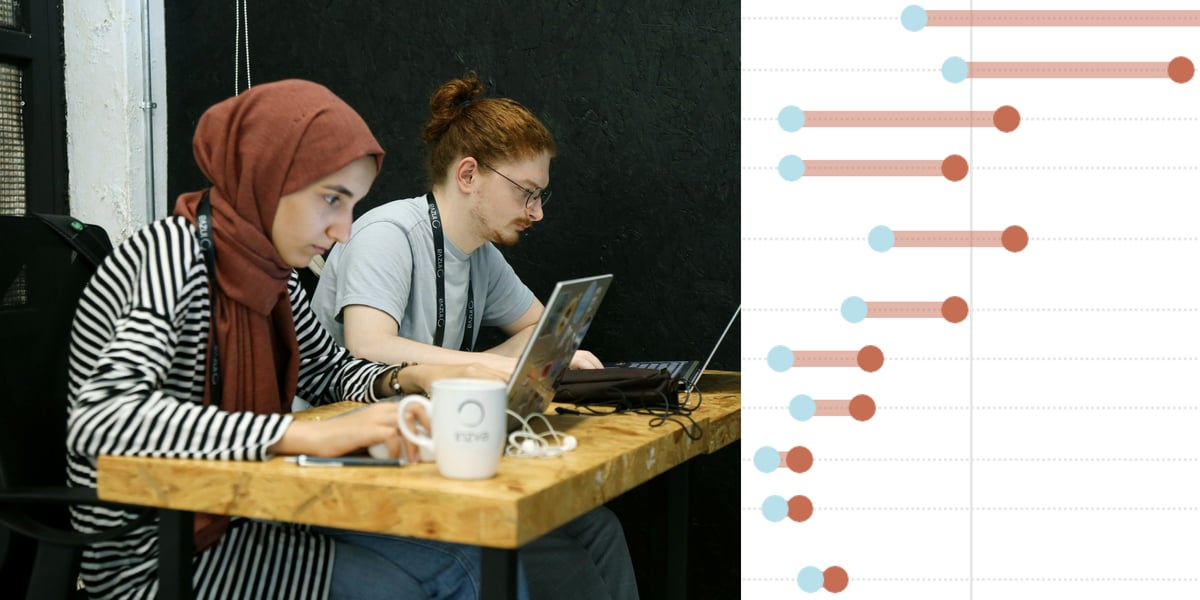
Women Are Avoiding AI. Will Their Careers Suffer? | Working Knowledge
Women are adopting generative AI technology at a significantly lower rate than men, in many cases because women question whether it's ethical to use the tools, according to research by Rembrand Koning and colleagues. If women are shying away from AI, could the gender gap in pay and job opportunities continue to widen?
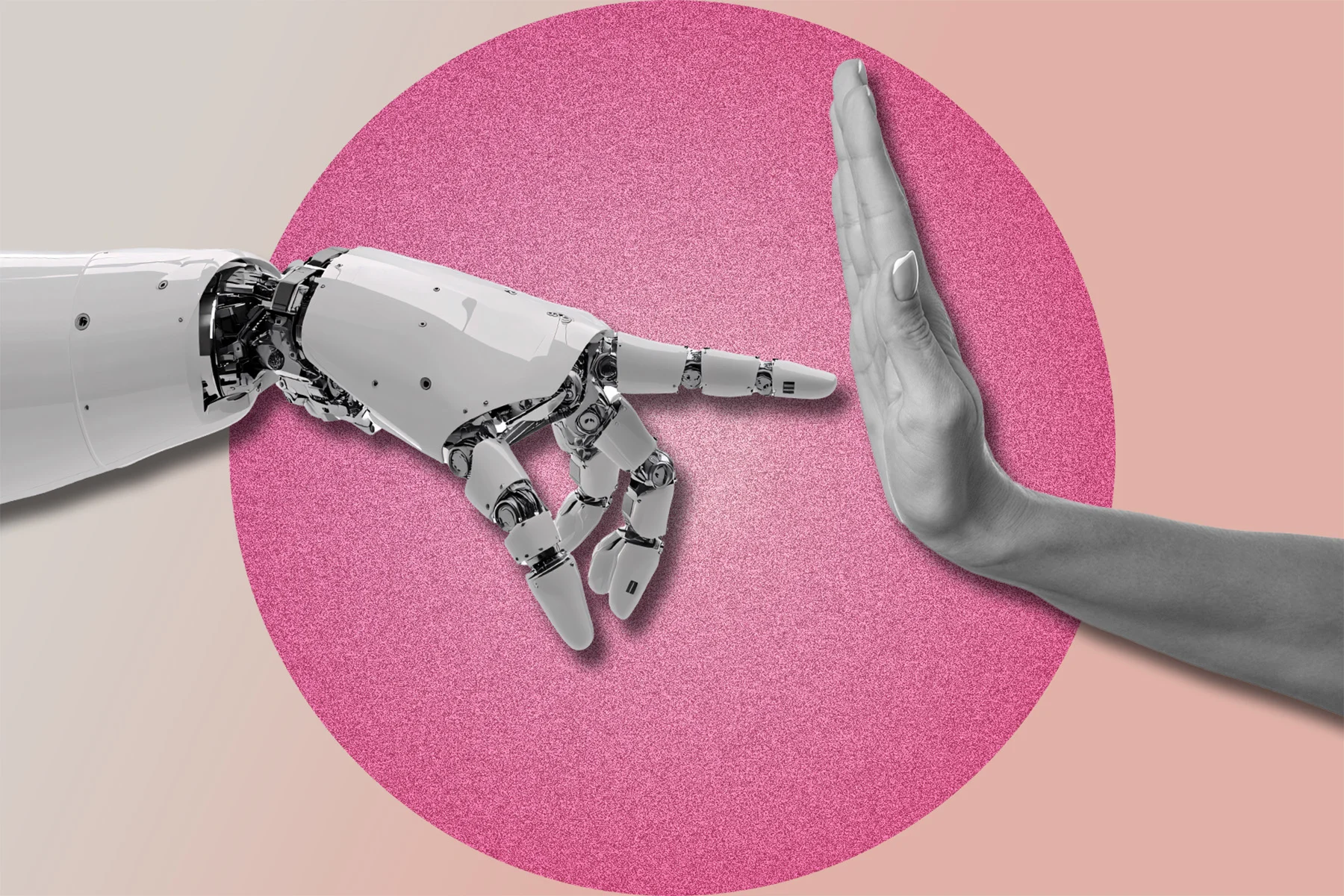
AI adoption higher among men than women: Survey
This large gap — 81.3% compared to 58.8% — stems from the higher representation of women in skilled trades, where AI usage remains extremely low.
The AI Gender Gap: Here’s What It Will Take To Close It
Women are adopting generative AI technology at a significantly lower rate than men, creating an AI gender gap. What are the reasons behind it, and can it be closed?

AI’s Gender Gap - Haas News | UC Berkeley Haas
Generative AI could boost productivity and reduce inequality, but women across the world are at risk of missing out. A sweeping analysis by Nick Otis, PhD 25, Assistant Professor Solène Delecourt, and colleagues from Stanford and Harvard found that women were about 20% less likely than men to use tools such as ChatGPT, Claude, and […]

Can the adoption of AI technology widen the gender gap in science? postdocs' use of AI technology
There is a known gender gap in science. Some studies suggest that this gap is decreasing, others that it is not. Although many studies have been conducted on gender equity in science, none have yet focused on the possibility that generative artificial intelligence (AI), a technology that promises to revolutionize research and academic work can have on widening or narrowing the gender gap in science. Postdoctoral researchers are a particularly important population to study in this context, as they have already demonstrated scientific maturity and independence and are poised to become the next generation in science and academia. Thus, this paper focuses on the gendered use of AI technology by postdocs. By using data from the 2023 Nature Post-Doctoral Survey, this paper investigates how postdocs are adopting AI and whether the usage of AI technology is likely to affect the gender gap in science and academia. The results show that females are less engaged with AI than male postdocs by 34%. This disparity may put female researchers at a disadvantage, potentially causing the gender gap to increase or be maintained. The study also reveals variations in AI adoption within gender groups. Younger female postdocs tend to use AI more than their older counterparts. Compared to female postdocs without promising job opportunities, those with good job prospects tend to use AI more frequently. Additionally, female postdocs working outside their native country are more engaged with AI than those working within their native country. For male postdocs, the results indicate that employment is an important factor in AI adoption. Regardless of age, male postdocs tend to use AI as part of their postdoc: they start using it once they begin their postdocs positions and use it more if they are satisfied with their postdoctoral experience.

New research reveals "staggering" gender gap in ChatGPT adoption
A study reveals that ChatGPT adoption reflects existing workplace inequalities, with younger, higher-paid men using AI more than women and lower-income employees.

The 'AI gender gap' narrative is missing the full picture | Fortune
New research shows women leaders are shaping AI strategy, ethics, and oversight—even as concerns about adoption gaps persist.

As more Americans adopt AI tools, fewer say they can trust the results | TechCrunch
AI adoption is rising in the U.S., but trust remains low, with most Americans concerned about transparency, regulation, and the technology’s broader societal impact, according to a new Quinnipiac poll.

The Large Gender Gap in Who Uses AI
A recent study finds that AI usage tilts heavily toward men. Part of the reason: Women worried they might be penalized for using AI.

Why women are more skeptical of AI than men, according to a new study
Drawing on survey data, the study finds that women consistently perceive AI as riskier, especially when its economic effects are uncertain.

A Growing Gender Divide in the AI Economy — The Honest Economist
The article argues that AI is reshaping gender inequality even before the pay gap visibly widens. Women are more concentrated in clerical and administrative roles where AI can restructure work, while men are more concentrated in technical, AI-complementary roles. Among college graduates, the exposur

Women and AI: The Gender Gap in AI Adoption and Recognition [Data]
Lean In’s survey shows how women are losing out in the AI age. Learn how women and men compare in AI adoption in the workplace, recognition, and more.