


Social programs shouldn't have to pay tuition to fraudsters; finance has already. Here's what we've learned.
Opinion | Michael Bloomberg: Why I’m Giving $1.8 Billion for College Financial Aid (Published 2018)
Let’s eliminate money problems from the admissions equation for qualified students.

Does the Fear of Debt Deter Students from Higher Education?
Concerns over the impact of debt on participation in higher education (HE) have dominated much of the debate surrounding the most recent reforms of financial support for full-time students in England, including the introduction of variable tuition fees. Yet few studies have attempted to explore this issue in a statistically robust manner. This article attempts to fill that gap. It examines the relationship between prospective HE students' attitudes to debt, and their decisions about whether or not to enter HE. Using data derived from a survey of just under 2,000 prospective students, it shows how those from low social classes are more debt averse than those from other social classes, and are far more likely to be deterred from going to university because of their fear of debt, even after controlling for a wide range of other factors. The article concludes that these findings pose a serious policy dilemma for the Westminster government. Their student funding policies are predicated on the accumulation of debt and thus are in danger of deterring the very students at the heart of their widening participation policies.
<div> When Consumer Financial Protection Spills Over: <span>Student Loan Borrowing under the CARD Act</span> </div>
<p>Credit card use among college students declined sharply following the enactment of the <span>Credit Card Accountability, Responsibility, and Disclosure

Six idées reçues sur la fraude sociale : la manne financière, les cartes Vitale usurpées, les pauvres qui profitent du système…
Parmi les pistes d’économies présentées par François Bayrou lors de son discours sur le budget, le durcissement de la lutte contre la fraude sociale. Estimée à 13 milliards d’euros par an, celle-ci draine des idées reçues : la désignation des responsables, l’origine du déficit de la Sécurité sociale ou la manne financière qui échapperait aux caisses de l’Etat.
[109] Data Falsificada (Part 1): "Clusterfake" - Data Colada
This is the introduction to a four-part series of posts detailing evidence of fraud in four academic papers co-authored by Harvard Business School Professor
Can Self-Control Explain Avoiding Free Money? Evidence from Interest-Free Student Loans
Abstract This paper uses insights from behavioral economics to explain a particularly surprising borrowing phenomenon: one in six undergraduate students offered interest-free loans turns them down. Models of impulse control predict that students may optimally reject subsidized loans to avoid excessive consumption during school. Using the National Postsecondary Student Aid Study, we investigate students' take-up decisions and identify a group of students for whom the loans create an especially tempting liquidity increase. Students who would receive the loan in cash are significantly more likely to turn it down, suggesting that consumers choose to limit their liquidity in economically meaningful situations.
The Origin of Student Debt: Reagan Adviser Warned Free College Would Create a Dangerous "Educated Proletariat”
In 1970, Roger Freeman, who also worked for Nixon, revealed the right’s motivation for coming decades of attacks on higher education.

Liquidity Affects Job Choice: Evidence from Teach for America*
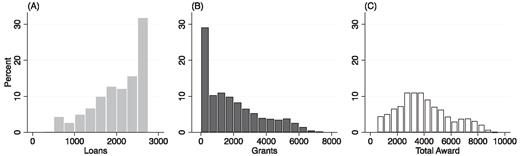
Abstract Can access to a few hundred dollars of liquidity affect the career choice of a recent college graduate? In a three-year field experiment with Teach For America (TFA), a prestigious teacher placement program, we randomly increase the financial packages offered to nearly 7,300 potential teachers who requested support for the transition into teaching. The first two years of the experiment reveal that although most applicants do not respond to a marginal $600 of grants or loans, those in the worst financial position respond by joining TFA at higher rates. We continue the experiment into the third year and self-replicate our results. For the highest-need applicants, an extra $600 in loans, $600 in grants, and $1,200 in grants increase the likelihood of joining TFA by 12.2, 11.4, and 17.1 percentage points (or 20.0%, 18.7%, and 28.1%), respectively. Additional grant and loan dollars are equally effective, suggesting a liquidity mechanism. A follow-up survey bolsters the liquidity story and also shows that those drawn into teaching would have otherwise worked in private-sector firms.
The ABCs of Financial Education: Experimental Evidence on Attitudes, Behavior, and Cognitive Biases
This paper uses a large-scale field experiment in India to study attitudinal, behavioral, and cognitive constraints that can stymie the link between financial education and financial outcomes. The study complements financial education with (i) financial incentives on a financial literacy test to affect participant motivation, (ii) financial goal setting to provide a psychological nudge, and (iii) personalized financial counseling to enhance the intensity of treatment. The analysis finds no impact of financial incentives on learning but significant effects of both goal setting and counseling on real financial outcomes. These results identify important complements to financial education that can bridge the gap between financial knowledge and behavior change. Data and the online appendix are available at https://doi.org/10.1287/mnsc.2017.2819 . This paper was accepted by Amit Seru, finance.

Borrowing to Save? The Impact of Automatic Enrollment on Debt
ABSTRACT Does automatic enrollment into a retirement plan increase financial distress due to increased borrowing outside the plan? We study a natural experiment created when the U.S. Army began automatically enrolling newly hired civilian employees into the Thrift Savings Plan. Four years after hire, automatic enrollmentincreases cumulative contributions to the plan by 4.1% of annual salary, but we find little evidence ofincreased financial distress. Automatic enrollment causes no significant change in credit scores, debt balances excluding auto debt and first mortgages, or adverse credit outcomes, with the possible exception of increasedfirst‐mortgage balances in foreclosure.

Cheating in the Lab Predicts Fraud in the Field: An Experiment in Public Transportation
We conduct an artefactual field experiment using a diversified sample of passengers of public transportation to study attitudes toward dishonesty. We find that the diversity of behavior in terms of (dis)honesty in laboratory tasks and in the field correlate. Moreover, individuals who have just been fined in the field behave more honestly in the lab than the other fare dodgers, except when context is introduced. Overall, we show that simple tests of dishonesty in the lab can predict moral firmness in life, although fraudsters who care about social image cheat less when behavior can be verified ex post by the experimenter. Data and the online appendix are available at https://doi.org/10.1287/mnsc.2016.2616 . This paper was accepted by Uri Gneezy, behavioral economics.
Les inégalités aux Etats-Unis (5/5) : une financiarisation prédatrice
traduction française du billet de blog "Predatory financialization. Understanding Inequality: Part V" de Paul Krugman

Right on Time: How Cash Helps Families Move Through Life's Transitions - Economic Security Project
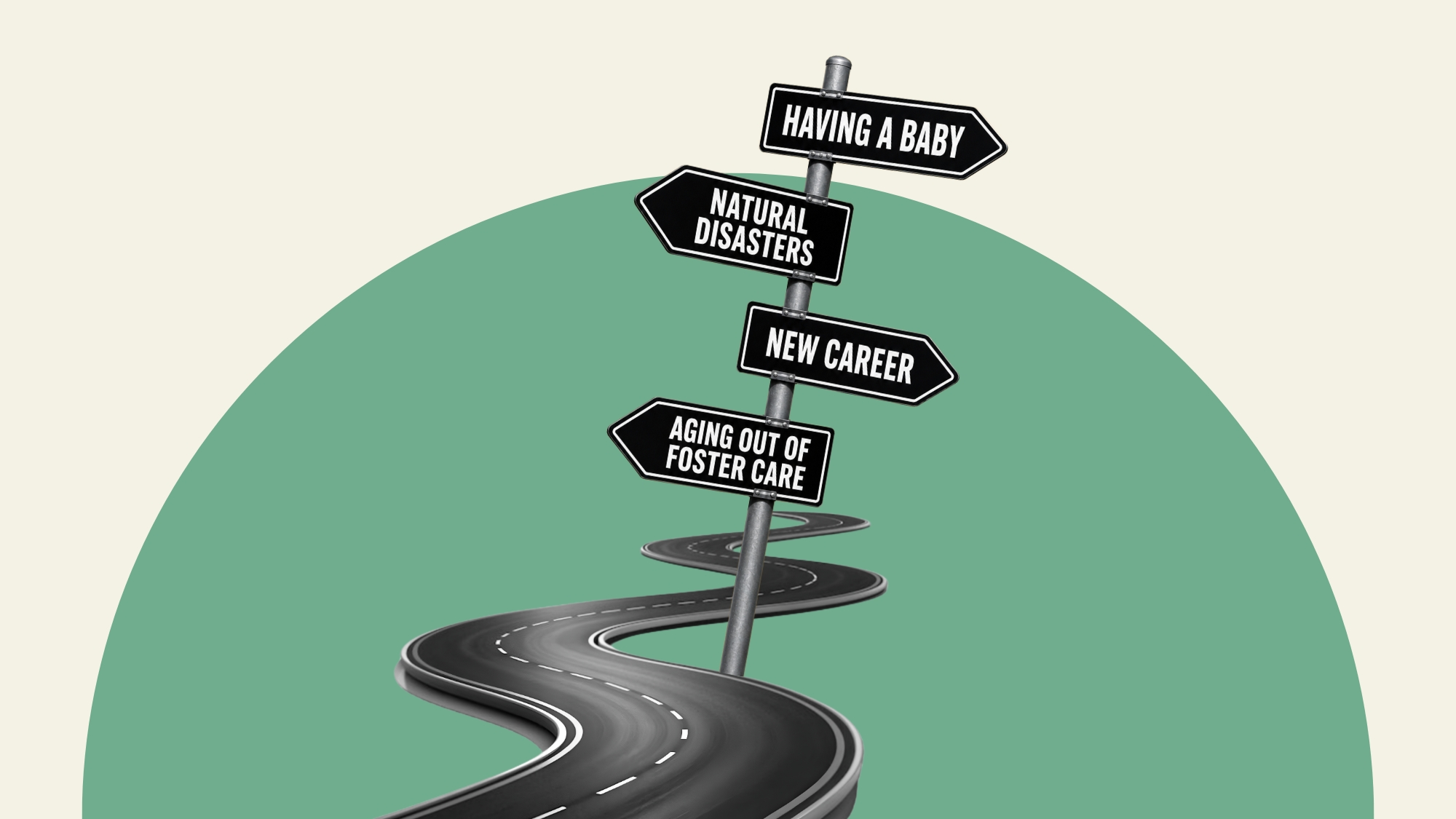
Executive Summary Over the past decade, more than 250 guaranteed income pilots, programs that provide people with regular cash with no restrictions on how they use it, have run across 40 states and the District of Columbia. That research has revealed many learnings, and this report focuses on one clear takeaway: cash has its largest…
Private Schools Are Bad for Society
The starting point for any honest discussion.
Behaviorally Informed Policies for Household Financial Decisionmaking
Low incomes, limited financial literacy, fraud, and deception are just a few of the many intractable economic and social factors that contribute to the financial difficulties that households face today. Addressing these issues directly is difficult and costly. But poor financial outcomes also result from systematic psychological tendencies, including imperfect optimization, biased judgments and preferences, and susceptibility to influence by the actions and opinions of others. Some of these psychological tendencies and the problems they cause may be countered by policies and interventions that are both low cost and scalable. We detail the ways that these behavioral factors contribute to consumers’ fiancial mistakes and suggest a set of interventions that the federal government, in its dual roles as regulator and employer, could feasibly test or implement to improve household financial outcomes in a variety of domains: retirement, short-term savings, debt management, the take-up of government benefits, and tax optimization.
