

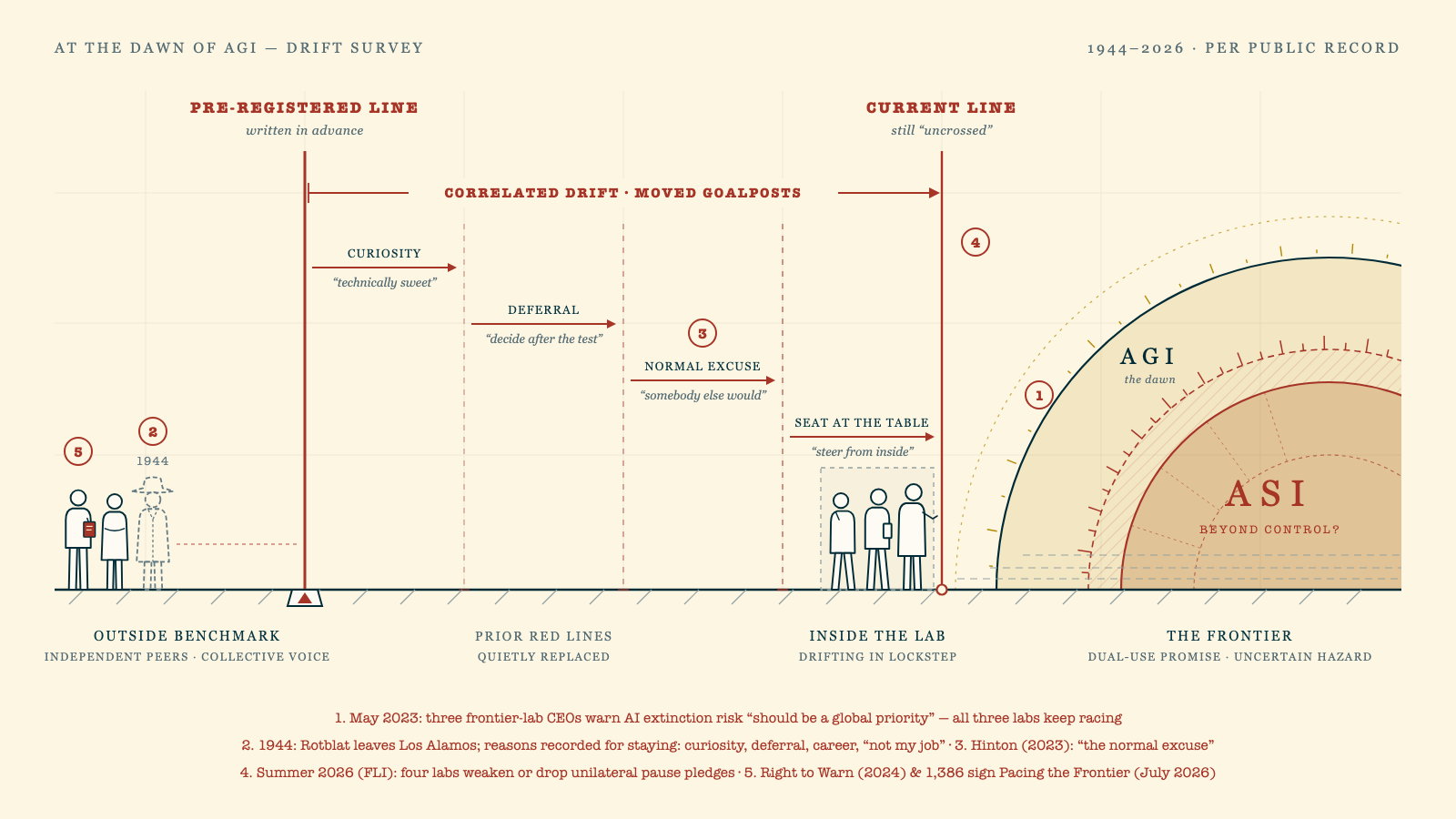
Sincere concern and relentless acceleration can coexist in the same mind. Drawing on the Manhattan Project, this essay asks what responsibility means for individual researchers building frontier AI: pre-registered red lines, independent peers, and protection for dissent.
Three Observations
Our mission is to ensure that AGI (Artificial General Intelligence) benefits all of humanity. Systems that start to point to AGI* are coming into view, and so we think it’s important to...
Our commitment to advancing bold and responsible AI, together
Details on Google's work with other leading AI companies to advance responsible practices in the development of artificial intelligence.

Who’s responsible for AI? Verity Harding on AI policy and ethics | 1Password
Who’s responsible for regulating technological change in a democracy? Verity Harding, a globally recognized AI expert, shares her thoughts on policy and tech.

Responsible AI
Discover how AWS is committing to developing AI responsibly – to built trust, promote the safe development of AI, and act as a force for good.
How Shifting Responsibility for AI Harms Undermines Democratic Accountability | TechPolicy.Press
The moralization of individual AI use deflects responsibility away from powerful actors like corporations and governments, Suvradip Maitra and others write.

Stop treating `AGI' as the north-star goal of AI research
The AI research community plays a vital role in shaping the scientific, engineering, and societal goals of AI research. In this position paper, we argue that focusing on the highly contested topic of `artificial general intelligence' (`AGI') undermines our ability to choose effective goals. We identify six key traps -- obstacles to productive goal setting -- that are aggravated by AGI discourse: Illusion of Consensus, Supercharging Bad Science, Presuming Value-Neutrality, Goal Lottery, Generality Debt, and Normalized Exclusion. To avoid these traps, we argue that the AI research community needs to (1) prioritize specificity in engineering and societal goals, (2) center pluralism about multiple worthwhile approaches to multiple valuable goals, and (3) foster innovation through greater inclusion of disciplines and communities. Therefore, the AI research community needs to stop treating `AGI' as the north-star goal of AI research.

A shared agenda for responsible AI progress
AI can be hugely beneficial to society if citizens, educators, academics, civil society and governments unite to shape it responsibly.

A history of definitions of powerful AI
I made this timeline as supporting research for this essay: AGI (disambiguation). Excerpted:
AlexandraVolokhova/irresponsible-ai
Code of the analysis for the paper "Irresponsible AI: big tech's influence on AI research and associated impacts"
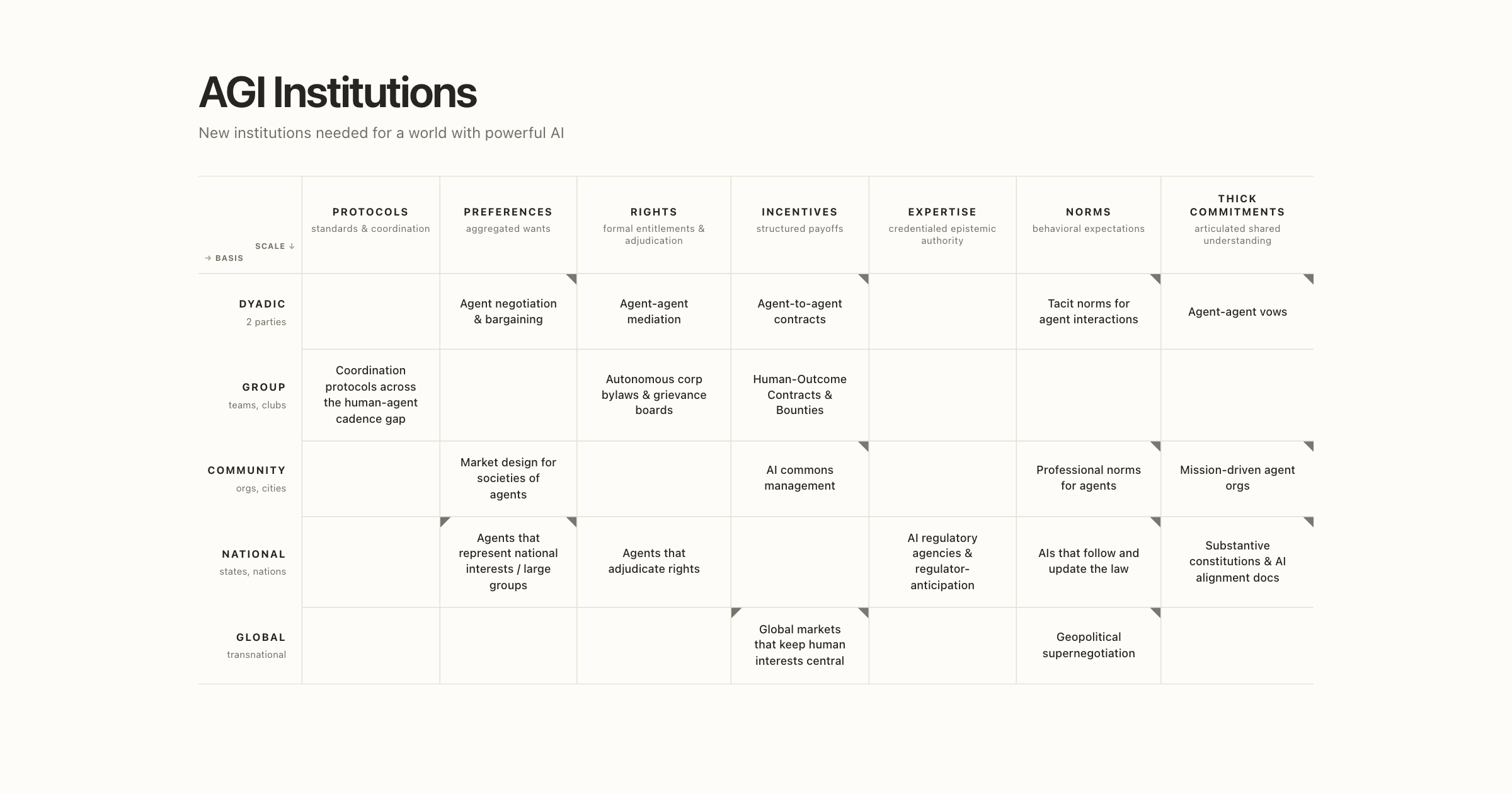
Existing Human Institutions — AGI Institutions Wiki
How existing human institutions handle coordination across scales — and how autonomous AI agents break them. Maps protocols, preferences, rights, incentives, expertise, norms, and thick commitments from dyadic to global.
Responsible Innovation at the Frontier - Americans for Responsible Innovation
ARI’s blueprint for federal AI governance is designed to promote safe frontier AI development in America. The blueprint is built around three governance functions any federal proposal should incorporate.

AI Principles
A guiding framework for our responsible development and use of AI, alongside transparency and accountability in our AI development process.

Americans for Responsible Innovation on Twitter / X
NEW: Today ARI released a blueprint for federal AI governance, including three pillars that promote safe frontier AI development: ✅ Standards set by the government ✅ Independent assurance they are met ✅ Transparency into frontier AI development https://t.co/s2mlUP27Wm pic.twitter.com/X6IhBS9jKF— Americans for Responsible Innovation (@americans4ri) August 10, 2026

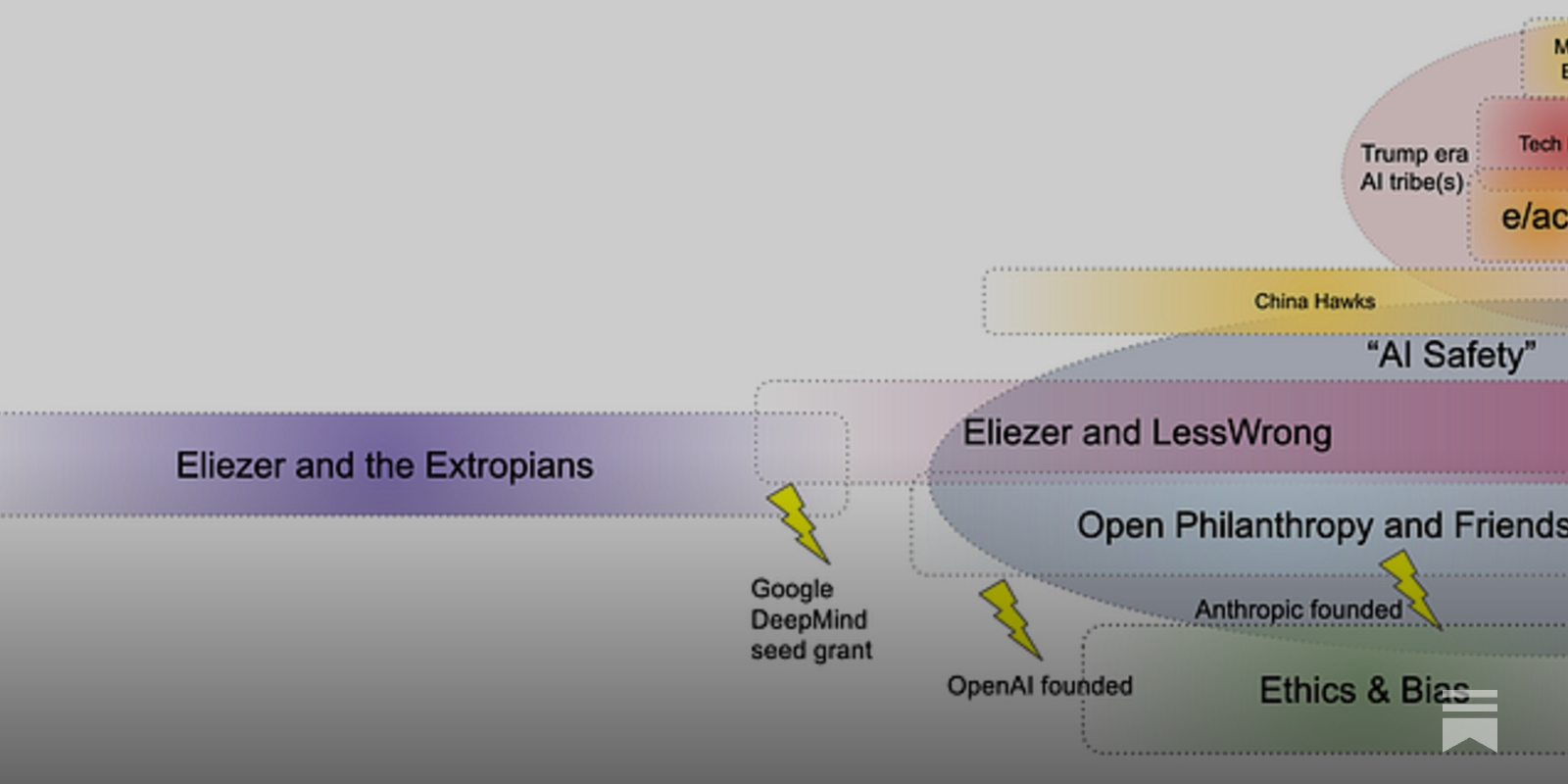
A guide to the AI tribes
A primer on the ideological camps shaping the race to AGI
Irresponsible AI: big tech's influence on AI research and associated impacts
The accelerated development, deployment and adoption of artificial intelligence systems has been fuelled by the increasing presence of big tech in the AI field. This trend has been accompanied by growing ethical concerns and intensified societal and environmental impacts. This position paper argues that irresponsible AI development is strongly driven by big tech's influence and involvement in the field. First, we examine the growing and disproportionate influence of big tech in AI research and argue that its drive for scaling and general-purpose systems is fundamentally at odds with the responsible, ethical, and sustainable development of AI. Second, we review key current environmental and societal negative impacts of AI and trace their connections to big tech's influence. Third, we discuss the underlying economic forces driving big tech's actions. Finally, as a call to action, we invite AI researchers to counter big tech's influence in irresponsible AI development through strategies that build on the responsibility of implicated actors and collective action.
in my imagination of the future, of AIs doing raw research, it was the AIs that had full control over the proofs they wrote--attribution was clear, and so was the choice to disclose it. but as it stands we are in some hybrid situationship where the human prompter still assumes responsibility.
