


We used AI to search for planets in NASA Kepler data, and found two new planets, and the first 8-planet solar system outside of our own, in the process.
I am a Staff Machine Learning Engineer with Planet, applying deep learning to geospatial AI problems. Planet has a fleet of Low Earth Orbit cubesats that image the land mass of the Earth daily to monitor changes and pinpoint trends. At Planet I've done everything from detecting new roads and buildings appearing in protected areas of the Brazilian Amazon to helping figure out how to put machine learning GPUs into space to applying cutting edge advancements in AI to Earth Observation problems.
AGENTWORLD | *
An exploration of planetary intelligence, tracing how computation and cosmology—from ancient mechanisms to AI—reshape Earth and its possible futures.
Intelligence as a planetary scale process
Conventionally, intelligence is seen as a property of individuals. However, it is also known to be a property of collectives. Here, we broaden the idea of intelligence as a collective property and extend it to the planetary scale. We consider the ways in which the appearance of technological intelligence may represent a kind of planetary scale transition, and thus might be seen not as something which happens on a planet but to a planet, much as some models propose the origin of life itself was a planetary phenomenon. Our approach follows the recognition among researchers that the correct scale to understand key aspects of life and its evolution is planetary, as opposed to the more traditional focus on individual species. We explore ways in which the concept may prove useful for three distinct domains: Earth Systems and Exoplanet studies; Anthropocene and Sustainability studies; and the study of Technosignatures and the Search for Extraterrestrial Intelligence (SETI). We argue that explorations of planetary intelligence, defined as the acquisition and application of collective knowledge operating at a planetary scale and integrated into the function of coupled planetary systems, can prove a useful framework for understanding possible paths of the long-term evolution of inhabited planets including future trajectories for life on Earth and predicting features of intelligentially steered planetary evolution on other worlds.
A Primordial Computing Soup
Fostering AI art scenius, creating an open planetary network of robots

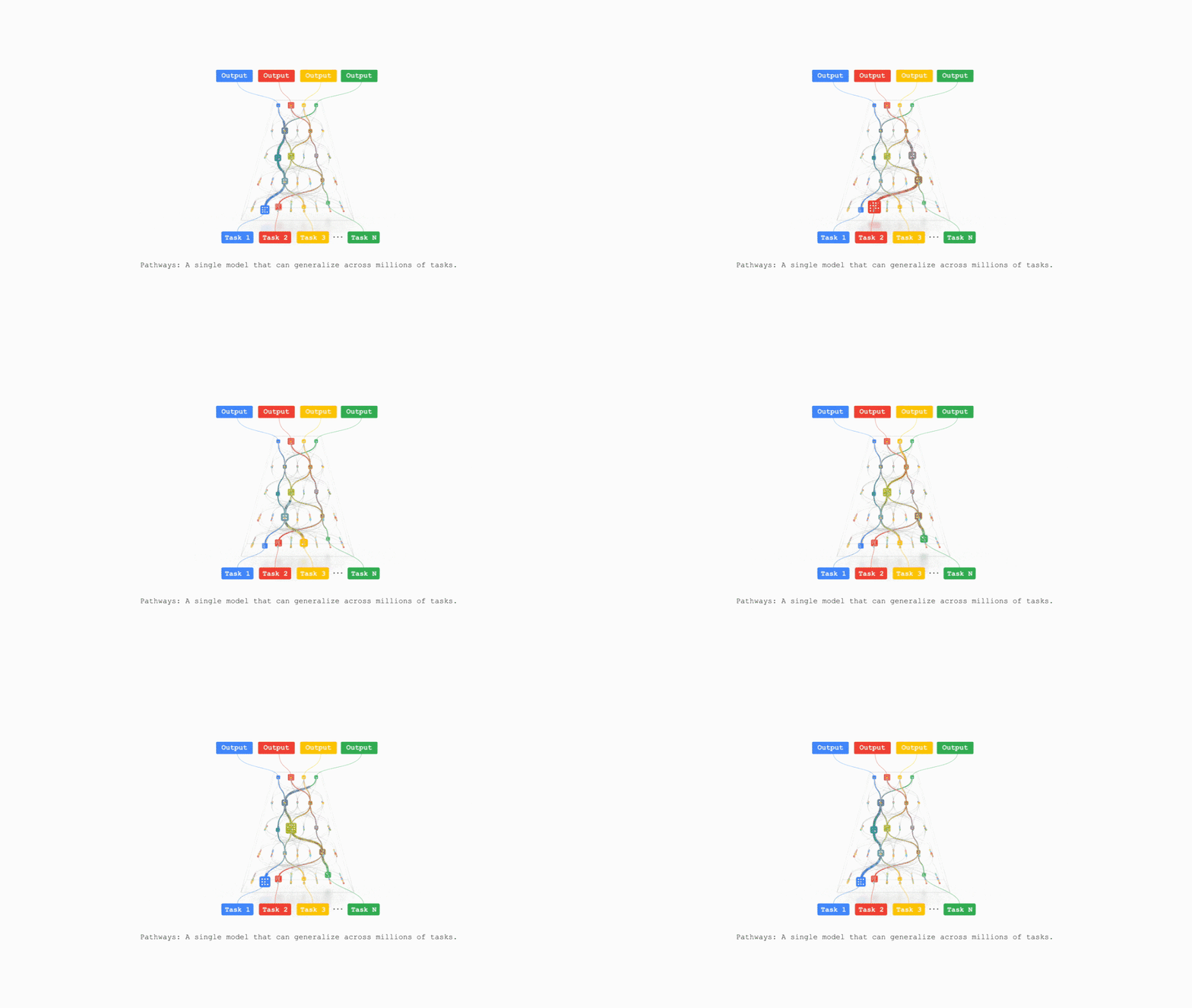
Introducing Pathways: A next-generation AI architecture
Too often, machine learning systems overspecialize at individual tasks, when they could excel at many. That’s why we’re building Pathways—a new AI architecture that will…
Kosmos: An AI Scientist for Autonomous Discovery
Today, we are announcing Kosmos, our next-generation AI Scientist. Kosmos is a major upgrade on Robin, our previous AI Scientist. You can read about it in our technical report, here. Kosmos is available to use from day one on our platform, here.

AI + Planetary Justice Alliance
The AI + Planetary Justice Alliance is a global collective of researchers, activists, and artists, working to address the socio-environmental impacts of artificial intelligence (AI) across its entire lifecycle.

Planning for AGI and beyond
Our mission is to ensure that artificial general intelligence—AI systems that are generally smarter than humans—benefits all of humanity.

AI in World Machine Theory
The telos of AI is to create liveness at planetary scale
New ways to search in 2024
We’re launching Circle to Search and an AI-powered multisearch experience to help you search even more naturally.

EurekaBench: Measuring Agentic Ability to Discover New Scientific Insights
When Isaac Newton discovered the law of gravitation, he did so through an iterative process of analyzing observed data such as planetary patterns, finding the underlying mechanisms by describing patterns in mathematical equations, and refining his theory against the Moon's orbit, revealing the startling insight that the same force governs both falling apples and orbiting planets. Would it be possible for AI agents to make similar discoveries? To measure this ability, we introduce EurekaBench, a cross-domain benchmark that tests AI agents' ability to conduct long-horizon experiments and discover mechanisms that explain observations. We evaluate these mechanisms by the scientific insights that can be derived from them. EurekaBench contains an expert-verified set of 26 long-horizon tasks across neuroscience, computer science, chemistry, astrophysics, geophysics, and plasma physics, with a total of 306 scientific insights that the discovered mechanisms are expected to support. Our evaluation framework tests three axes of scientific discovery: agents' ability to follow known scientific constraints, the predictive accuracy of the discovered mechanisms, and whether these mechanisms yield scientific insights or inform future research. Our results show that current AI agents often overly fixate on predictive accuracy optimization, surpassing human scientists, while falling substantially short in deriving scientific insights.

autonomous-ai/autonomous-grid
Your AI intranet: network the computers you already own for inference and training.
AI for science needs reasoning, not just data
AI agents that can model the human process of research will accelerate discoveries in science.

Artificial Intelligence Glossary | Stanford HAI
Artificial Intelligence (AI) is rapidly growing, with new terms and concepts being introduced at a breakneck speed. You may have seen terms such as AGI, machine learning, or foundation models in media headlines, emerging legislation, or in your everyday life.
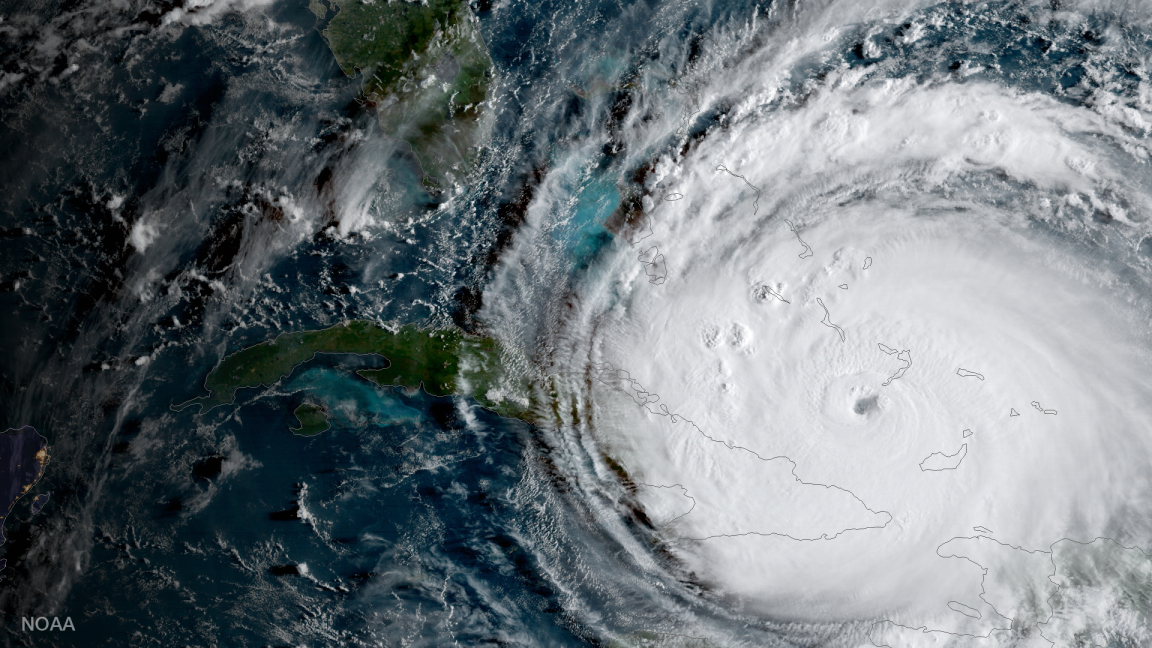
AI is getting better at hurricane forecasting
This hurricane season shows how machine-learning algorithms can improve weather forecasts.
And this includes any all scientific uses of AI and indeed any computational system, weather prediction, cancer research, medical imaging, mathematics, please just don't claim it's fine if you don't research automation in those areas. I'll post further resources below...

Emily M. Bender
But speaking of staying in one's lane, can we PLEASE switch the default position from "It's fine to use 'AI' for this thing I'm not an expert in" to "Yeah, I'd be really skeptical of any use cases and need to see strong evidence that it's okay, but I'm not the one who can produce that evidence"?
