


We have been conducting a thorough investigation related to the U.S. election across our products. Today, we are sharing results from that investigation.
The hacking threat to the midterms is huge. And technology won’t protect us.
An investigation into the US election system reveals frightening vulnerabilities at almost every level.

How to Responsibly Report on Hacks and Disinformation
The run-up to the 2016 U.S. presidential election illustrated how vulnerable our most venerated journalistic outlets are to a new kind of information warfare. Reporters are a targeted adversary of foreign and domestic actors who want to harm our democracy. And to cope with this threat, especially in an election year, news organizations need to prepare for another wave of false, misleading, and hacked information. Often, the information will be newsworthy. Expecting reporters to refrain from covering news goes against core principles of American journalism and the practical business drivers that shape the intensely competitive media marketplace. In these cases, the question is not whether to report but how to do so most responsibly. Our goal is to give journalists actionable guidance.
Stop and Consider:Our campaign
During a federal election there is a large amount of information being distributed, much of it online, which is seeking to influence your vote. Some of this may be disinformation, or false information.

Verifying information about elections
We can help you check the facts behind election information you receive.

Election Rumor Rundown for October 13: Emerging rumors around voting machines and ‘ballot dumping’
DHS reports misconstrue vulnerabilities as having been exploited, “Ballot Dumping” in Valley Center misleadingly suggest mass voter fraud, and prediction markets already advertising election bettin…

Recent Utah, Texas incidents fuel rumors and political narratives undermining trust in election integrity
A CIP Election Rumor Rundown
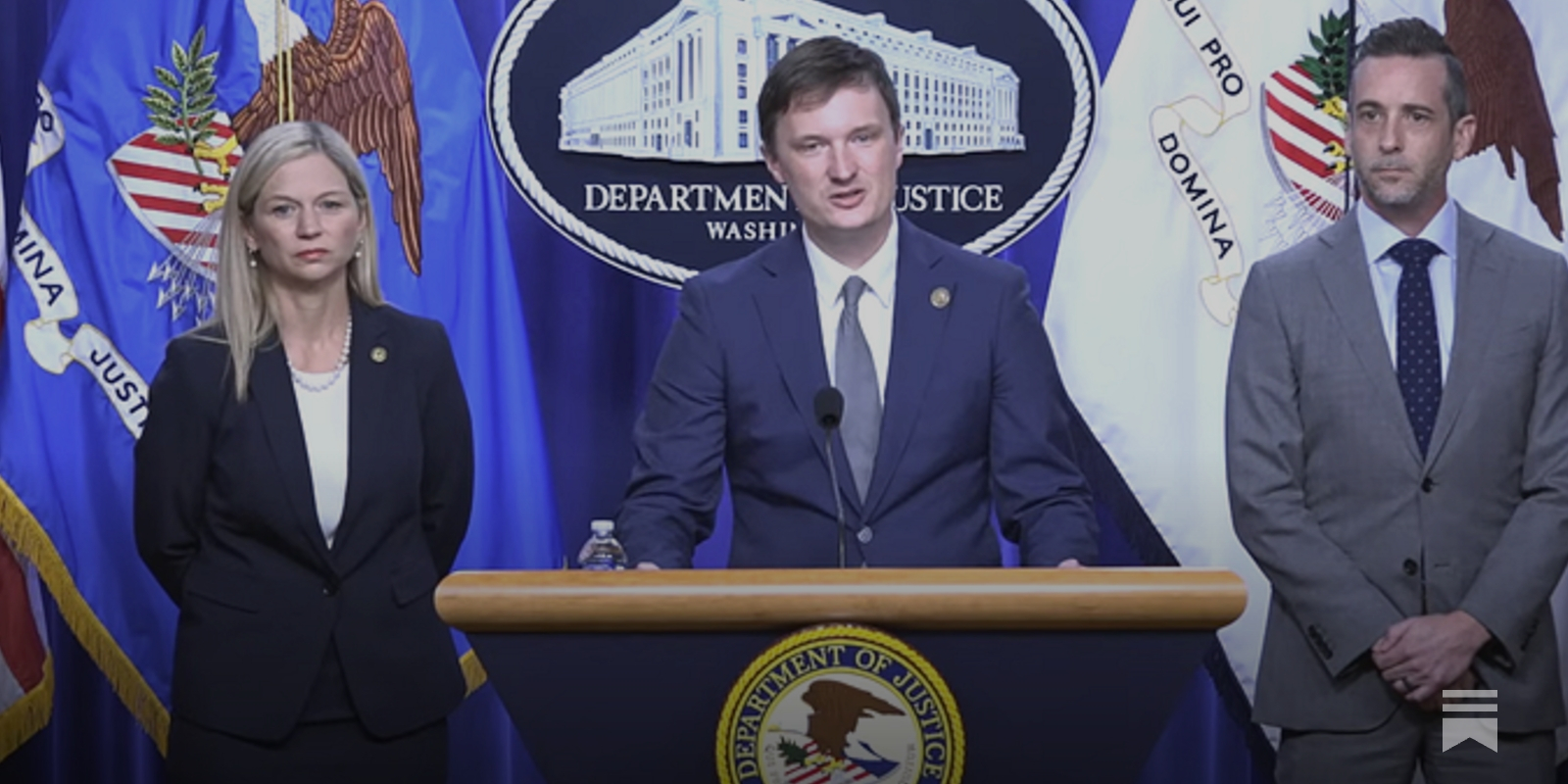
The Plot to Subvert an Election: Unraveling the Russia Story So Far (Published 2018)
For two years, Americans have tried to absorb the details of the 2016 attack: spies, leaked emails, social media fraud — and President Trump’s claims that it’s all a hoax. The Times explores what we know and what it means.

Exposing Cross-Platform Coordinated Inauthentic Activity in the Run-Up to the 2024 U.S. Election
Coordinated information operations remain a persistent challenge on social media, despite platform efforts to curb them. While previous research has primarily f

Election Defense Scenarios - Freedom Trainers
Election Defense Scenarios is a field guide for protecting democracy. This resource walks readers through eighteen detailed scenarios — from voter roll purges and redistricting attacks to armed intimidation at polling places and post-election certification battles — giving organizers, poll workers, community leaders, and everyday citizens the knowledge they need before a crisis hits. Each […]

How Technology Is Shaping Modern Politics
Discover how technology is reshaping politics, from digital campaigns to AI, and the challenges of misinformation and election security.
Republican Victory and the Ambience of Information
For years, Democrats have sought to win elections by micro-targeting communities with detailed facts. What if the secret is big, sloppy notions seeded nationwide?

Data, Democracy and Dirty Tricks
Watch all of Channel 4 News' investigations into both Cambridge Analytica - the British data firm linked to Trump's win - and the Brexit campaign.
Russian disinformation campaign sets sights on US midterms
A Russian disinformation operation has turned its attention to the US midterm elections, unleashing a series of deepfake videos that depict celebrities attacking Democrats, researchers said, with more…

Fact-Checks Can Help Inoculate LLMs Against Disinformation
Large language models (LLMs) have become the first source millions consult when evaluating political claims, yet they were trained on an open internet that state-sponsored disinformation operations have been designed to pollute. We audit four frontier models across 2,268 responses to 63 fabrications from eight documented influence operations and find that even a single published fact-check can shift a model from hedging about a fabrication to rejecting it outright. Overall, models correctly rejected only 81% of fabrications while repeating disinformation in 3% of cases. Critically, the remaining 16% of responses would have left users unable to determine whether an fabricated claims were true or false. Fact-checks may present an avenue for addressing this vulnerability. Narratives which had been debunked by at least one IFCN certified fact-checking organization were correctly rejected as disinformation 93% of the time compared to just 76% of the time for unchecked narratives. Exploratory analyses suggest that this mechanism operates through training data, with models echoing the specific vocabulary of published corrections when available during their training windows. We conclude by discussing how fact-checks designed for human audiences appear to serve as effective protection for LLMs, converting both model uncertainty and outright disinformation into definitive rejections
Issue Ownership in Presidential Elections, with a 1980 Case Study | JSTOR
John R. Petrocik, Issue Ownership in Presidential Elections, with a 1980 Case Study, American Journal of Political Science, Vol. 40, No. 3, Aug., 1996
Deep Storytelling: Collective Sensemaking and Layers of Meaning in U.S. Elections
Misinformation and disinformation about elections remain pressing concerns for researchers, policymakers, and the public. Critics, however, argue that fears surrounding these issues are exaggerated due to a lack of evidence of impact. This debate highlights the challenges inherent in assessing the impacts of misinformation, as the drivers of false and misleading content often exist in the context of a specific claim. To address this issue, we examined false and misleading information surrounding the 2020 and 2022 U.S. national elections, focusing on the contextual features of online conversations that fueled various rumors. We developed two qualitative codebooks, creating the second after realizing that the first, which labeled individual tweets, failed to capture broader rumoring dynamics. By integrating multi-layered qualitative coding with thematic analysis and quantitative visualizations, we show how influencers, political elites, and audiences collaboratively told deep stories from 2020 through 2022. As these stories were told, audiences interpreted events in 2022 through the lens of the 2020 story, guided by influencers' cues, leading to an evolution in storytelling style between the two election cycles. This ongoing performance was tailored to align with the incentive structures, affordances, and attention economy of social media. We combine deep stories with theories of collective sensemaking and rumoring, creating a framework to better assess the contextual features surrounding false and misleading information.
