

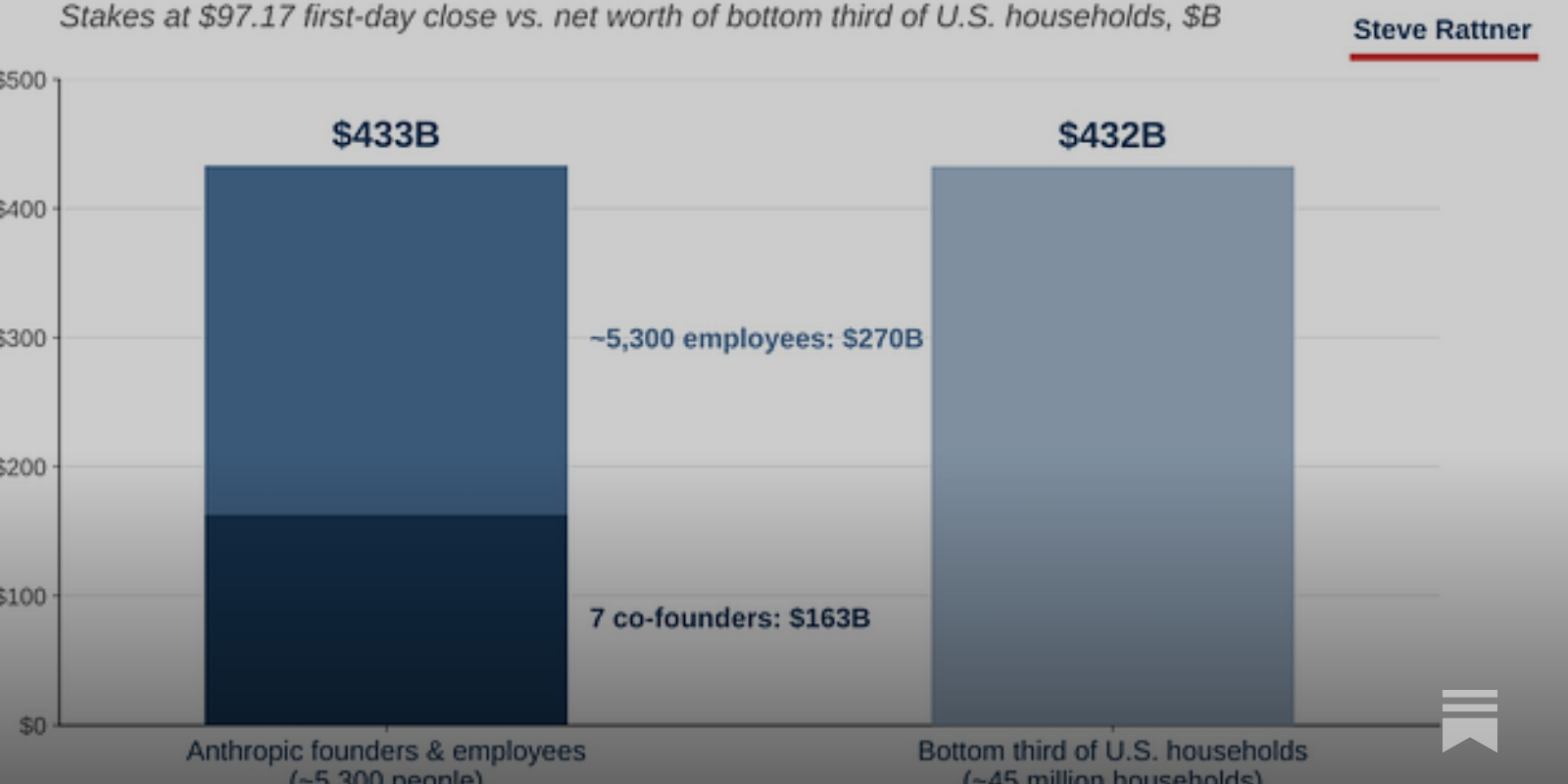
On the Jensen Huang debacle and the Anthropic wealth explosion, and the presumption of impunity en route to mass labor automation.
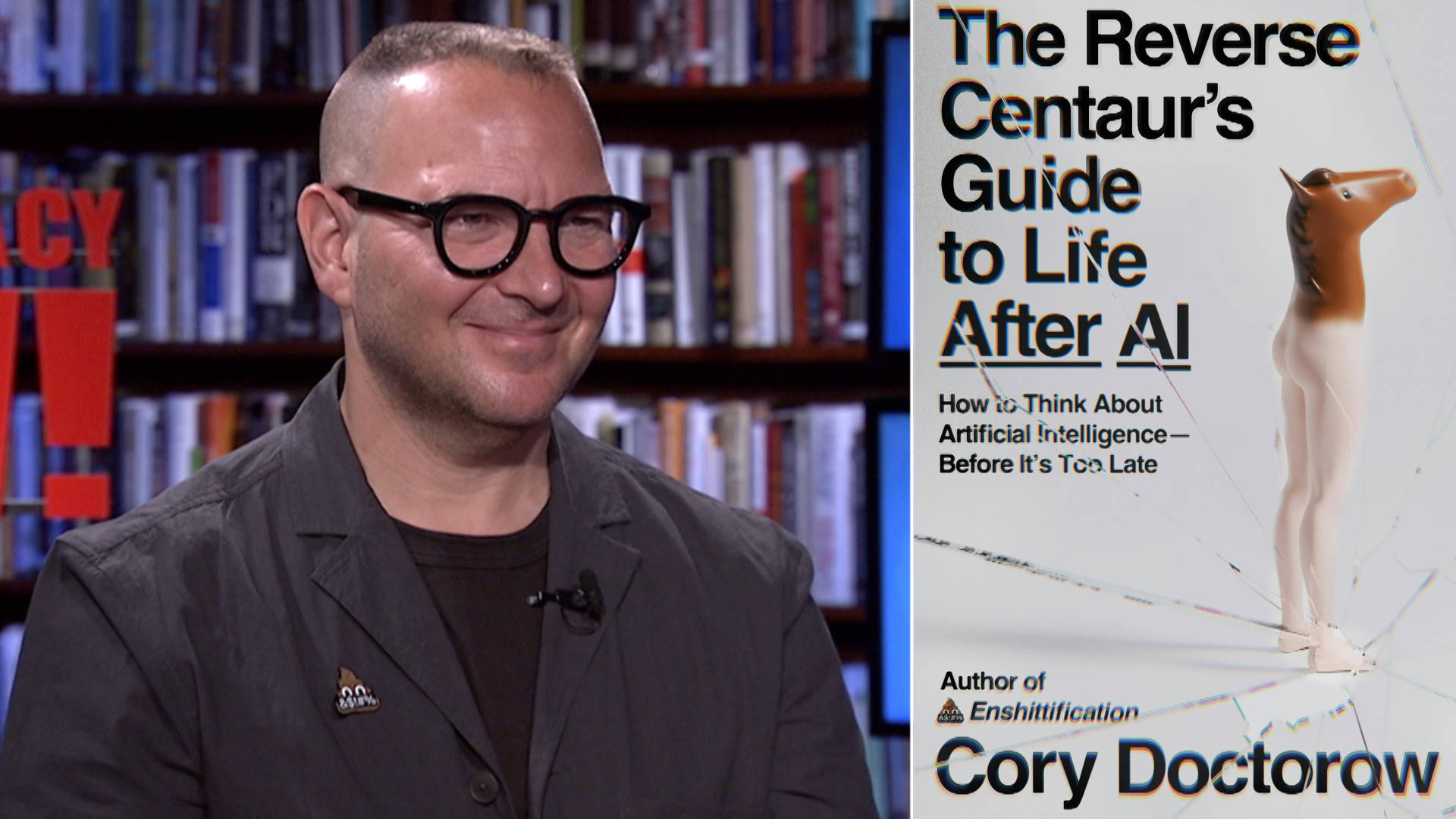
“How to Think About AI”: Cory Doctorow on Big Tech, Understanding AI, Labor Automation & More
Democracy Now! speaks with science fiction author, activist and journalist Cory Doctorow about AI and his latest book, The Reverse Centaur’s Guide to Life After AI: How to Think About Artificial Intelligence — Before It’s Too Late. Doctorow comments on AI’s “bad unit economics” and the connection between automation and labor. “When labor drives automation, it’s usually in service to making the product better, and when capital drives automation, it’s usually in service to making more of the product,” says Doctorow.
Inescapable AI — TechTonic Justice
The use of artificial intelligence, or AI, by governments, landlords, employers, and other powerful private interests restricts the opportunities of low-income people in every basic aspect of life: at home, at work, in school, at government offices, and within families. AI technologies derive from a lineage of automation and algorithms that have been in use for decades with established patterns of harm to low-income communities. As such, now is a critical moment to take stock and correct course before AI of any level of technical sophistication becomes entrenched as a legitimate way to make key decisions about the people society marginalizes.

AI's economic peril to democracy | Brookings
Bell and Korinek argue that increasing use of AI in industry will create a dangerous cycle of rising inequality and weakened democratic norms.


Cory Doctorow: Hell is other people – so billionaires are using AI to replace them
The tech elite are pouring billions into dispensing with inconvenient humans. Now governments want the same trick to wish away the migrants their economies desperately need, writes the author and Nerve columnist
How AI can become pro-worker
The automation of blue-collar and office jobs using digital technologies has been an important driver of the rise in inequality since the 1980s. A new CEPR Policy Insight argues that a ‘human-complementary’ path for artificial intelligence could contribute more to productivity growth and help reduce economic inequality. The authors suggest five potential elements for policy attention to help move the US, Europe, and other economies onto this human-complementary path.

Workers powering the AI industry face terrible conditions, but they shouldn’t have to – interview
Mark Graham, founder of the Fairwork initiative, notes that most of the labour in the AI supply chain is data work primarily done in low-income countries in poor conditions.

Feeding the Machine: The Hidden Human Labour Powering AI

Risk of ‘industrial capture’ looms over AI revolution
A handful of individuals and corporations now control much of the resources and knowledge in the sector

Will AI Destroy the Economy? (According to Economists: No.) | AI Reality Check | Cal Newport
"AI" is Automated Inequality
Tech bros still dominate the discussions about so-called "AI" with false claims. Even most "AI"-critical researchers spend much of their time meticulously debunking (always only a subset of) claims, leaving vast areas of the economic consequences of "AI" unexplored. (Even the "AI"-evangelist Economi

For the love of God, stop calling your AI a co-worker | TechCrunch
A growing number of startups are anthropomorphizing AI to build trust fast -- and soften its threat to human jobs.

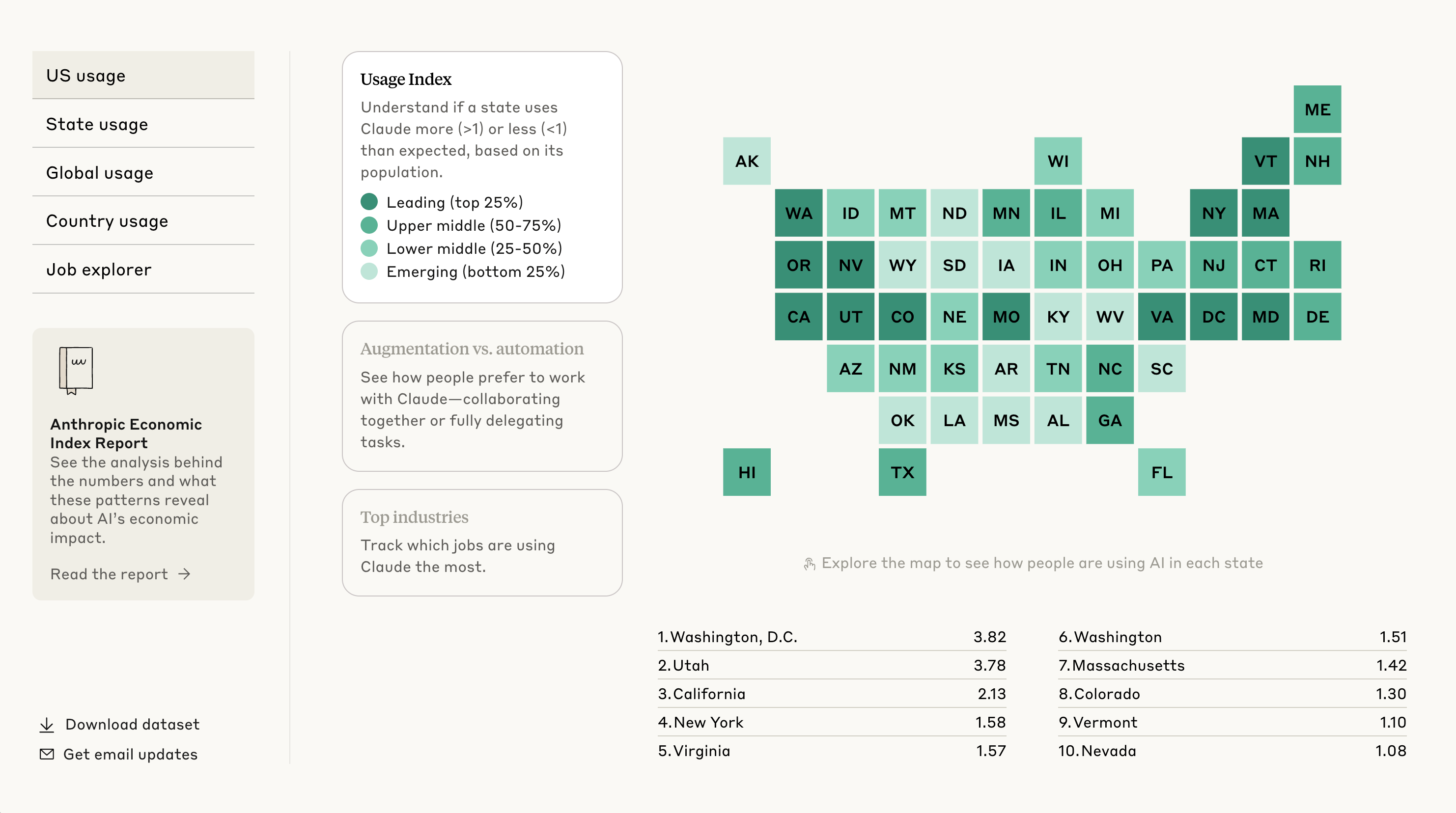
The Anthropic Economic Index
The Anthropic Economic Index reveals the shape of AI adoption across the world. Here, you can explore the data behind our research to understand how people are using Claude across every US state and hundreds of occupations. Track the topics that are trending where you live, and see how people are using AI to augment or automate their work—that is, whether they prefer to collaborate with, or delegate to, Claude.
A Growing Gender Divide in the AI Economy — The Honest Economist
The article argues that AI is reshaping gender inequality even before the pay gap visibly widens. Women are more concentrated in clerical and administrative roles where AI can restructure work, while men are more concentrated in technical, AI-complementary roles. Among college graduates, the exposur

> the central promise of “ai” is that nothing is worth doing and that community doesn’t exist. It’s individual entitlement as software. It’s Thatcherism. post.lurk.org/@emenel/117441848350524047
emenel (@emenel@post.lurk.org)
post.lurk.org"The forces that are now shaping AI are the same forces that turned the open internet into monopolistic platforms, converted peer-to-peer participation into precarious labor, and enclosed the digital commons. They are now threatening to capture and enclose thought itself." osf.io/preprints/socarxiv/qahd3_v1/

