


The spillover from retailer debt will flow far and wide across the economy.
Amazon and Walmart’s rivalry is reshaping how we’ll buy everything in the future
The retail war is expanding to cloud computing, grocery delivery, and streaming video

How Silicon Valley missed the next wave of e-commerce
There are lots of exciting retail companies — just not in the U.S.


Have Data Centers Raised Your Electric Bill? Causal Evidence from the United States
We estimate that data centers caused average retail electricity rates to fall modestly in the United States from 2015 to 2024 using an instrumental variables approach. Despite prevailing sentiment, the finding is consistent with economic reasoning: existing large power system fixed costs, economies of scale in transmission and distribution, and declining unit costs for generation imply that durable demand growth lowers average prices. We find patterns of economies of scale for transmission, distribution, and generation costs as well as within and across retail customer classes. We caution that future supply constraints could reverse the effect.

Have Data Centers Raised Your Electric Bill? Causal Evidence from the United States
We estimate that data centers caused average retail electricity rates to fall modestly in the United States from 2015 to 2024 using an instrumental variables approach. Despite prevailing sentiment, the finding is consistent with economic reasoning: existing large power system fixed costs, economies of scale in transmission and distribution, and declining unit costs for generation imply that durable demand growth lowers average prices. We find patterns of economies of scale for transmission, distribution, and generation costs as well as within and across retail customer classes. We caution that future supply constraints could reverse the effect.
The Real Retail Killer
How private equity is gouging some of the country’s best-known corporate brands

How Walmart Keeps an Eye on Its Massive Workforce
The retail giant is always watching.

Credit Card Debt Puzzle: Liquid Assets to Pay Bills
Using transaction data from a US consumer payments diary, we revisit the credit card debt puzzle—a scenario in which consumers revolve credit card debt while al


On shifting consumers from high‐interest to low‐interest debt
Abstract In the United States, many consumers are increasingly accumulating debt, much of which is harmful and expensive. Prior research has devoted a great deal of attention to understanding why consumers generally get into debt and the strategies they can use to repay existing debts. While this work has furthered the agenda of helping consumers reduce or eliminate their overall debt balances, it has failed to emphasize the fact that for many consumers, debt may be unavoidable. This article aims to promote research that addresses not only overall debt reduction but also the need for consumers to shift from more to less costly types of debt. By shedding light on the psychological reasons why consumers may naturally gravitate toward more costly forms of debt when less costly ones may be available, we offer a novel perspective on why consumers get into and stay in debt longer than they should. This new angle has the potential to spur on further research into the ways consumers can use debt more effectively and less expensively in service of the overarching goal of debt reduction.


Debt is Coming
Ten years from now, what seismic change will we reflect back on and think, “well that was pretty obvious, in retrospect”? Debt is going to finally come to the tech industry. We can hat…

Credit Crises, Precautionary Savings, and the Liquidity Trap*
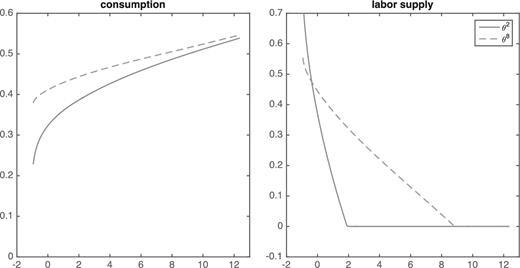
Abstract We study the effects of a credit crunch on consumer spending in a heterogeneous-agent incomplete-market model. After an unexpected permanent tightening in consumers’ borrowing capacity, constrained consumers are forced to repay their debt, and unconstrained consumers increase their precautionary savings. This depresses interest rates, especially in the short run, and generates an output drop, even with flexible prices. The output drop is larger with sticky prices, if the zero lower bound prevents the interest rate from adjusting downward. Adding durable goods to the model, households take larger debt positions and the output response can be larger.
Apple and the Ghosts of Companies Past
Apple is not doomed, but for the first time in a long time its long-term fortunes are cloudy; the time to make change is now.

Revolving versus Convenience Use of Credit Cards: Evidence from U.S. Credit Bureau Data
Credit card payments and revolving debt are important for consumer theory but a key data source — credit bureau records — does not distinguish between current charges and revolving debt from the previous month. We develop a theory-based econometric methodology informed by survey evidence to estimate the likelihood a consumer is revolving each quarter. We validate our approach using a new survey linked to credit bureau data. For likely revolvers: (1) 100 percent of an increase in credit becomes an increase in debt eventually; (2) credit limit changes are half as salient as debt changes; and (3) revolving status is extremely persistent.
What Happens to All the Stuff We Return?
Online merchants changed the way we shop—and made “reverse logistics” into a booming new industry.
