Banks are safer today, but is the system strong enough to withstand the next shock?
Has Wall Street Been Tamed? (Published 2016)
Critics say nothing has changed, but the truth is that American banks really are taking on less risk.

The Demise of Silicon Valley Bank
The Rapid Collapse of the 16th Largest Bank in America
One shock after another: Why fragile economies are falling further behind?
Fragile and conflict-affected situations (FCS) never fully exited the pandemic recession and now face renewed stress from a major Middle East–driven energy shock. Nearly 60% of FCS economies still have lower real income per capita than in 2019 (vs 18% in other EMDEs), with poverty and food insecurity concentrated in non-recovered countries. The blog points to three main drags—high debt, conflict, and larger disaster losses—and calls for conflict prevention, macro stability, fiscal space, jobs, and sustained support.

Who supplies and demands safe assets – and why it matters
Safe assets are the building blocks of modern financial markets. This column examines the sectoral dynamics of safe assets across advanced economies since the 1980s. It shows that foreign demand for these assets has steadily increased, with the financial sector playing a key role in meeting it. However, because financial institutions often back the safe assets they create with risky loans, this rising foreign demand can fuel domestic credit booms and contribute to macroeconomic instability. The results highlight the importance of carefully managing the creation of safe assets within the global financial system.
Why Only One Top Banker Went to Jail for the Financial Crisis (Published 2014)
The economic catastrophe of 2008 was the largest of its kind since the Depression. Who’s taking the fall?

Resilience, Risk, and Transformation
AI-related market corrections, sharp rises in sovereign bond yields, and cyber threats could trigger market turmoil, while financial vulnerabilities could amplify these risks into systemic events. The growing footprint of hedge funds could further exacerbate adverse market dynamics during periods of stress.

Report - Brace for Impact: Protecting People and the Economy when the AI Bubble Bursts — Open Markets Institute
Our report in partnership with Americans for Financial Reform outlines vulnerabilities in the financial system and wider economy that could intensify an AI crash into the next financial crisis, and provides steps that policymakers can take to mitigate the damage and protect everyday people from bear

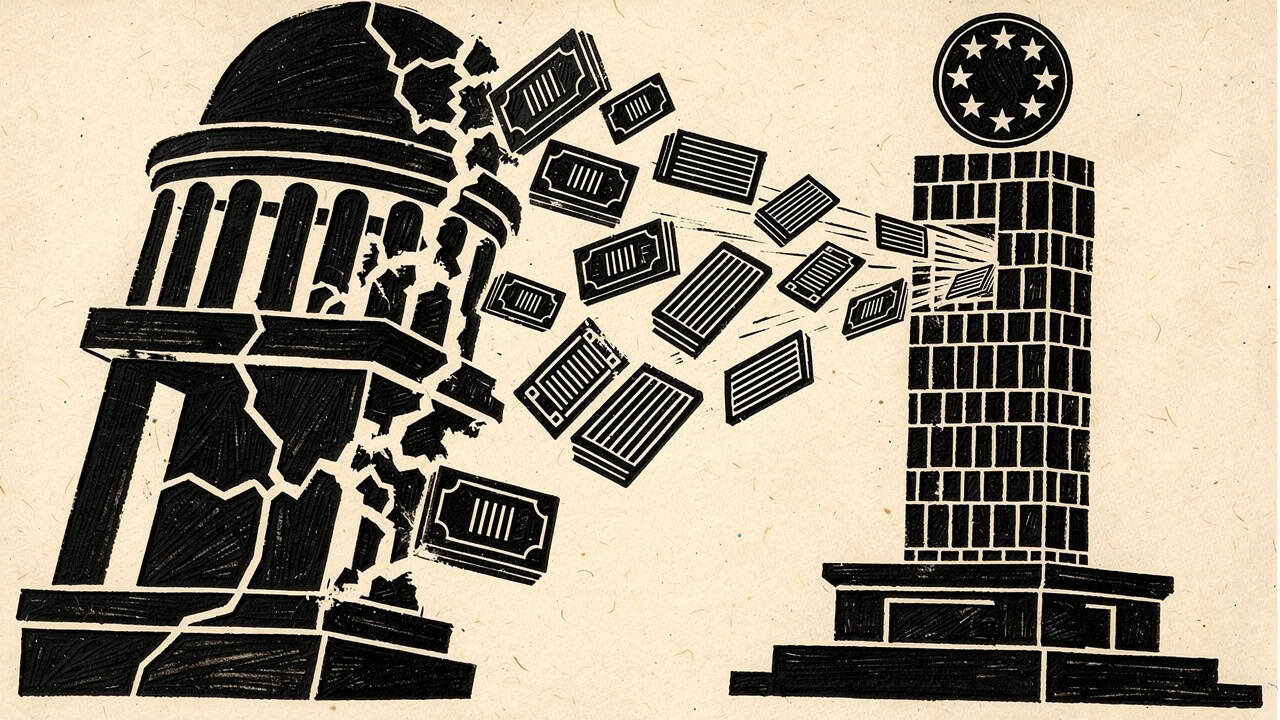
America’s Fiscal Crisis Is Europe’s Chance to Build a Treasury Market of Its Own
The EU should seize the moment to gain strategic autonomy by creating its own safe asset.
The ‘Neo-Banks’ Are Finally Having Their Moment (Published 2018)
High fees and low interest rates have provided an opening for a new generation of finance start-ups to compete with the big banks.

Attention Is All You Need #2: This Time Is Different
What can we learn from the 2007 Global Financial Crisis and the 1990’s dot-com bubble?


The Quiet Rewiring of American Finance
Stablecoins, Treasury markets, and the most significant shift in financial infrastructure that almost nobody is discussing.

The End of Silicon Valley (Bank)
Silicon Valley Bank bears responsibility for its demise, but it symbolizes a Silicon Valley reality that is very different from the myth — and the ultimate cause is tech itself.

That’s Not the Warsh of It: The End(ish) of Forward Guidance and the Rise(?) of Treasury Monetary Policy
This is a free piece of Notes on the Crises. Take out a paid subscription to support our work here. Publisher Note: I’ve been off for two weeks because of a family medical emergency. Everything is fine now, but as you are likely aware, medical emergencies take up an
Financial innovation is actually happening
The future has already arrived: tech and finance joined forces to make core financial services better for consumers.

Jefferies’ Chris Wood Warns of ‘Massive Capital Destruction’ From US AI Boom
The most likely long-term outcome of the AI boom will be massive capital destruction in the US, with market share going to cheaper open-source Chinese models, according to Jefferies Financial Group Inc.