


Remote-work programs help techies see the world—but not actually live in it.
Home | Urban Nomad Adventures
The Remote Manifesto
View the GitLab remote working manifesto and the multitude of life-balance benefits it allows our employees to enjoy. Learn more here!

The Stress of Remote Working | HackerNoon
In software engineering, remote working makes a lot of sense since, most of the time, you only need a computer and an internet connection to perform your duties. So there are fewer reasons to force people to sit in a predefined office everyday. Consequently, it has become an important feature of a lot of IT jobs, even in Belgium, while it is definitely not the most forward looking job market. That said, most of the time, the remote working offer only apply to a part of the week (1 or 2 days a week seems to be the most frequent proposition here). Nevertheless, it definitely is getting a hold in most companies.

The Good, the Bad and the Ugly of Remote Work (After 5 Years of Experience)
Learning about working from home and location independent lifestyle was a true pivotal moment for me. Before that, I didn’t think much about the concept of “freedom at work” or anything like that. And even though the concept was a bit far-fetched for me at the time, I realized that it surely was something that I would… Read More »The Good, the Bad and the Ugly of Remote Work (After 5 Years of Experience)

The Digital Life Collective
The Digital Life Collective is an enabler. If you think we should be doing something we're not currently doing, we're here to help you and your project make the change you want to see in the world.
Fitter. Happier. More productive. Working remotely.
An economic analysis of distributed teams Travel the world as a digital nomad. Surf a new beach every morning. Eat a different local cuisine each night. Or just stay home all day in your pajamas. It doesn’t really matter. You can get your work done e...

Thoughts on Cyberpositionality: The Construction of Digital Communities in Digital Spaces, Damien Patrick Williams
I found Rebecca Monteleone, Martin Perez Comisso, and Elma Hajric’s “Cyberpositionality: Sociotechnical Location in the Digital Age” (2024) to be an extremely timely and important article which can…

Working from Home and Phatic Communication
Working from home, being what’s called a remote worker, is a really fascinating frontier of Work. It’s fascinating both because as a paradigm, it creates new challenges, and it also mak…

The Local Relational Technologist
Who can we rely on for meaningful software in our communities?
The 10 Things You Learn After One Month Of Remote Work | I Done This
At iDoneThis, we’ve got our team spread all across the world. Germany, Italy, New York, Wisconsin. The company has been remote from Day 1 and we wouldn’t have it any other way. Working from a home office or coworking space gives us the freedom to work how we want and…

Collectief Eigendom
Cultural practices of collective ownership over natural resources have been around for quite some time. Do these ways of working have a digital counterpart? It may seem simple at first. To translate cultural practices of collective ownership into the digital realm, just use a Creative Commons license to allow others to make use of your work, share further modifications, and contribute to the wealth of the digital commons. That’s it. Some stories are just too good to be true.
The digital exiles: Why people are abandoning their smartphones - Coda Story
A growing movement of “former screenagers” is calling for a screen-free, surveillance-free life, for a chance to build a future beyond tech capture
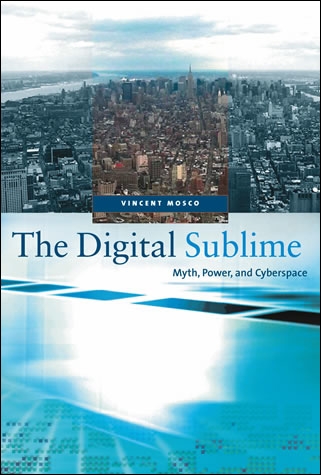
The Digital Sublime: Myth, Power, and Cyberspace
Interpreting the myths of the digital age: why we believed in the power of cyberspace to open up a new world.The digital era promises, as did many other te

Folk Tech – tech for life
Folk Tech is a solidarity-based movement among designers, developers, and people in communities who want digital technology that supports their daily life and interdependence without the extraction, exploitation, or surveillance found in most proprietary technology today.
Must watch if you work on digital social spaces

Saleh
New video on Interface Studies: what happens when software borrows a word from a different world and what makes an interface “social”? youtu.be/j7xidb5fK8c?is=x15JSgEFhSjD1A…
