I am always trying to figure out how to explain the idea of the commons to newcomers who find it hard to grasp. In preparation for a talk that I gave at the Caux Forum for Human Security, near Montreux, Switzerland, I came up with a fairly short overview, which I have copied below. I think it gets to the nub of things.
The Commons Explained in 15 Minutes | David Bollier
Elinor Ostrom’s 8 rules for managing the commons
The commons are those things that we all own together, that are neither privately owned, nor managed by the government on our behalf. Some are large scale and somewhat abstract, such as the English…

New to the Commons? | David Bollier
If you’re coming to the commons for the first time, it can be difficult to grok the idea because there are so many different ways to understand the commons. That’s because the commons is not so much a fixed, universal thing as a general concept describing durable, dynamic sets of social relationships for managing resources -- all sorts of resources: digital, urban, natural, indigenous, rural, cultural, scientific, to use some crude categories.
An alternate ending to the tragedy of the commons
I recently read Elinor Ostrom’s Governing the Commons and have been evangelizing it so enthusiastically that I figured I’d do a quick…
The tragedy of the commons is a false and dangerous myth | Aeon Essays
Far from being profoundly destructive, we humans have deep capacities for sharing resources with generosity and foresight
Commons
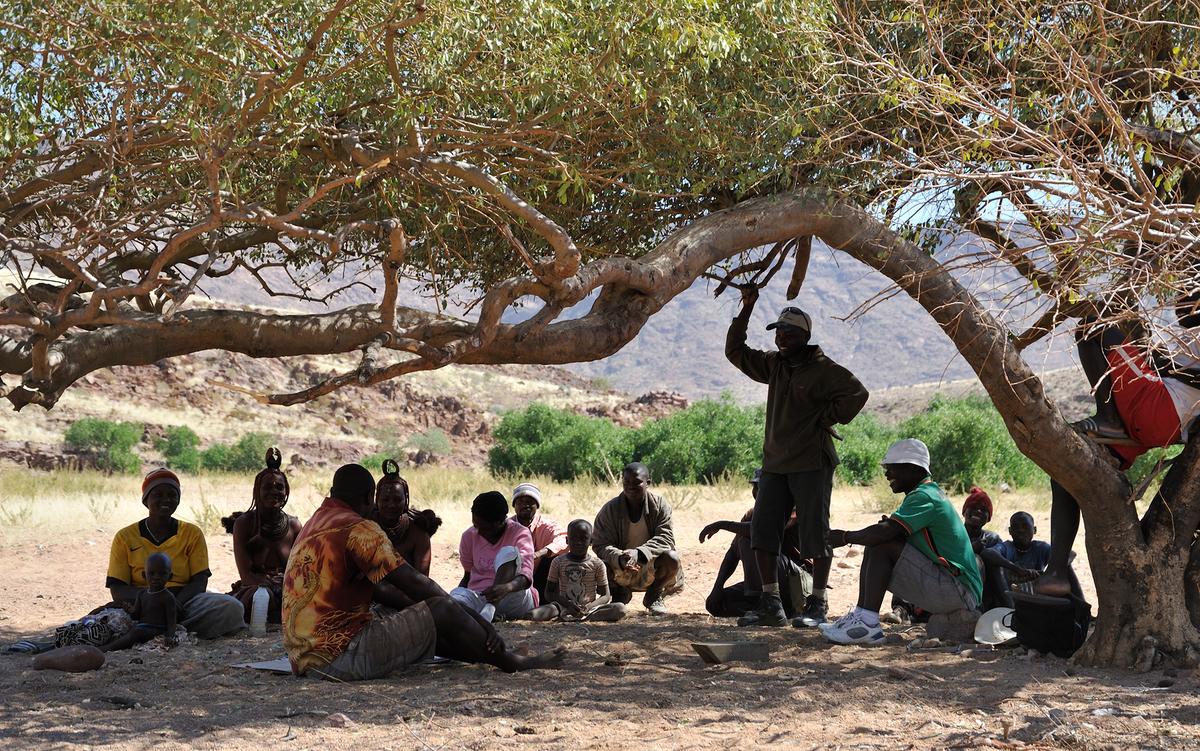
The commons are the cultural and natural resources accessible to all members of a society, including natural materials such as air, water, and a habitable Earth. These resources are held in common even when owned privately or publicly. Commons can also be understood as natural resources that groups of people manage for individual and collective benefit. Characteristically, this involves a variety of informal norms and values employed for a governance mechanism. Commons can also be defined as a social practice of governing a resource not by state or market but by a community of users that self-governs the resource through institutions that it creates.

Think Like a Commoner | A Short Introduction to the Life of the Commons
In our age of predatory markets and make-believe democracy, our troubled political institutions have lost sight of real people and practical realities. But if you look to the edges, ordinary people are reinventing governance and provisioning on their own terms. The commons is arising as a serious, practical alternative to the corrupt Market/State.
How Commons can flourish
The following eight reference points are the result of intensive debates at the first German Sommerschool on the Commons, which took place in Bechstedt/Thuringia in June 2012. They aim to interpret…

A Revised “Ostrom’s Design Principles for Collective Governance of the Commons
A Revised “Ostrom’s Design Principles for Collective Governance of the Commons” The traditional economic definition of “the commons” are those resources...

Governing The Commons: The Evolution of Institutions for Collective Action
The governance of natural resources used by many individuals in common is an issue of increasing concern to policy analysts. Both state control and privatization of resources have been advocated, but neither the state nor the market has been uniformly successful in solving common-pool resource problems. After critiquing the foundations of pol icy analysis as applied to natural resources, Elinor Ostrom here provides a unique body of empirical data to explore the conditions under which common-pool resource problems have been satisfactorily or unsatisfactorily solved. Dr. Ostrom first describes three models most frequently used as the foundation for recommending state or market solutions. She then outlines theoretical and empirical alternatives to these models in order to illustrate the diversity of possible solutions. In the following chapters she uses institutional analysis to examine different ways - both successful and unsuccessful - of governing the commons. In contrast to the propositions of the " tragedy of the commons" argument. common-pool problems sometimes are solved by voluntary organizations rather than by a coercive state. Among the cases considered are communal tenure in meadows and forest, irrigation communities and other water rights. and fisheries. Governing the Commons makes a major contribution to the analytical literature on institutions and to our understanding of human cooperation. Elinor Ostrom is co-director of the Workshop in Political Theory and Policy Analysis and professor of political science at Indiana University.

The Commons | Join Our Unique Community
Discover The Commons: A multi-generational Co-Housing community fostering sustainable living and connection in Santa Fe. Learn about our homes, lifestyle, and how to get involved.

10 Tips from GetUp's Decade of Campaigning
The Commons is an online library for the change makers of the world and for those interested in social change, activism, organising, advocacy and justice.

Commons Network
Digital Commons are not only about digital technology, but also about the economy, how it is organised and who it benefits. Digital Commons represent a democratic practice, with shared ownership, thus initiating a shift away from centralised (private or state) management of technology and towards democratisation of digital infrastructure. In this way Digital Commons help guard and reinforce such public values as democracy, self-determination and sovereignty. In the first explainer we put forward how this shift offers numerous opportunities for the Netherlands, or any country that takes Digital Commons seriously. Read the explainer

Deep Roots, Real Power: Candid Stories from the Field
The Commons is an online library for the change makers of the world and for those interested in social change, activism, organising, advocacy and justice.
A Revised “Ostrom’s Design Principles for Collective...
A Revised “Ostrom’s Design Principles for Collective Governance of the Commons” The traditional economic definition of “the commons” are those resources...
Together for Treaty
The Commons is an online library for the change makers of the world and for those interested in social change, activism, organising, advocacy and justice.