

Rarely have I read an essay that knits together some very different commons with such wisdom and depth. Joline Blais' 2006 essay, “Indigenous Domain: Pilgrims, Permaculture and Perl,” is a wonderfully insightful analysis that reveals the underlying unity and logic of commons principles. Her piece appeared in Intelligent Agent (vol. 6, no. 2), published by the Inter-Society for the Electronic Arts.
Solidarity Syllabus: Indigenous Peoples, Rematriation, and Resisting AI Data Centers — Solidarity Is
For this Solidarity Syllabus, we are learning alongside Indigenous organizers, leaders, and communities whose work offers important solidarity lessons and invitations for how we might understand land, water, sovereignty, and resistance to data centers. Indigenous Peoples Day is observed

New to the Commons? | David Bollier
If you’re coming to the commons for the first time, it can be difficult to grok the idea because there are so many different ways to understand the commons. That’s because the commons is not so much a fixed, universal thing as a general concept describing durable, dynamic sets of social relationships for managing resources -- all sorts of resources: digital, urban, natural, indigenous, rural, cultural, scientific, to use some crude categories.
Indigenous Data Sovereignty (DDN3-A11)
This article explores Indigenous data sovereignty, identifies some of the data-related challenges faced by Indigenous Peoples and highlights the work done to overcome these challenges.

Abundant intelligences: placing AI within Indigenous knowledge frameworks
The current trajectory of artificial intelligence development suffers from fundamental epistemological shortcomings, resulting in the systematic operationalization of bias against non-white, non-male, and non-Western peoples. We argue that these failings are, in part, the result of certain Western rationalist epistemologies that exclude many ways of knowing about the world, and therefore they cannot provide a sufficient foundation on which to adequately, robustly, and humanely conceptualize intelligence. We present a new research agenda, Abundant Intelligences, an Indigenous-led, Indigenous-majority international, interdisciplinary research program that imagines anew how to conceptualize and design artificial intelligence (AI) based on Indigenous knowledge (IK) systems. Abundant Intelligences draws on the rich plurality of Indigenous knowledge systems, bringing together diverse sets of thought, culture, and protocol together. We show IK systems provide one way to rebuild AI’s epistemological foundations and transform these tools’ current role in reinforcing colonial practices of exclusion, extraction, manipulation, and eradication into engines of abundance that enable us to care better for ourselves, our communities, and our world. Our proposition is to fully engage with AI to explore how different conceptions of intelligence could be embodied in these technologies. In this paper, we present the tenets of the research program in detail, account for our methodological approach, describe the impact and limitations, and conclude on a discussion of the implications of the program.
Good, Standard Work: Creating the Commons
A defence of digital stewardship, IndieWeb principles, Blackfoot models of collective flourishing, and what it means to plant seeds in a garden you'll neve…
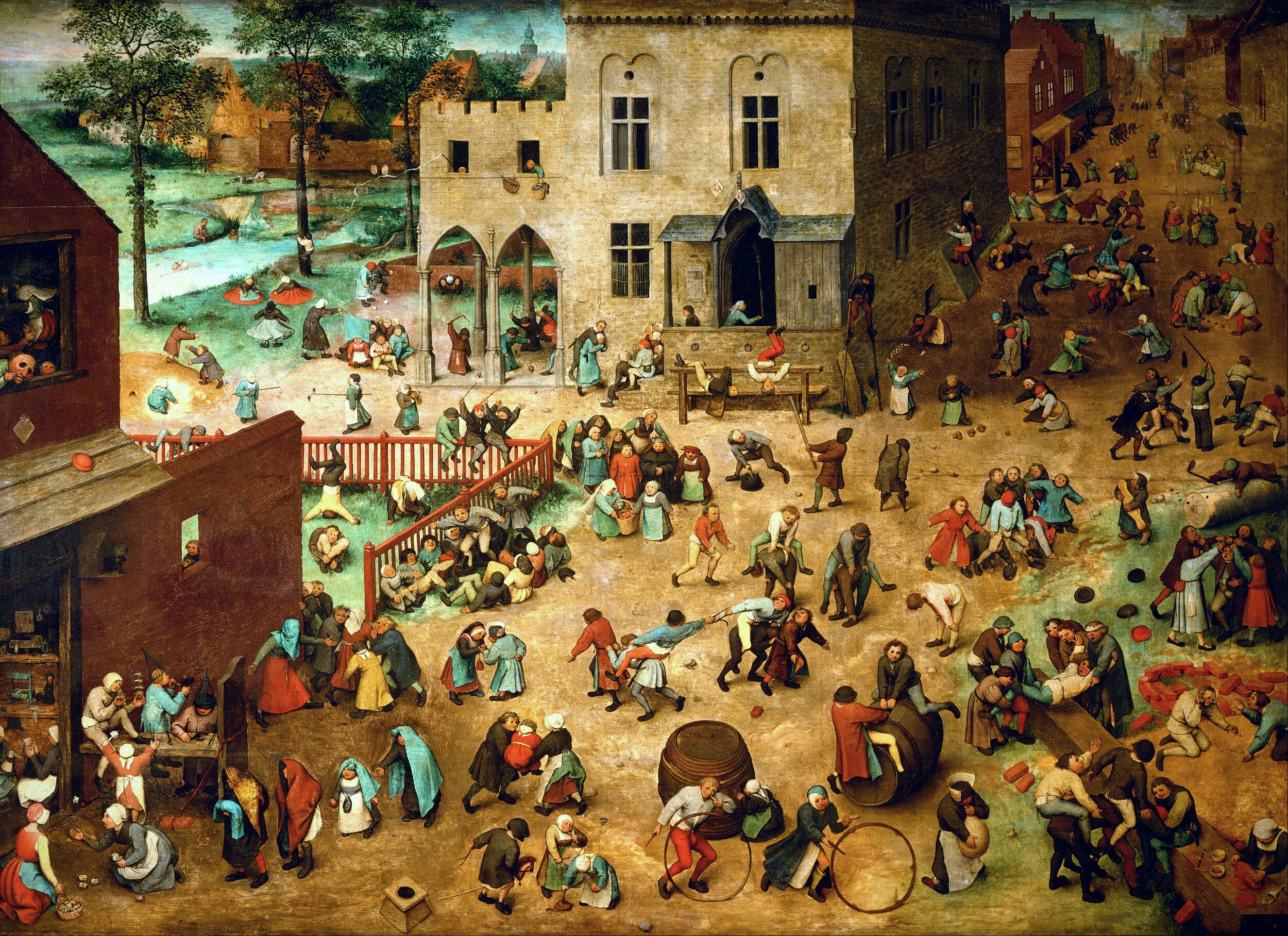
Commoning as a Transformative Social Paradigm | David Bollier
Every so often I am invited to write a piece that in effect answers the question, “Why the commons?” I invariably find new answers to that question each time that I re-engage with it. My latest attempt is an essay, “Commoning as a Transformative Social Paradigm,” which I wrote for the Next System Project as part of its series of proposals for systemic alternatives.
Animikii: Indigenous Technology for an Equitable Future
Animikii empowers Indigenous communities with culturally informed technology solutions like Niiwin—our groundbreaking tool for Indigenous data sovereignty and community empowerment.

Collectief Eigendom
Cultural practices of collective ownership over natural resources have been around for quite some time. Do these ways of working have a digital counterpart? It may seem simple at first. To translate cultural practices of collective ownership into the digital realm, just use a Creative Commons license to allow others to make use of your work, share further modifications, and contribute to the wealth of the digital commons. That’s it. Some stories are just too good to be true.
Deep Roots, Real Power: Candid Stories from the Field
The Commons is an online library for the change makers of the world and for those interested in social change, activism, organising, advocacy and justice.
Digital Commons: Our Shared Right to Knowledge and Culture
As the volume of cultural and scientific works produced and available on the internet continues to expand, the question of freedom to consult and use this immense ‘digital commons’ is becoming a critical one, particularly as cutting off access could entail serious consequences for education, cultural exchange, and even the health of European citizens.

Regina Harsanyi on Twitter / X
I've realized that a commons-based, peer-to-peer society is only possible at scale if anchored in a widely believed, collectively internalized narrative, or what sociologist Robert Bellah would call “civil religion.” Such narrative would help normalize cooperation,…— Regina Harsanyi (@ReginaHarsanyi) November 8, 2025
Indigenous Knowledges and Data Governance Protocol — Indigenous Innovation Initiative
Between March 2020 and March 2021, the Indigenous Innovation Initiative co-created the Indigenous Knowledges and Data Governance Protocol with the community, to guide how we collect and use Indigenous Knowledges and Data. Click on the image below to learn more about this Protocol. Since then, t

Commons Network
Digital Commons are not only about digital technology, but also about the economy, how it is organised and who it benefits. Digital Commons represent a democratic practice, with shared ownership, thus initiating a shift away from centralised (private or state) management of technology and towards democratisation of digital infrastructure. In this way Digital Commons help guard and reinforce such public values as democracy, self-determination and sovereignty. In the first explainer we put forward how this shift offers numerous opportunities for the Netherlands, or any country that takes Digital Commons seriously. Read the explainer

mai ishikawa sutton
My work lies at the intersection of technology and the solidarity economy. I’m passionate about strengthening the digital commons, in which people control and steward communication technologies as collective goods.
Indigitalization: Indigenous Computing Theory - Jon Corbett