


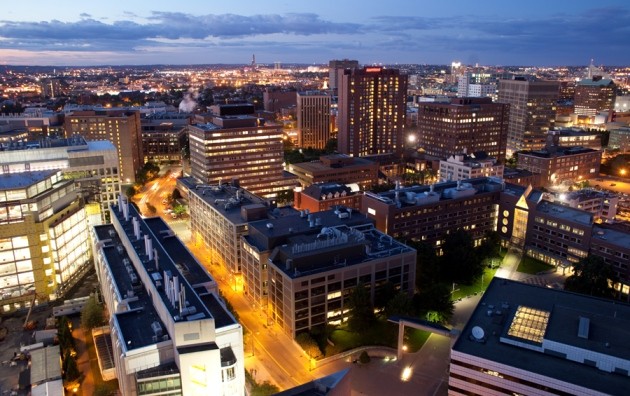
With a "terrible" job market, empty labs, and mounting competition from China, the lifeblood of Kendall Square is under massive threat.
Start-ups fight for a place in Boston’s biotech hub
Competition for lab space threatens Kendall Square’s innovative spark.
The next generation of Boston business: What's new and what's next
The next generation of Boston business: What's new and what's next
The next generation of Boston business: What's new and what's next
The next generation of Boston business: What's new and what's next
How Biotech Startup Funding Will Change in the Next 10 Years | Y Combinator
Back when YC was getting started about 10 years ago, Paul Graham wrote some [http://www.paulgraham.com/webstartups.html] essays [http://www.paulgraham.com/future.html] that predicted the way startup fundraising would change in the next decade – accurately, it turns out. Paul Graham predicted that there would be way more startups, that they’d be cheaper to start, that new kinds of investors would fund them, that founders would be more technical, and that founders would keep control of their compa
The Current Crisis: What's Happening to Science in America
Boston's WTF/LOL Problem | TechCrunch
Well, that was embarrassing. Following months of piss-poor communication and a chaotic planning process, Boston’s bid to be the U.S. entry for the 2024

Steve Jurvetson on investing industrial biotech at SynBioBeta SF 2013
The Evolution Of The Biohacking Ecosystem | TechCrunch
Silicon Valley efforts in the biology and health domains have recently seen increased public interest because of the questions around the legitimacy of Theranos' technology and medical claims and the recent FDA approvals for a number of 23andMe's genetic screens. These data points are just two of the most visible examples of a broad ecosystem of companies and startups in Silicon Valley working on biological problems.

A new Kendall Square envisioned in $1.2b MIT plan - The Boston Globe
A six-building cluster would include apartments for graduate students and low-income tenants, stores, and a tree-covered plaza.

The SXSW ecosystem is embracing a biotech wave
A look at the expanding biotech landscape at SXSW.

Innovation Districts Catch On | Brookings
In June, we released a report on the rise of “innovation districts,” where leading-edge anchor institutions and companies cluster and connect with start-ups, business incubators and accelerators. These districts are a response to changes in where people want to live and where innovative companies want to locate—trends that have continued unabated. Population growth in central cities continues its strongest run over the past half-century, especially in those cities with strong, innovation-based economies, such as Seattle, Boston, Denver and Washington, D.C.
Thoughts on the startup world in Boston
Although not officially full time on a startup in Boston, I have been working with my co-founder, John Kelleher, on a project called Leasability for the better part of the past year. As a full time…

Data Scientist: The Sexiest Job of the 21st Century
Back in the 1990s, computer engineer and Wall Street “quant” were the hot occupations in business. Today data scientists are the hires firms are competing to make. As companies wrestle with unprecedented volumes and types of information, demand for these experts has raced well ahead of supply. Indeed, Greylock Partners, the VC firm that backed Facebook and LinkedIn, is so worried about the shortage of data scientists that it has a recruiting team dedicated to channeling them to the businesses in its portfolio. Data scientists are the key to realizing the opportunities presented by big data. They bring structure to it, find compelling patterns in it, and advise executives on the implications for products, processes, and decisions. They find the story buried in the data and communicate it. And they don’t just deliver reports: They get at the questions at the heart of problems and devise creative approaches to them. One data scientist who was studying a fraud problem, for example, realized it was analogous to a type of DNA sequencing problem. Bringing those disparate worlds together, he crafted a solution that dramatically reduced fraud losses. In this article, Harvard Business School’s Davenport and Greylock’s Patil take a deep dive on what organizations need to know about data scientists: where to look for them, how to attract and develop them, and how to spot a great one.

American tech giants are making life tough for startups
Big, rich and paranoid, they have reams of data to help them spot and buy young firms that might challenge them
