


Medicinal, useful, and nutritious plants hold the potential to restore both human health and ecological balance.
Biophoton emission promotes the modern scientific utilization of medicinal plants: from theoretical integration to research applications
Medicinal plants constitute the primary pharmacological source of Chinese medicine and their scientific interpretation is crucial for quality standardization and clinical guidance. Paradoxically, the contemporary evaluation model primarily adopts ...

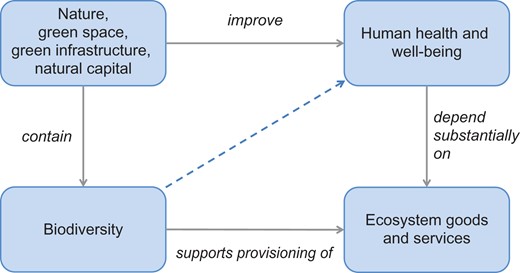
Biodiversity and human health: mechanisms and evidence of the positive health effects of diversity in nature and green spaces
AbstractIntroduction. Natural environments and green spaces provide ecosystem services that enhance human health and well-being. They improve mental health
Cytochrome P450 Enzyme Inhibition and Herb-Drug Interaction Potential of Medicinal Plant Extracts Used for Management of Diabetes in Nigeria
The use of herbal medicines is common in Africa, and patients often use a combination of herbs and drugs. Concurrent herbal and pharmaceuticals treatments can cause adverse effects through herb-drug interactions (HDI). This study evaluated the potential risk of HDI for five medicinal plants, Vernonia amygdalina, Ocimum gratissimum, Moringa oleifera, Azadirachta indica, and Picralima nitida, using in vitro assays. Patients with diabetes and some other disease conditions commonly use these medicinal plants in Nigeria, and little is known regarding their potential for drug interaction, despite their enormous use.

Ecosystem services - nature’s benefits
Nature's benefits or ecosystem services depend on a healthy environment. Investing in nature will help to secure these benefits for future generations.

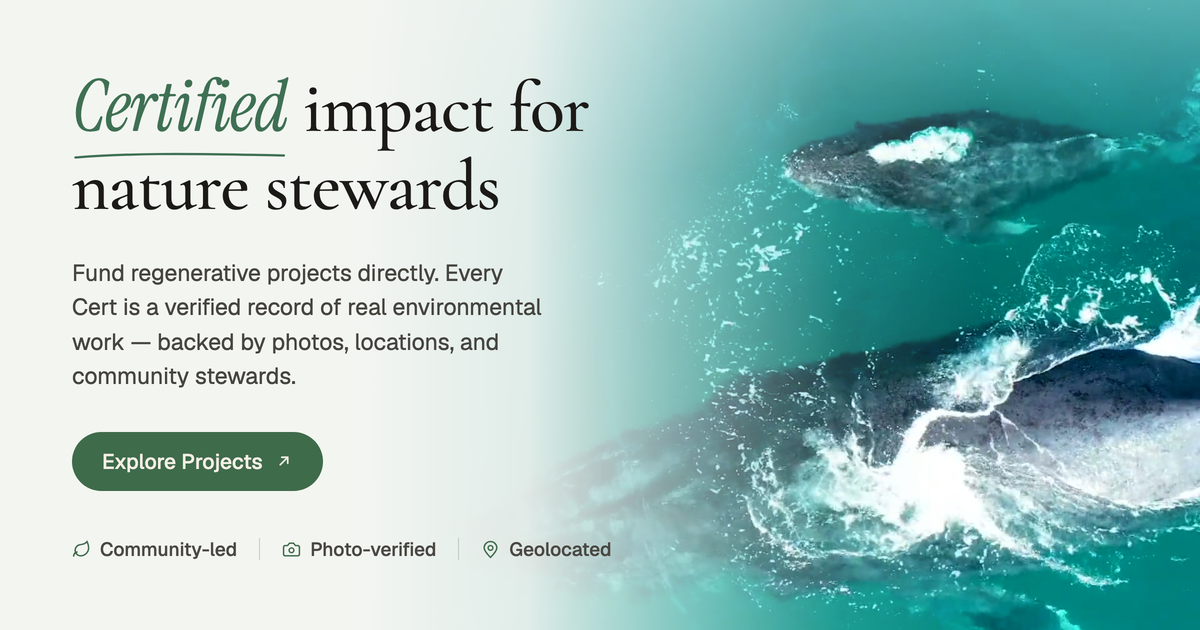
GainForest — Fund Regenerative Impact
GainForest connects funders with nature stewards doing on-ground regenerative work. Fund verified environmental impact directly.
The SAGE Community Coordinator: A Demonstration
Sustainable polyculture gardens thrive more effectively when they are designed with an awareness of other gardens in the community, as opposed to as individual gardens. However, the complex characteristics of plants, and their relations to other plant species in terms of needs and capacities, require a complex knowledge base not easily acquired by novice gardeners. We contribute a demonstration of our project, called the Software for Agricultural Ecosystems (SAGE) Community Coordinator, that helps manage the complexities of plant relationships and provides planting suggestions based on existing plants in adjacent garden sites. The research team collected the requirements and developed a preliminary demonstration of this system. This demonstration shows the feasibility of the idea and lays the foundation for a more comprehensive implementation of the SAGE Community Coordinator. By doing so, this paper explores the use of technology to foster the establishment of complex plant assemblages in urban and suburban areas to address the current and future limits of material resources derived from plants.
Home - Houston Botanic Garden
A wide variety of plant life and ecosystems, plus 2.5 miles of walking trails. Make memories at Houston Botanic Garden. Family friendly. Support. Educate.

“Open Source” Seeds Loosen Big Ag’s Grip on Farmers – World Sensorium / Conservancy
A handful of companies own the patents on virtually every seed planted in the US. Now, a new crop of unowned seeds is bringing biodiversity back to farming.
PEPAKEṈ HÁUTW̱ Foundation
Our programs include intention time and space to learn about W̱SÁNEĆ protocol, Traditional Ecological Knowledge, W̱SÁNEĆ stewardships practices, traditional uses of plants for both medicinal and technological purposes, and practical training for how to remove invasive species. Our programs can be tailored to fit the needs and pre-existing skills of interested groups.
Alliance of Native Seedkeepers
Discover unique heirloom and non-GMO seeds at Alliance of Native Seedkeepers. As a Native American-led store, we specialize in over 1,500 varieties, preserving the rich heritage and biodiversity of indigenous agriculture. Shop now to contribute to sustainable, community-focused farming practices.

Nature of Trust
The Nature of Trust Project is a collaboration between Biomimicry for Social Innovation (BSI) and Biomimicry 3.8 that combines biological research with real-world application to discover new models for social innovation using nature’s best strategies for building trust. Working alongside leaders in health equity and social change, the project explored how trust functions in living systems—and what those insights reveal for building stronger human relationships, organizations, and communities.

New Year, New Goals - Sri's leaflets
Introducing goals.garden - Goal and habit tracking on ATProto
Assessing nature's contributions to people
Recognizing culture, and diverse sources of knowledge, can improve assessments , A major challenge today and into the future is to maintain or enhance beneficial contributions of nature to a good quality of life for all people. This is among the key motivations of the Intergovernmental Science-Policy Platform on Biodiversity and Ecosystem Services (IPBES), a joint global effort by governments, academia, and civil society to assess and promote knowledge of Earth's biodiversity and ecosystems and their contribution to human societies in order to inform policy formulation. One of the more recent key elements of the IPBES conceptual framework ( 1 ) is the notion of nature's contributions to people (NCP), which builds on the ecosystem service concept popularized by the Millennium Ecosystem Assessment (MA) ( 2 ). But as we detail below, NCP as defined and put into practice in IPBES differs from earlier work in several important ways. First, the NCP approach recognizes the central and pervasive role that culture plays in defining all links between people and nature. Second, use of NCP elevates, emphasizes, and operationalizes the role of indigenous and local knowledge in understanding nature's contribution to people.

Relational values of nature: leverage points for nature policy in Europe
Relational values reflect the qualities of the relationships between humans and nature, such as care, social bonding, place attachment and spiritual meanings. In this perspective article, we argue ...

GainForest — Biodiversity Observations & Nature Projects
Explore field observations, biodiversity records, and nature projects from communities and organizations using GainForest.