

Shellfish safety hotline: (800) 553-4133 Check the Recreational Bivalve Shellfish Advisory Map before harvesting any bivalves.
Marine Fish and Shellfish Identification
The Department of Fish and Wildlife manages California's diverse fish, wildlife, and plant resources, and the habitats upon which they depend, for their ecological values and for their use and enjoyment by the public.
The fish language — fish-shell 4.7.1 documentation
This document is a comprehensive overview of fish’s scripting language.
WEBFISHING
WEBFISHING a multiplayer chatroom-focused fishing game! Relax and fish (on the web!)

Whales' Bubble Net Fishing | Nature's Great Events | BBC Earth
Communicating Pollutants That Threaten Tribal Identities: PFAS Contamination in Local Fish and Shellfish
Indigenous communities that rely on the consumption of local fish and shellfish may have elevated exposures to environmental contaminants, such as PFAS (perfluoroalkyl and polyfluoroalkyl substances). Conventional public health communication that focuses on reducing consumption can conflict with cultural identities tied to harvesting local fish. Through a series of focus groups and interviews ( n = 25) and a community-wide survey ( n = 155) among members of the Mashpee Wampanoag Tribe (Cape Cod, Massachusetts, USA), we document the connection between local fish/shellfish consumption and Tribal cultural identity, how PFAS contamination may threaten this identity, and explore how to more effectively communicate health risks to Tribal communities.

A Canticle to the Waterbirds
Clack your beaks you cormorants and kittiwakes,North on those rock-croppings finger-jutted into the rough Pacific surge;You migratory terns and pipers who leave but the temporal clawtrack written on sandbars there of your presence;Grebes and pelicans; you comber-picking scoters and you shorelong gulls;All you keepers of the coastline north of here to the Mendocino beaches;All you beyond upon the cliff-face thwarting the surf at Hecate Head;Hovering the under-surge where the cold Columbia grapples at the bar;North yet to the Sound, whose islands float like a sown flurry of chips upon the sea;Break wide your harsh and salt-encrusted beaks unmade for songAnd say a praise up to the Lord.And you freshwater egrets east in the flooded marshlands skirting the sea-level rivers, white one-legged watchers of shallows;Broad-headed kingfishers minnow-hunting from willow stems on meandering valley sloughs;You too, you herons, blue and supple-throated, stately, taking the air majestical in the sun-flooded San Joaquin,Grading down on your belted wings from the upper lights of sunset,Mating over the willow clumps or where the flatwater rice fields shimmer;You killdeer, high night-criers, far in the moon-suffusion sky;Bitterns, sand-waders, all shore-walkers, all roost-keepers,Populates of the ‘dobe cliffs of the Sacramento;Open your water-dartling beaks,And make a praise up to the Lord.For you hold the heart of His mighty fastnesses,And shape the life of His indeterminate realms.You are everywhere on the lonesome shores of His wide creation.You keep seclusion where no man may go, giving Him praise;Nor may a woman come to lift like your cleaving flight her clear contralto songTo honor the spindrift gifts of His soft abundance.You sanctify His hermitage rocks where no holy priest may kneel to adore, nor holy nun assist;And where His true communion-keepers are not enabled to enter.And well may you say His praises, birds, for your waysAre verved with the secret skills of His inclinations,And your habits plaited and rare with the subdued elaboration of His intricate craft;Your days intent with the direct astuteness needful for His outworking,And your nights alive with the dense repose of His infinite sleep.You are His secretive charges and you serve His secretive ends,In His clouded, mist-conditioned stations, in His murk,Obscure in your matted nestings, immured in His limitless ranges.He makes you penetrate through dark interstitial joinings of His thicketed kingdoms,And keep your concourse in the deeps of His shadowed world.Your ways are mild but earnest, your manners grave,Your customs carefully schooled to the note of His serious mien.You hold the prime condition of His clean creating,And the swift compliance with which you serve His minor meansSpeaks of the constancy with which you hold Him.For what is your high flight forever going home to your first beginnings,But such a testament to your devotion?You hold His outstretched world beneath your wings, and mount upon His storms,And keep your sheer wind-lidded sight upon the vast perspectives of His mazy latitudes.But mostly it is your way you bear existence wholly within the context of His utter will and are untroubled.Day upon day you do not reckon, nor scrutinize tomorrow, nor multiply the nightfalls with a rash concern,But rather assume each instant as warrant sufficient of His final seal.Wholly in Providence you spring, and when you die you look on death in clarity unflinched,Go down, a clutch of feather ragged upon the brush;Or drop on water where you briefly lived, found food,And now yourselves made food for His deep current-keeping fish, and then are gone:Is left but the pinion-feather spinning a bit on the uproilWhere lately the dorsal cut clear air.You leave a silence. And this for you suffices, who are not of the ceremonials of man,And hence are not made sad to now forego them.Yours is of another order of being, and wholly it compels.But may you, birds, utterly seized in God’s supremacy,Austerely living under His austere eye—Yet may you teach a man a necessary thing to know,Which has to do of the strict conformity that creaturehood entails,And constitutes the prime commitment all things share.For God has given you the imponderable grace to be His verification,Outside the mulled incertitude of our forensic choices;That you, our lesser in the rich hegemony of Being,May serve as testament to what a creature is,And what creation owes.Curlews, stilts and scissor-tails, beachcomber gulls,Wave-haunters, shore-keepers, rockhead-holders, all cape-top vigilantes,Now give God praise.Send up the strict articulation of your throats,And say His name.
The 7 Safest Edible Mushrooms to Forage and Eat
A list of the most delicious and safest edible mushrooms for beginner foragers, including chanterelles, oyster, and hen of the woods.
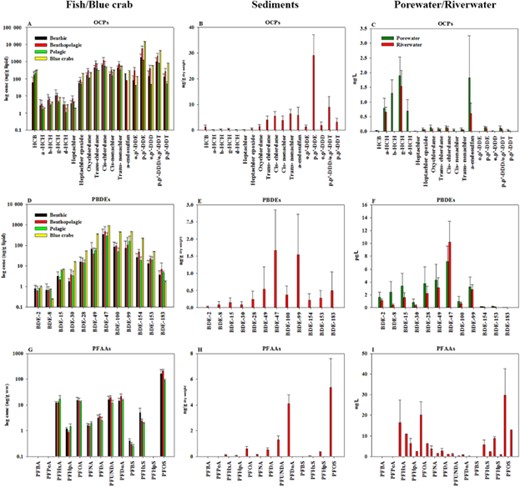
Uptake of hydrophobic organic compounds, including organochlorine pesticides, polybrominated diphenyl ethers, and perfluoroalkyl acids in fish and blue crabs of the lower Passaic River, New Jersey, USA
Abstract . The bioavailability and bioaccumulation of sedimentary hydrophobic organic compounds (HOCs) is of concern at contaminated sites. Passive sampler
Fauna Robotics | Capable, Safe, Fun Robots for Everyone
Meet Sprout, a humanoid platform for developers, enterprises, and researchers—shipping today.
.jpg)
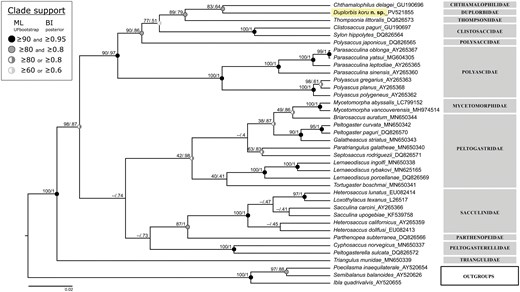
Description of a new species of the hyperparasitic barnacle <i>Duplorbis</i> Smith, 1906 and its cypris larva, with the molecular phylogenetic placement of the enigmatic family Duplorbidae Høeg & Rybakov, 1992 (Cirripedia: Rhizocephala)
Abstract Most species of Rhizocephala are obligate parasites of decapod crustaceans, but species in three families parasitize non-decapod hosts: Chthamalophilidae Bocquet-Védrine, 1961 (parasites of barnacles), Duplorbidae Høeg & Rybakov, 1992 (parasites of isopods and cumaceans), and Thompsoniidae Høeg & Rybakov, 1992 (mostly parasites of decapods but includes one species that is a parasite of stomatopods). Hyperparasitism (form of parasitism in which a secondary parasite lives on or in a primary parasite of a host) is extremely rare in Rhizocephala, but Duplorbis Smith, 1906, the type genus of the enigmatic family Duplorbidae, currently contains two named species hyperparasitic on bopyrid isopods (abdominal and branchial parasites of decapods) and one species on free-living isopods. A lectotype is selected for Duplorbis smithi Nierstrasz & Brender à Brandis, 1923. Recent work on the parasites of squat lobsters from New Zealand revealed a putative new species of this genus, described herein as Duplorbis korun. sp., hyperparasitic on branchial bopyrids of the genera Paragigantione Barnard, 1920 and Parapleurocryptella Bourdon, 1972. Each parasitized female bopyrid contained 3–8 externae of D. korun. sp. in the brood chamber. Externae of one host contained mature cypris larvae, a stage previously poorly known in this genus. These larvae are described herein using SEM and are shown to have a pair of long frontal filaments (retained from the nauplius stage), an exclusive feature shared among Duplorbidae. The first molecular (18S rRNA sequence) analysis of the family was also conducted. Duplorbids appear nested within a well-supported monophyletic lineage also comprising of Polyascidae Høeg & Glenner in Høeg, Noever, Rees, Crandall & Glenner, 2019, Polysaccidae Lützen & Takahashi, 1996, Clistosaccidae Boschma, 1928, Thompsoniidae Høeg & Rybakov, 1992, and Chthamalophilidae Bocquet-Védrine, 1961, most closely related to chthamalophilids. The discovery of this new species expands our knowledge of the species diversity, host use, and larval development of hyperparasitic rhizocephalans.
About Fishing
Cast your line into calm waters and feel the quiet pull beneath the surface. Each cast brings rewards, but some things you reel in were never meant to be found.

Flukebook
Flukebook helps you study, identify and protect marine mammal populations!
Chronology and ecology of early islanders in the Philippines: The Mindoro Archaeology Project
The investigation and excavation of caves and rockshelters located at the southern end of Occidental Mindoro produced significant artefacts, data, and information related to the initial arrival and colonization of the Philippine archipelago by anatomically modern humans. The sites provided several indications for the increasing adaptation to maritime environments and delivered evidence for their behavioural and technological complexity. Mindoro lies along a direct route to reach the main islands of the Philippines coming from the Asian mainland via Borneo and Palawan. Since 2010, surveys conducted in the karstic regions of Ilin Island and Sta. Teresa, Magsaysay have mapped and explored over 40 caves and rockshelters. Particularly the sites of Bubog 1, Bubog 2, Cansubong 2 Cave, and Bilat Cave, have delivered cultural and biological materials that chronicle human habitation and adaptation to maritime and coastal environments over a period of 35–40,000 years. Early islanders in the region intensively foraged for molluscs and other marine invertebrates along the coast, employed different techniques to catch a variety of reef and pelagic fish as well as terrestrial animals, and were embedded in maritime networks with access to transfer routes, through which technology, information, and ideologies were disseminated over long distances and across Island Southeast Asia (ISEA) and possibly also reaching the Southeast Asian mainland. The results of the archaeological research in Mindoro contribute to our understanding of the processes of human island adaptation, complement ongoing research on the peopling of Southeast Asia, and enhance current knowledge of prehistoric subsistence strategies across the region.
Second flush of pink oyster mushrooms. They were perfect in a quiche this weekend! #mushrooms #fungifriends #fungi
