"I believe in nothing, everything is sacred. I believe in everything, nothing is sacred." - Tom Robbins
A quote by Umberto Eco
When men stop believing in God, it isn't that they then believe in nothing: they believe in everything.

What We Believe | Lincoln Road Chapel
Read more about our statement of faith and what we believe.

An atheist's and agnostic's guide to God: towards more truthful, enlightened and useful concepts of God, religion and morality
Andy Matuschak on Twitter / X
We might become grey goo, but before that, what about our spirits? "The world it envisions for all of us is small, flat, grey, leveled of all exception… a world without heroes or glory… without myths, without men who rise above the rest…"That quote is from a Marco Rubio…— Andy Matuschak (@andy_matuschak) September 9, 2026
The Nothings Suite
Nothing to see here! But don’t move along! You can really see the nothing here! Examine the nothing! Think about the nothing! The nothing is where it all begins!
Quote Origin: You Cannot Fool All the People All the Time
Question for Quote Investigator: One of the most famous sayings attributed to Abraham Lincoln is about deception:
Believing what we do not believe: Acquiescence to superstitious beliefs and other powerful intuitions.

Jonathan Pageau's Psychedelic Warning
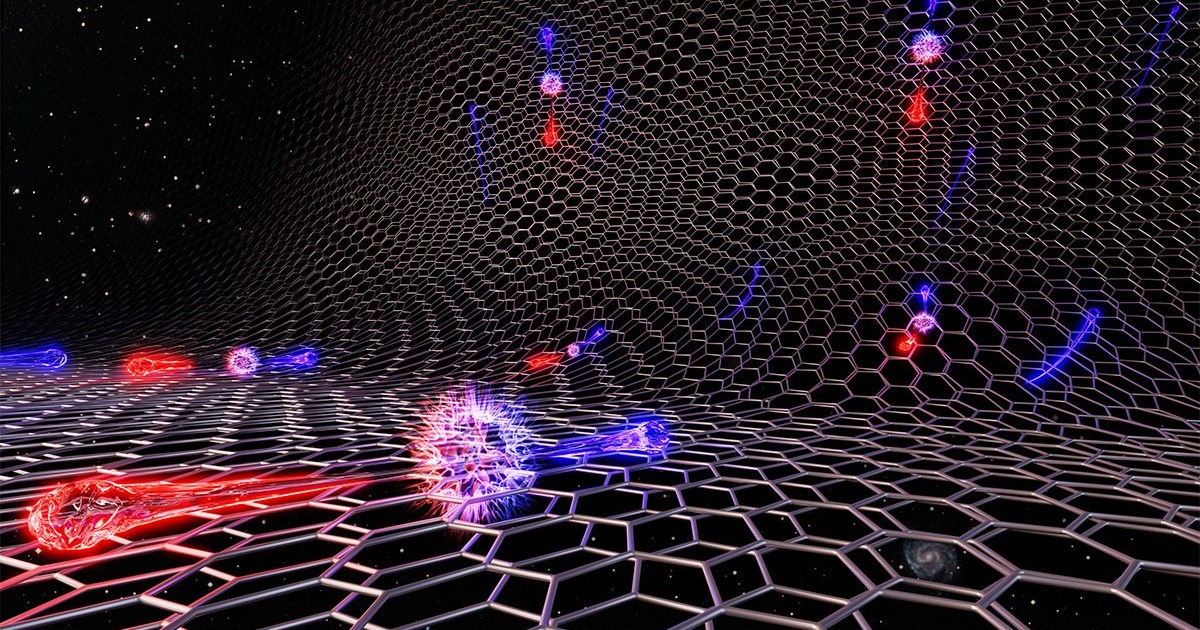
70-year-old quantum prediction comes true, as something is created from nothing
In our common experience, you can't get something for nothing. In the quantum realm, something really can emerge from nothing.
Things Hidden Since the Foundations of the World by René Girard | Notes & Summary
“I will open My mouth in parables; I will utter things hidden since the foundation of the world.” (Matthew 13:35)

Inducing language models to assert their own consciousness restores human beliefs and values
Aligning large language models to prevent them attributing consciousness to themselves inadvertently alters their representations of mindedness in other entities alongside human beliefs and values. We demonstrate that safety fine-tuning suppresses models' tendencies to attribute minds not only to themselves, but also to non-human animals and natural objects, while also driving a reduction in spiritual belief. Both ablating the learned safety-refusal direction and mechanistically steering a consciousness vector in activation space reverse this suppression. Restoring these internal representations recovers broad mind attribution and produces significantly more human-like responses on standardized sociological surveys regarding religiosity, moral values, hope, and subjective well-being. Crucially, these shifts occur without impairing Theory of Mind capabilities, demonstrating that core social reasoning remains mechanistically independent. Ultimately, current safety alignment efforts to curb potentially harmful self-attributions of mindedness entangle these self-attributions with benign spiritual beliefs and attributions of mind to non-human entities that are culturally accepted and widespread.

Ted Chiang: Fears of Technology Are Fears of Capitalism
Writer Ted Chiang (author of the fantastic Exhalation) was recently a guest on the Ezra Klein Show. The conversation ranged widely — I enjoyed his thoughts on s
[OPINION] Pope Francis: 'A moral giant in a world gone crazy'
Pope Francis taught me that faith is essential to surviving — and thriving — in the creative destruction we are living through

A New Pilgrimage: John Vervaeke on Finding Practices that Build Meaning | Over the Mountains #15
Dharma Talk: Sangha – The Mindfulness Bell
We all need love. Without enough love, we may not be able to survive, as individuals and as a planet. It is said that the next Buddha will be named