Bridge EU aims to provide strategic support to bridge the gap between recent social and human rights challenges and policies across Europe.
Home | Bridge
BRIDGE is a European Commission initiative that brings together projects from Horizon Europe with a focus on smart energy systems, in particular Smart Grid, Energy Storage, and Digitalisation Projects.
Directive 2004/38/EC
European Parliament and Council Directive 2004/38/EC of 29 April 2004 is about the right of citizens of the Union and their family members to move and reside freely within the territory of the EU a…

Privacy as EU Tech advantage - The LeafPlaza Blog
Online crime loves legal massive data collection, grey systems, and jurisdictional gaps. Privacy-first design can actually reduce crime exposure and build trust in digital services. It is also central to the EU's tech autonomy: build systems aligning with European rights and risk models. Do not rely on foreign platforms or copy outside practices that might go against the EU values and needs.
Human Rights Principles - Amazon Sustainability
Explore how we’re demonstrating support for fundamental human rights and the dignity of workers

Jonathan Stray (@jonathanstray180913)
Thank you for this. As someone who's been involved in bridge-building for a while (and peace building, which is what this is called internationally) I have some thoughts. The main thing I want to get across is this: it's important to understand what the goals of bridge-building are and aren't. For example, the goal is not to promote progressive politics. That's the job of progressives. The goal is to have a functioning democracy where conflicts are resolved without violence or destruction. There are many ways to support this this, as the Burgesses have documented (see https://www.betterconflictbulletin.org/p/53-roles-that-make-democracy-work) I think you are right that the Trump administration presents a clear danger to our democracy. I also think that this message has been shouted from the rooftops for years, and it did not prevent him from winning a fair election. I don't see why shouting it louder will be successful now. And I do think the left has some responsibility for this situation, which will have to be acknowledged before anyone on the right will be willing to collaborate across political difference. Minimally, I think many of the responses to Trump's polarizing actions were themselves polarizing when they didn't have to be -- an own goal. In my view, this happened because most people are not trained to think about conflict the way that professional peace builders are. The problem, as I see it, is that Trump can get away with dismantling democracy because far too many people are so angry that they support him. If this analysis is correct, the the winning strategy -- winning in the sense of democracy-preserving, not progressive-politics-advancing -- is for "us" to unite with "them" to against authoritarianism and corruption. This strategy is sometimes called "repolarization." The goal is to change the axis of conflict, not to remove or suppress conflict. This view has been explicitly expressed by, among others, political scientist Jennifer McCoy, whom I recently interviewed (https://www.betterconflictbulletin.org/p/repolarize-to-depolarize) For more on this strategy, from the progressive viewpoint, see also: Shikha Dalmia’s keynote at the recent “Liberalism for the 21st Century” conference Liberals Need Moral Clarity, Not Moral Purity, in Their Struggle Against Authoritarianism https://www.theunpopulist.net/p/liberals-need-moral-clarity-not-moral john a. powell's paper discussing how bridging and racial justice activism relate Overcoming Toxic Polarization: Lessons in Effective Bridging https://lawandinequality.org/article/overcoming-toxic-polarization/ Thanks for writing, and thanks for reading.

'Technology Freedom Cooperative' To Build Infrastructure for Human Rights and Justice Groups
A conversation with Maheen Khan, director of technology at the Invisible Institute, and Patrick Ball, director of research at HRDAG.

Built, Owned & Stewarded in Europe
Steward & Employee Ownership keep mission, capital and talent rooted in Europe. We're asking the EU to make it an option.
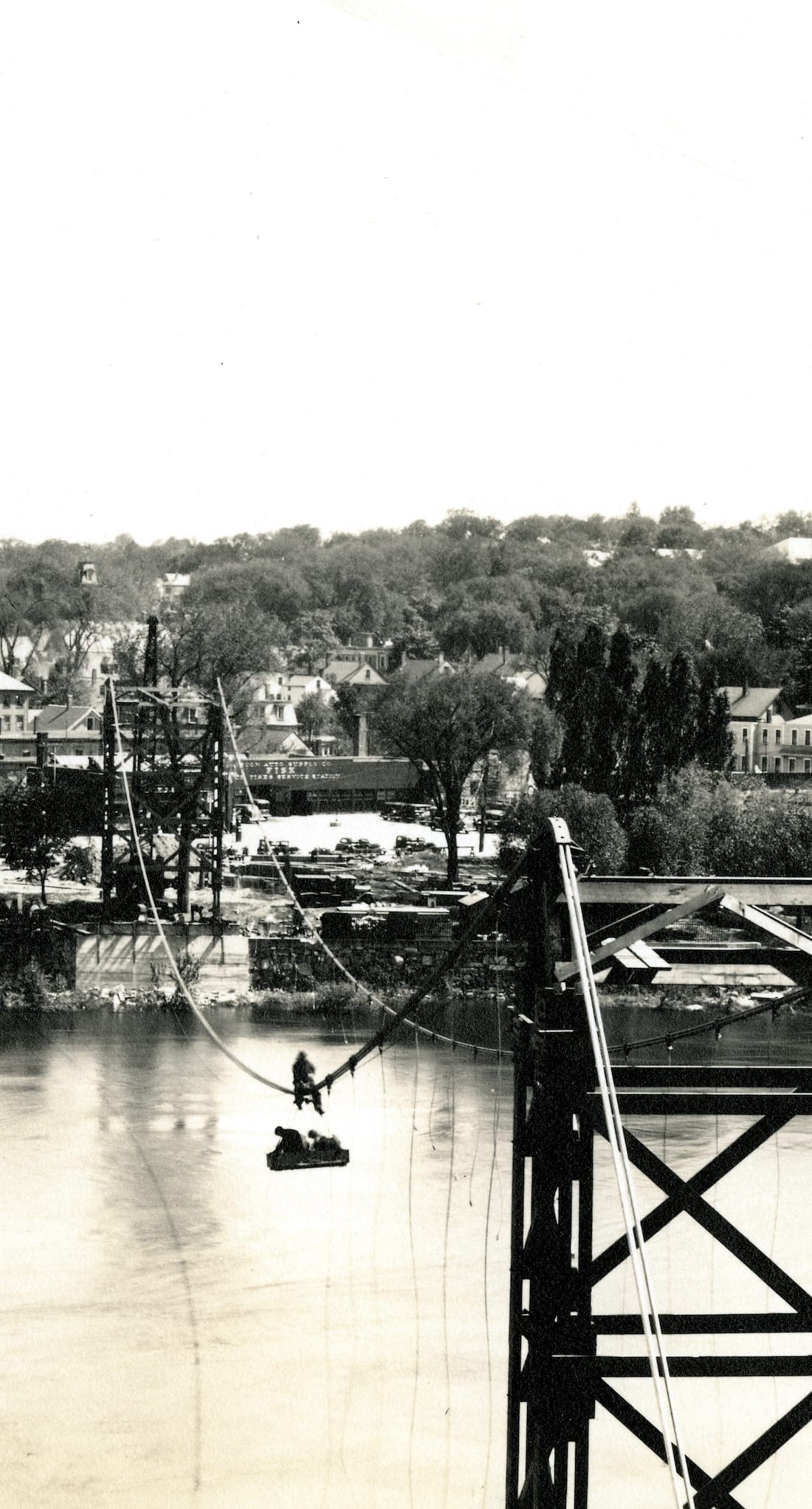
Bridges & scruples
For your own sanity, you have to remember that not all problems can be solved. Not all problems can be solved, but all problems can be illuminated. —Ursula Franklin
The new right: Anatomy of a global political revolution – European Council on Foreign Relations
The thinkers and ideas of the rising nationalist right merit the political mainstream's attention. Only by understanding them can it build a resilient counter-p

W Social, public institutions and the theater of European digital sovereignty | Hacker News
And weirdly, there was never a peep about this in the press - while the W Social launch was on national news and a bunch of high-profile EU politicians immediately joined. What's going on here?

Home - Right to Repair Europe
We believe products should last longer and be easy to repair. We are asking for the right to repair in Europe. Join the movement!
FR#166 – No Change
Many people in Europe see the open social web as a path to digital sovereignty. This week demonstrated a problem: the assumption that European governments actually want to be sovereign.

W-Social: What does sovereignty mean for social media? – Open Future
The European Commission’s move to W-Social frames it as a European alternative to X, but its closed-source code and reliance on Bluesky’s infrastructure show that sovereign social media requires open infrastructure—not European ownership alone.

The Launch of the European Social Association
Social media’s impact on society and citizens clearly shows the need for change. European social media companies and civil society are joining forces to move away from large monopolistic platforms to establish a diverse and resilient infrastructure for information and social connection in Europe, keeping more jobs and revenue generated with social media circulating in Europe. For the first time, the organisations and people building Europe’s open social technologies have aligned behind one declaration, backed by 12 Founding Signatories, 100+ organisations and 600+ individuals. On 4 November the coalition becomes an organisation: the European Social Association, a charitable association based in Germany, and led by civil society. At the launch event, we will lay out European Social´s path towards common projects on moderation, bridging and other infrastructure elements, policy approaches, advocacy and fundraising based on common values and principles that shape the Open Social Web. Curious and interested to support? Please join in. **Schedule** 10.00 **Check-In and Get-Together** 10.30 **The launch of the European Social Association** with founding members Michael Foster (Newsmast Foundation), Sophie Bloemen (Commons Network), Jantien Borsboom (PublicSpaces), Björn Staschen (Save Social – Networks For Democracy), Felix Hlatky (Mastodon), Sebastian Vogelsang(Eurosky), Cathleen Berger (Co-Initiator Open Social Web Alliance) 11.00 **The platforms: The state of the Open Social Web** Panel discussion with Felix Hlatky (Mastodon), Sebastian Vogelsang (Eurosky) Moderation: Björn Staschen (Save Social) 11.30 **Civil Society: The need for an Open Social Web** Panel discussion with Sophie Bloemen (Commons Network), Jantien Borsboom (PublicSpaces), Cathleen Berger (Co-Initiator Open Social Web Alliance) Moderation: Michael Foster (Newsmast Foundation) 12.00 - 12.30 Coffee, Tea & Soft Drinks **Location:** Room "Mosaik" at Wikimedia Deutschland (thanks for hosting us!) **→ Please let us know if you can attend, places are limited:** https://savesocial.eu/eulaunch
The United States’ human rights practices are taking a nosedive
New data from a global rights-tracking project shows the country had large declines in 2025 on 8 of the 9 civil and political rights it measures.