

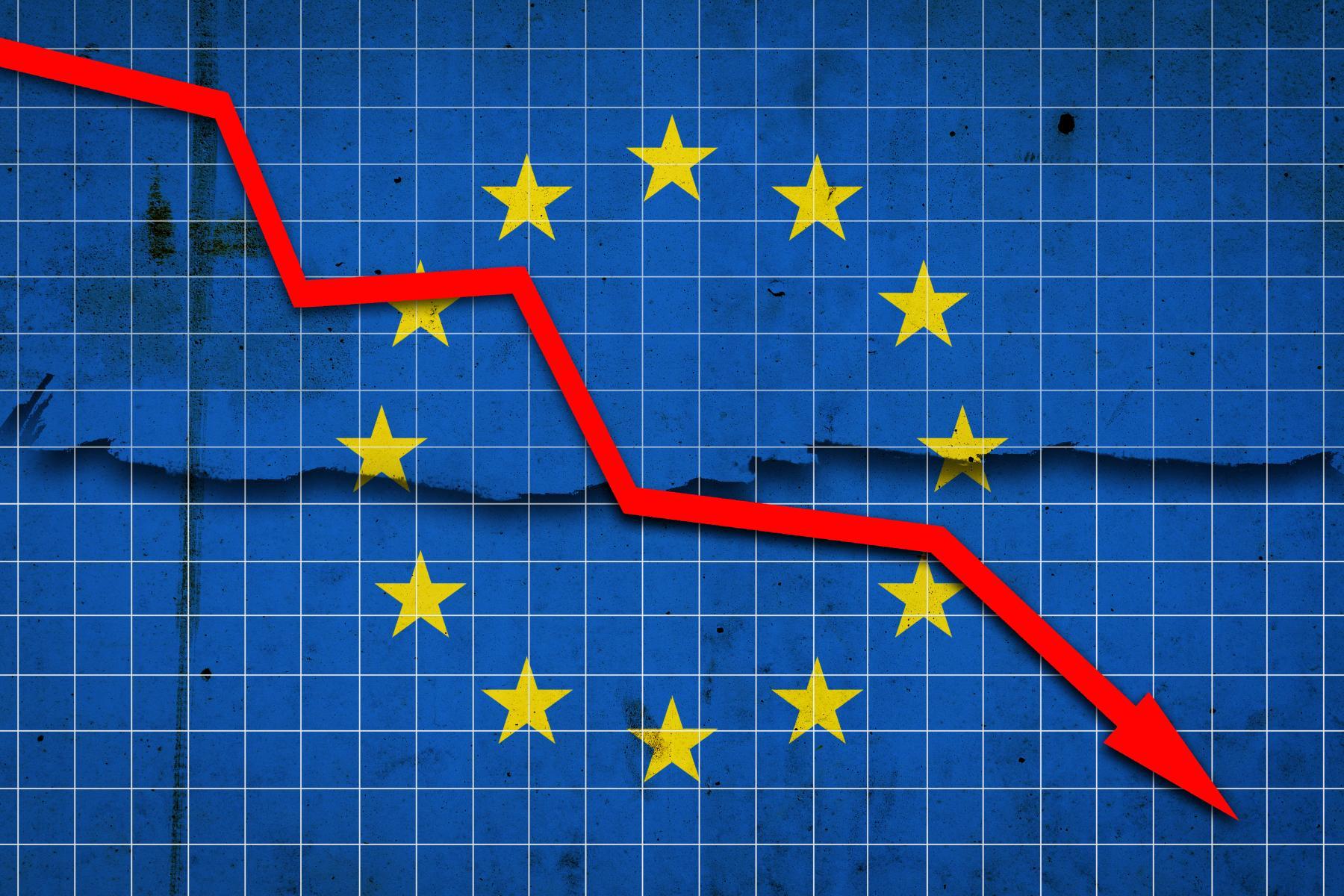
The eurozone's lack of fiscal union puts it at risk of heading for Japanification, Robin Brooks warns.
Germany’s fiscal stimulus plan shows Europe is learning the wrong lesson from Ukraine | Brookings
Robin Brooks considers the feasibility and impact of Germany's planned spending on the military and infrastructure.

Un nouveau modèle de croissance en zone Euro ? – Le blog de Philippe Waechter
Le blog de Philippe Waechter, Directeur de la Recherche Economique chez Ostrum Asset Management.

Ce que l’austérité a fait à la croissance de la zone euro
Le gouvernement Barnier semble emporter la France sur la voie de la consolidation budgétaire : à travers ses propositions de hausses des prélèvements obligatoires (équivalentes à 20 milliards d’euros) et de coupes dans les dépenses publiques (40 milliards d’euros), c’est bien l’assainissement des finances publiques qui est recherché.
Monetary policy transmission in the euro area: Why this time it’s different
The unprecedented surge in prices since 2021 led the ECB to embark on the fastest tightening cycle in the euro area’s history. This column analyses the lags and strength of monetary policy transmission to output and inflation over the two decades in the euro area. It shows that the peak effects on real GDP and headline inflation are observed within 12-18 months of the interest rate rise. The impact on inflation has been stronger and more persistent in the recent tightening cycle, reflecting the forceful monetary policy response and the higher flexibility of prices.

Is the US dollar's reserve currency status eroding? | Brookings
Robin Brooks analyzes changes in the U.S. dollar's reserve currency status during the second Trump administration.
annotations: La globalisation, la fragmentation et le système monétaire international
Traduction française de "Globalisation, fragmentation, and the international monetary system" de Barry Eichengreen
Structural adjustment: damages, reparations and pathways to non-recurrence
Beginning in the 1980s and 1990s, the International Monetary Fund (IMF) and the World Bank implemented neoliberal structural adjustment programmes (SAPs) across most countries in Asia, Africa and Latin America. SAPs imposed austerity, privatisation and economic deregulation and have been associated with severe negative impacts on human welfare, including (a) declining real wages and working-class consumption, (b) increased rates of poverty and basic-needs deprivation, (c) increased neonatal and maternal mortality and (d) reduced health system access. Structural adjustment also created conditions for increased financial outflows and drain from the global South through unequal exchange. This paper reviews evidence of these damages and proposes possible options for reparations and distributive justice. We argue that the IMF and the World Bank should be democratised and restructured—or otherwise replaced by alternative institutions—to prevent further harm.
ESF+ Study on Workers’ Buyout
This report provides a WBO overview within a European context, defines WBO and the most common models, as well as current trends and insights within the WBO context. The assessment is further enriched with insights collected from the countries analysed, incl. the mapping of the WBO frameworks in France, Spain, Italy and Slovenia and the in-debt case studies.

annotations: Que faire face à la sous-évaluation des monnaies asiatiques ?
Traduction française du billet de blog de Jeffrey Frankel, "Undervaluation of Asian currencies"
Who supplies and demands safe assets – and why it matters
Safe assets are the building blocks of modern financial markets. This column examines the sectoral dynamics of safe assets across advanced economies since the 1980s. It shows that foreign demand for these assets has steadily increased, with the financial sector playing a key role in meeting it. However, because financial institutions often back the safe assets they create with risky loans, this rising foreign demand can fuel domestic credit booms and contribute to macroeconomic instability. The results highlight the importance of carefully managing the creation of safe assets within the global financial system.

Looking for a “fair” international monetary system
President Trump’s Chief Economic Adviser, Stephen Miran, has claimed that the international monetary system in which the US provides the rest of the world with a safe, liquid asset is “unfair” as it supposedly prevents the US from eliminating its current account deficit. His proposed solution is to lower the value of the dollar through coordinated currency market intervention by foreign central banks. This column finds the idea that there could be lasting reversal of exchange rates following an international currency agreement highly speculative, and argues that a multipolar system would attenuate the Triffin dilemma and provide the US with a deficit-adjustment tool.
Valuing What Counts: Framework to Progress Beyond Gross Domestic Product: Our Common Agenda Policy Brief 4
annotations: Une union monétaire sans union budgétaire est-elle vouée à l’échec ?
Blog de sciences économiques et sociales de Martin Anota. Traductions, revues de presse.
L’erreur fondamentale de la zone euro
Blog de sciences économiques et sociales de Martin Anota. Traductions, revues de presse.

Retombées de la politique monétaire de la Fed sur celle de la BCE : le rôle des « nouvelles » sur l’inflation | Banque de France
Billet de blog 386. La politique monétaire de la Fed a eu des effets sur les conditions financières en zone euro lors du cycle monétaire récent. Toutefois, ces effets ont avant tout résulté indirectement de la perception par les marchés de perspectives d’inflation communes entre les deux zones et non d’une influence directe. Ainsi, pour les marchés, la crédibilité de la BCE à lutter contre l’inflation en toute indépendance de la Fed n’a pas été mise en doute.

Supporting AT Proto development with money and infrastructure should be a no-brainer for EU industrial policy. In fact, given the need for alternatives to US-owned platforms, comparative advantage, and infinite downstream benefits, few areas offer a bigger bang for your industrial policy buck.

Eurosky Sebastian
2 days ago I had the opportunity to participate in the European Commission‘s workshop on the future of social networks in Europe, together with researchers, entrepreneurs, policymakers, investors and civil society representatives.
