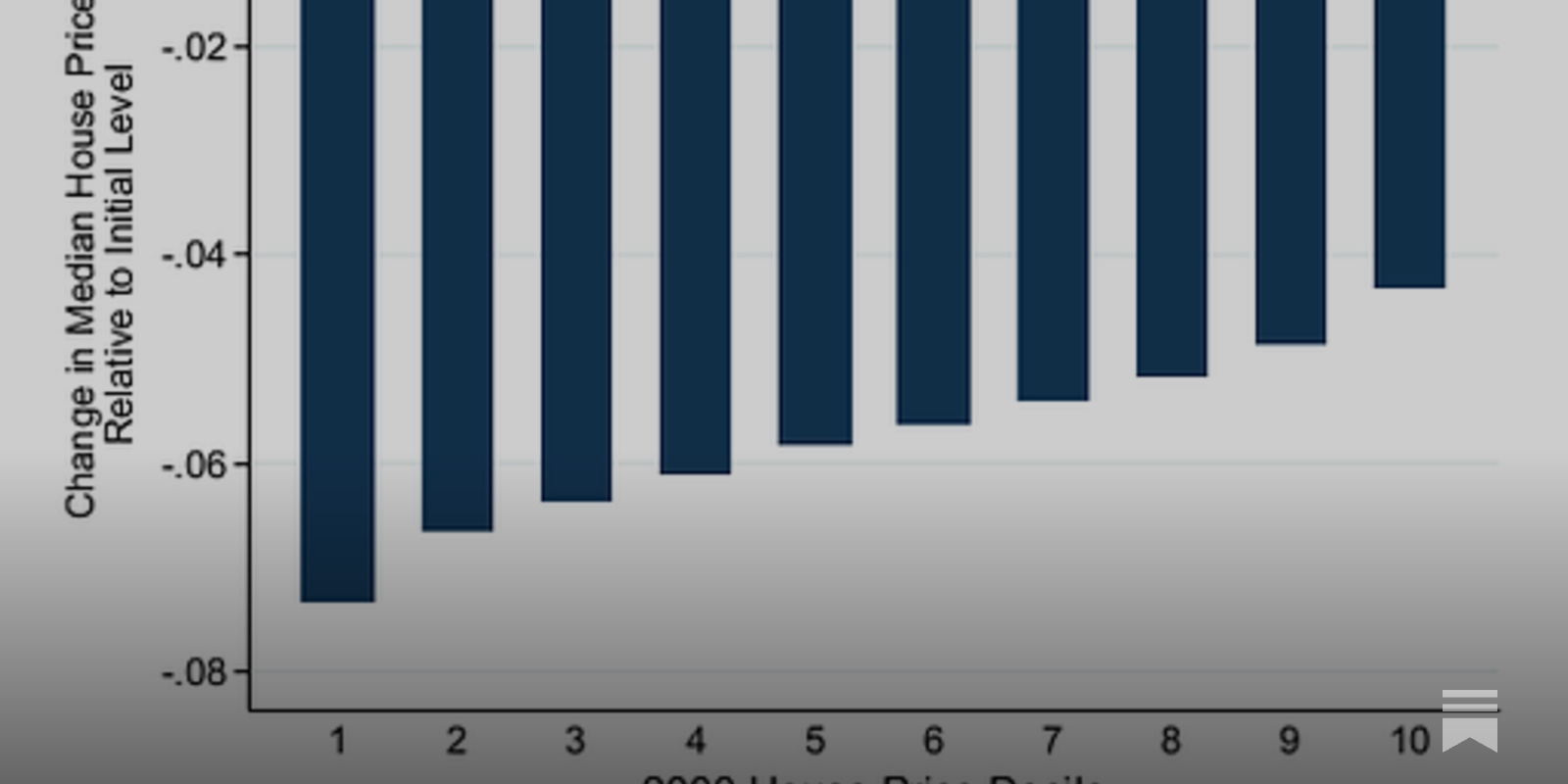
Rich newcomers can raise low-end rents, and adding high-end homes can lower them
More Housing is Possible: a National Town Hall · Burhan for State Senate
Join Vice Mayor Burhan Azeem and the people behind the Montana Miracle, California’s SB79, and the ROAD to Housing Act to discuss recent wins and what comes next for the housing movement. Speakers will dig into the policy that's moving the needle, the campaigns and organizing that got us here, and how local leadership can turn big ideas into more homes. Expect sharp takes, lively panels, and the collective brainpower of the country's most effective housing advocates in one (virtual) room.

Seniors Are Fighting New Senior Housing as US Faces Shortage
America’s elders need more places to live, but even in liberal enclaves that recognize the problem, developers are facing the fiercest foes of all: America’s elders.

One condo, hundreds of homes: UHERO study reveals housing ripple effect | University of Hawaiʻi System News
Housing filtering is a process in which new construction sets off a chain of moves that frees up existing homes across the market.

The housing theory of everything - Works in Progress Magazine
Western housing shortages drive inequality, climate change, low productivity growth, obesity, and even falling fertility rates.

The Artist Loft: Affordable Housing (for White People)
Do these tax-subsidized apartments perpetuate segregation by excluding some low-income households?

Communities Across the Nation Want to Add Housing. Which Metropolitan Areas Are Adding the Most?
Between 2020 and 2025, four Texas metropolitan areas—Austin, Dallas, Houston, and San Antonio—accounted for 13.3 percent of total US housing supply growth.

Higher Wages for Early Care and Education Workers Builds a Stronger System
Higher wages for early care and education workers in California is critical to expanding affordable child care.

America’s housing was built for a world we no longer live in
The United States is turning 250. Everything we want for the next 50 years starts with fixing housing.

Almost nowhere in California is building enough, according to the state. Here’s why
California ordered cities and counties to plan for 2.5 million new homes by 2030. Only five jurisdictions are on track to hit their numbers.

The Last Gasps of the Rent Seeking Class
Over the past fifty years, the U.S. economy built a giant rent-extraction layer on top of human limitations: things take time, patience runs out, brand familiarity substitutes for diligence, and most people are willing to accept a bad price to avoid more clicks. Trillions of dollars of enterprise value depended on those constraints persisting. – Citrini Research
Credit Access in the United States
We measure differences in US households’ access to credit and explore the mechanisms driving such differences using newly constructed population-level linked credit bureau and Census data. We find large differences in credit scores by race, class, and hometown that emerge in one’s 20s and persist throughout the life cycle. These gaps are primarily driven by differences in delinquencies that emerge in young adulthood. By age 30, 73% of Black individuals, 62% of those from low-income families, and 51% of those from Appalachia and the South have a 90+ day delinquency on their credit report, in contrast to 36% for White individuals, 20% for high-income families, and 31% for those from the upper Midwest. These delinquencies are correlated with income and wealth, but observed income profiles and wealth account for at most 10–35% of the gaps in delinquencies across groups. In contrast, movers-based estimates of hometown effects imply that childhood exposure accounts for around 50% of the differences in delinquencies across hometowns. Counties that promote repayment also promote upward income mobility, but adult income mediates only a small fraction of this relationship: growing up in a place where others are likely to repay improves credit outcomes even for those who do not have higher income in adulthood. We provide suggestive evidence on the mechanisms driving these patterns. JEL Codes: G5, H0.

Opinion | One City Might Have Just Cracked the Housing Crisis
A large real estate development in the middle of Vancouver, British Columbia, shows how cities can build more housing.

Community wealth building
As the UK’s leading organisation for community wealth building, we work with places to build fairer, more inclusive local economies.
Will the AI IPO boom make S.F. richer, or wipe out what’s left of its middle class?
OPINION: Anthropic and OpenAI plan IPOs that make previous tech booms look tiny. If San Francisco wants to benefit, our leaders need far more urgency on housing, the editorial board writes.