

We’ve all been led to believe that self-confidence or self-esteem is the answer to everything.
Confidence
Confidence is a belief in oneself, the conviction that one can meet life's challenges and succeed, and the willingness to act accordingly. Being confident requires a realistic sense of one’s capabilities and feeling secure in that knowledge. Projecting confidence helps people gain credibility, make a strong first impression, deal with pressure, and tackle personal and professional challenges. It’s also an attractive trait, as confidence helps put others at ease.

9 Steps To Banish Insecurity And Develop Self-Confidence
Have you ever felt like you’re stuck in a job you don’t like and can’t seem to get yourself out of the situation? That’s what happened to a reader, who felt that her lack of self-confidence was holding her back. Here’s how to banish insecurity and develop self-confidence.

Here’s What Successful People Do When They’re Feeling a Lack of Confidence. (Hint: It’s Not About Working Harder)
Taking action is key.

New Insights into Self-Insight: More May Not Be Better
An innovative study technique yields surprising results that counter the popular idea that knowing yourself is good for you
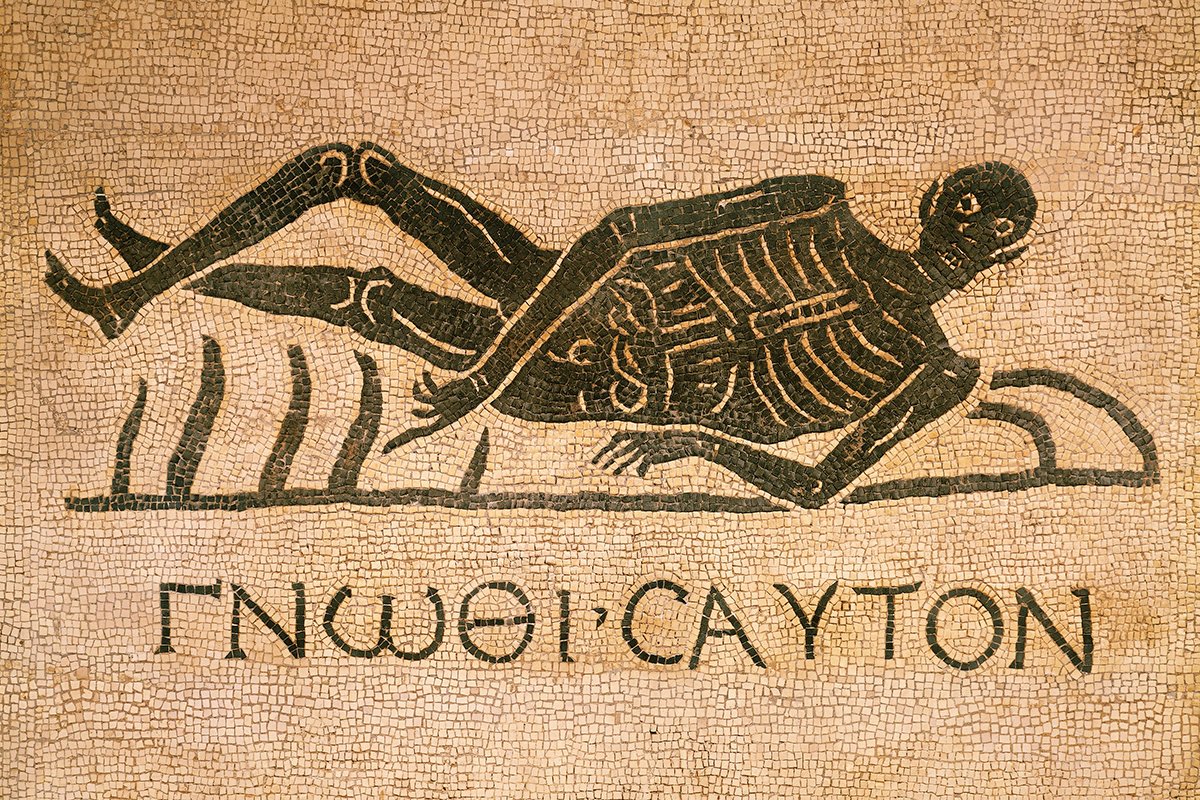
Ask HN: Low self confidence and self esteem. How to improve? | Hacker News
So many times when I had to meet someone or talk to someone, I feel worthless and underconfident. I could not able to talk to them properly and hesitate.
Why speaking to yourself in the third person makes you wiser | Aeon Ideas
Wisdom and good decision making are within your power: just as soon as you start speaking of yourself in the third person

Who Can You Trust?
Reprint: R1403K Success in business unquestionably requires some willingness to cooperate through having faith in others. The question is how much faith and in whom? Decades of scientific research show that people’s accuracy in deciding if another can be trusted tends to be only slightly better than chance. But this isn’t because trustworthiness is completely unpredictable. It’s because the guidelines most of us use to make these predictions are flawed. We place too much emphasis on reputation and perceived confidence, ignoring the fact that human behavior is always sensitive to context and can often be better assessed by our own intuition. So when your company’s money and resources are on the line, how can you do a better job of gauging trustworthiness and thereby improve your likelihood of success? This article draws on emerging research to show how trustworthiness works and offers four points to keep in mind the next time you’re deciding whether or not to do business with a new partner: Integrity can vary, power does corrupt, confidence often masks incompetence, and it’s OK to trust your gut.
Want to sound and feel more confident? Ditch these 11 phrases from your vocabulary, say psychologists
The words we use can have a powerful effect on our moods and confidence. Here are some negative phrases to ditch if you want to think more positively, according to behavioral scientists, researchers and psychologists.

The Inconvenient Truth about Your "Authentic" Self
To actually feel authentic, you might have to betray your true nature

3 Life Goal Red Flags That Actually Prove You’re More Successful Than You Think, Backed by Science
Take a closer look: You may be smarter, wealthier, and have stronger social ties than you might think.
Different facets of narcissism are associated with different personal values, study finds
New research from Poland sheds light on how narcissistic personality traits are related to personal values. The findings, published in the journal Personality and Individual Differences, provide evidence that valuing self-enhancement is a core aspect of narcissism. But the study also indicates that different facets of narcissism are associated with different personal values.

People with low self-esteem tend to seek support in ways that backfire, study finds
People with low self-esteem are more likely to seek support from an intimate partner in a manner that tends to backfire, according to new research in

From social skills to sleep patterns: all the self-help advice that actually works
Much advice on how to be successful is wrong, or useless cliches. Here we cover the best advice we've found in the last 5 years that's backed by evidence.
Want to Instantly Become a Better Leader? Science Says 3 Simple Habits Will Make You More Influential and Charismatic
Simple things you can immediately start doing, without changing your leadership style. (Or yourself.)

Rethinking Trust
Reprint: R0906H Will we ever learn? We’d barely recovered from Enron and WorldCom before we faced the subprime mortgage meltdown and more scandals that shook our trust in businesspeople. Which raises the question: Do we trust too much? In this article, Stanford professor and social psychologist Kramer explores the reasons we trust so easily—and, often, so unwisely. He explains that genetics and childhood learning make us predisposed to trust and that it’s been a good survival mechanism. That said, our willingness to trust makes us vulnerable. Our sense of trust kicks in on remarkably simple cues, such as when people look like us or are part of our social group. We also rely on third parties to verify the character of others, sometimes to our detriment (as the victims of Bernard Madoff learned). Add in our illusions of invulnerability and our tendencies to see what we want to see and to overestimate our own judgment, and the bottom line is that we’re often easily fooled. We need to develop tempered trust. For those who trust too much, that means reading cues better; for the distrustful, it means developing more receptive behaviors. Everyone should start with small acts of trust that encourage reciprocity and build up. Having a hedge against potential abuses also helps. Hollywood scriptwriters, for instance, register their treatments with the Writers Guild of America to prevent their ideas from being stolen by the executives they pitch. To attract the right relationships, people must strongly signal their own honesty, proactively allay concerns, and, if their trust is abused, retaliate. Trusting individuals in certain roles, which essentially means trusting the system that selects and trains them, also works but isn’t foolproof. And don’t count on due diligence alone for protection; constant vigilance is needed to make sure the landscape hasn’t changed.
New study finds that when people help collect data or contribute to research it can build public trust by making scientists feel personally familiar and approachable, and that trust then spreads to how local and tangible the research feels. jcom.sissa.it/article/pubid/JCOM_2506_2026_…

How can citizen science reduce psychological distance to science? Insights from three projects in contested environmental contexts
jcom.sissa.it