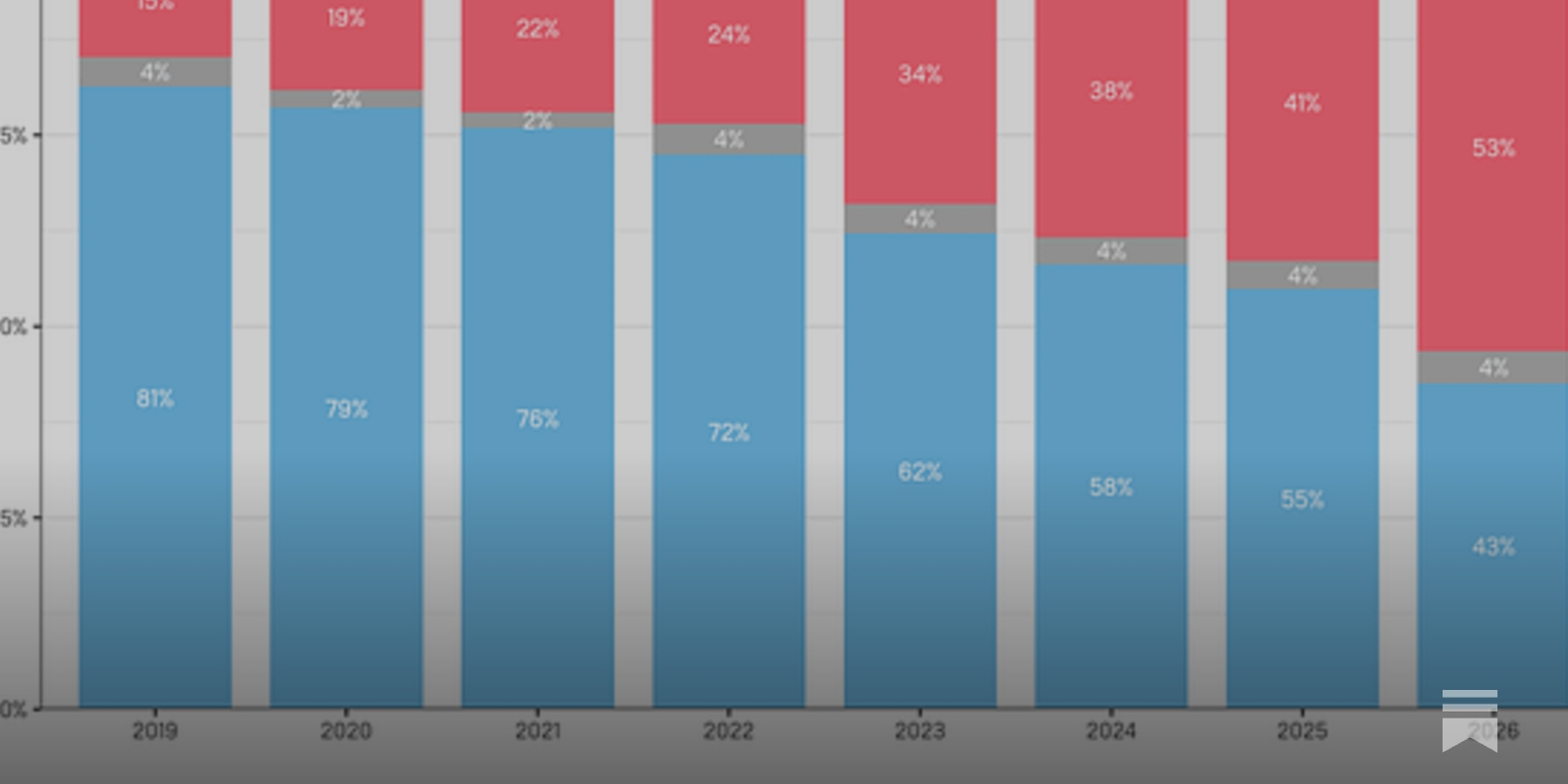
Fed up with bloated, confusing internal documents, companies are issuing new rules for when employees should — and shouldn't — use AI.
Companies rushed in on AI. Now some are pulling back
Rapid AI adoption left workers cleaning up a flood of errors and low-quality work

Bosses Are Blowing More Money on AI Agents Than It'd Cost Them to Just Pay Human Workers
Some organizings are finding themselves spending more on AI token fees than they do paying human salaries.
AI Is Turning Workplaces Into Hopeless Gridlock
Office workers find that they are being flooded by AI generated workslop that's paradoxically making them less productive.

Companies Are Being Torn Apart by AI "Workslop," Stanford Research Finds
Not only is AI hampering productivity, but it's also blowing up collaboration and souring employee dynamics.

Cory Doctorow: The people who tell you ‘AI is changing everything’ are lying
It has become impossible to tell managers mesmerised by artificial intelligence that the tools are not, in fact, helpful. So employees just play along with the fiction to keep their jobs, writes our tech columnist

‘Deskilling’: a dangerous side effect of AI use
Workers are increasingly reliant on the new technology
Anything That Can Be Capitalized Eventually Gets Operationalized
A structural pattern has reshaped servers, labor, and software licenses. AI is now running the same playbook — simultaneously — on software production and human capital.
AI-Generated “Workslop” Is Destroying Productivity
Despite a surge in generative AI use across workplaces, most companies are seeing little measurable ROI. One possible reason is because AI tools are being used to produce “workslop”—content that appears polished but lacks real substance, offloading cognitive labor onto coworkers. Research from BetterUp Labs and Stanford found that 41% of workers have encountered such AI-generated output, costing nearly two hours of rework per instance and creating downstream productivity, trust, and collaboration issues. Leaders need to consider how they may be encouraging indiscriminate organizational mandates and offering too little guidance on quality standards. To counteract workslop, leaders should model purposeful AI use, establish clear norms, and encourage a “pilot mindset” that combines high agency with optimism—promoting AI as a collaborative tool, not a shortcut.

Companies Are Throttling Employees’ AI Use Because It’s Too Expensive
Sources and leaks from Amazon, Adobe, Atlassian, Citi, and more show what is really happening with AI right now: companies are trying to rein in AI use as costs spiral out of control.
AI Is Forcing Employees to Work Harder Than Ever
Another new study adds to the understanding that AI is actually making work more demanding for employees instead of making it easier.

"AI" and Productivity
[I keep bringing these up on Bluesky, so I think it’s time to gather them up and make a post out of them.] This is a collection of articles...
"Joyless and demoralizing:" Microsoft workers share damning open letter criticising internal AI mandate
"Enforced adoption of AI tools is making our morale, work, and products worse."

AI companies are asking their employees to flag AI writing — and one wants a steak emoji
AI companies are tired of employees passing off AI chatbot output as their own and are rolling out writing guidelines.
Researchers Studied What Happens When Workplaces Seriously Embrace AI, and the Results May Make You Nervous
Introducing AI in the workplace can create a vicious cycle that leaves employees overburdened and burned out.

AI Doesn’t Reduce Work—It Intensifies It
One of the promises of AI is that it can reduce workloads so employees can focus more on higher-value and more engaging tasks. But according to new research, AI tools don’t reduce work, they consistently intensify it: In the study, employees worked at a faster pace, took on a broader scope of tasks, and extended work into more hours of the day, often without being asked to do so. That may sound like a win, but it’s not quite so simple. These changes can be unsustainable, leading to workload creep, cognitive fatigue, burnout, and weakened decision-making. The productivity surge enjoyed at the beginning can give way to lower quality work, turnover, and other problems. To correct for this, companies need to adopt an “AI practice,” or a set of norms and standards around AI use that can include intentional pauses, sequencing work, and adding more human grounding.

Why office workers are turning against AI
Whether or not you like AI at work ultimately boils down to a question of power.