New findings from Sam Altman's basic-income study show recipients valued work more after getting monthly payments.
A Universal Basic Income Is a Poor Tool to Fight Poverty (Published 2016)
In this world where work remains an important social, psychological and economic anchor, there are better tools to help than giving every American a monthly check.

What is Work For? Labor, Politics, and Meaning in the Age of AI
This paper investigates the role of work in providing meaning, purpose, community, and other non-monetary benefits. Using an original cross-national survey of 8,234 working-age adults across the UK, US, Denmark, and India, I study the factors that motivate people in their work, with an eye toward the future AI economic transformation. I find that 81% of respondents report being satisfied with their job, and a majority across all four countries are strongly motivated by the non-monetary components of their employment. Using an original "Work Values" Index, I show that one third of working respondents are motivated intrinsically by their job--valuing their role for its own sake. Nearly one quarter are driven by social and community-related aspects of their employment, 17% by social status, and just over one quarter by the transactional financial benefits of their job. Although a majority of people would leave their role if offered their current salary as a guaranteed income, one fifth of workers would stay even if offered up to 120% of their salary. Intrinsically motivated workers were disproportionately likely to refuse a basic income at any substitution level. Groups attached to their job for non-monetary reasons were also more likely to pursue volunteering or work-like activities if they received guaranteed income substitution but could no longer perform their role. Crucially, these non-monetary work motivations are evenly distributed across the income distribution and between white- and blue-collar workers. I argue that these findings have implications for managing the AI transition, understanding attitudes to AI, and making sense of policy preferences. Guaranteeing a basic income may indeed be necessary for managing any future AI labor shock, yet it could ultimately fail to compensate workers for any loss of the non-monetary benefits they derive from work.

Moving Forward on Basic Income | Y Combinator
We have a few updates we want to share on our Basic Income Project [https://ycombinator.wpengine.com/basic-income]: Our Research Director Elizabeth Rhodes is joining Basic Income Project as our Research Director. She recently completed a joint PhD in Social Work and Political Science at the University of Michigan, where her research focused on health and education provision in slum communities in Nairobi. We received over 1000 applications for this position (including tenured professors from
Handbook of Labor Economics
What new tools and models are enriching labor economics?Developments in Research Methods and their Application, Volume 4A summarizes recent advances in the ways economists study wages, employment, and labor markets. Mixing conceptual models and empirical work, contributors cover subjects as diverse as field and laboratory experiments, program evaluation, and behavioral models. The combinations of these improved empirical findings with new models reveal how labor economists are developing new and innovative ways to measure key parameters and test important hypotheses. - Investigates recent advances in methods and models used in labor economics - Demonstrates what these new tools and techniques can accomplish - Documents how conceptual models and empirical work explain important practical issues
CMV: The labor theory of value is flawed
72 votes, 407 comments. This might be an obscure topic, however, in some—largely Marxist circles— the approach seems to motivate much of the dialogue…
Effective Altruism’s Problems Go Beyond Sam Bankman-Fried - Bloomberg
archived 12 Mar 2026 21:01:45 UTC

Work less, get more: New Zealand firm's four-day week an 'unmitigated success'
Reduced hours for same pay increased successful work-life balance management, cutting stress levels and boosting commitment

Germany's 'Universal Basic Income' Experiment Proves It Doesn't Encourage Unmployment - Slashdot
People "are likely to continue working full-time even if they receive no-strings-attached universal basic income payments," reports CNN, citing results from a recent experiment in Germany (discussed on Slashdot in 2020): Mein Grundeinkommen (My Basic Income), the Berlin-based non-profit that ran t...

Universal Basic Income is Capitalism 2.0 | TimJRobinson
A Universal Basic Income (UBI) would improve everyone’s lives, increase our free time, empower workers, and ensure everyone has food and a roof over their head. These are noble goals, but obviously there’s a downside or it would already be implemented, right?
My own private basic income
One person’s experience becoming a business owner shows how our economy is based on luck rather than merit and how it rewards people who own stuff rather than people who do stuff.
David Graeber: "Spotlight on the financial sector did make apparent just how bizarrely skewed our economy is in terms of who gets rewarded"
David Graeber explains why the more your job helps others, the less you get paid

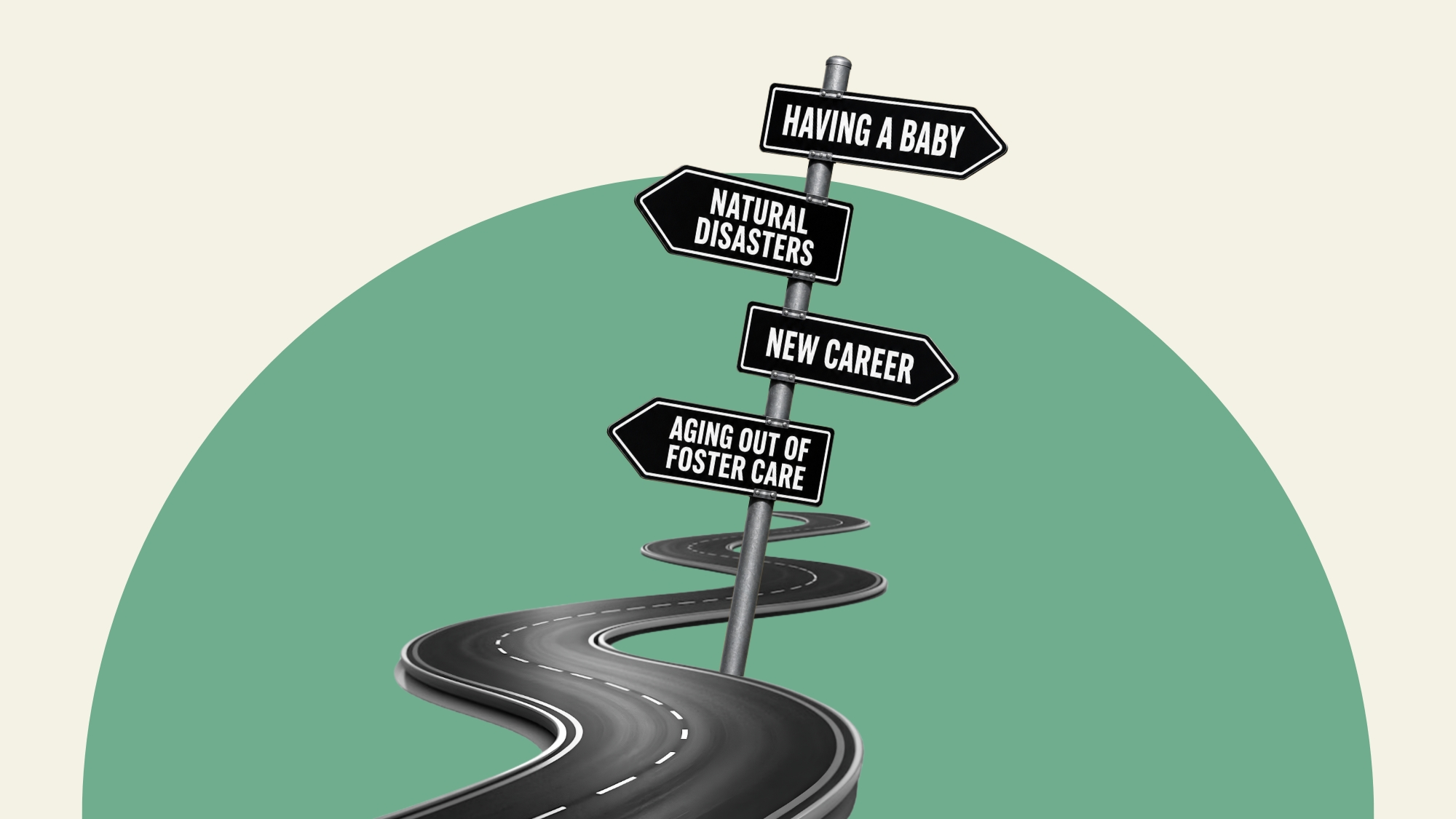
Right on Time: How Cash Helps Families Move Through Life's Transitions - Economic Security Project
Executive Summary Over the past decade, more than 250 guaranteed income pilots, programs that provide people with regular cash with no restrictions on how they use it, have run across 40 states and the District of Columbia. That research has revealed many learnings, and this report focuses on one clear takeaway: cash has its largest…
Basic Income Means Basic Freedom
I think it’s wrong to tell people how to live their lives. Beyond what is necessary to ensure the safety and security of those within a society, the state should not impinge on the liberty of…

Make ‘em dumb, sell ‘em smarts
Sam Altman wants intelligence to be a utility that you pay him for

Can Money Serve Life? How to Fund Communities Doing the Real Work with Matthew Monahan
The Panama Papers prove it: America can afford a universal basic income | Colin Holtz
If the super-rich actually paid what they owe in taxes, the US would have loads more money available for public services