


When I pick an organization for the podcast or the map at Futuremending.com, I’m not just picking businesses out of a hat – I have a system for evaluating orgs which I call the Four Factors for Organizations. The Four Factors are Multi-solving, Sharing, Sufficiency and Transparency.This episode is in two parts. The opening minutes are a bit of an emotional check-in to see how people are processing the unprecedented political turmoil in the United States. The second part of the podcast discusses the Four Factors for Organizations and why seeking out certain vectors of change makes more sense than trying to lay out a detailed plan for a better future. Read about the Four Factors: https://www.futuremending.com/whatMatt’s Blue Sky account: https://bsky.app/profile/mattliepaehlke.bsky.socialWired Magazine coverage of the crisis in the U.S. : https://www.wired.com/tag/elon-musk/Rebecca Solnit’s newsletter: https://meditations-in-an-emergency.ghost.io/welcome-to-meditations-in-an-emergency/ Google's AI Policy: https://www.theguardian.com/technology/2025/feb/05/google-owner-drops-promise-not-to-use-ai-for-weapons Future Mending Map: https://www.futuremending.com/toronto Music Credits:'Epilogue' by The Slow Motions. Used with permission of the artist.‘Fashion’ by Alex Productions. Creative Commons. https://www.youtube.com/watch?v=OV1miCgT7J4‘Miss you’ by Middle Child. Creative Commons. https://www.youtube.com/watch?v=dayIKHEIYqY‘Opening’ by Phillip Glass. Arr. by Karl Michelson. Performed by The Union Guitar Trio. Used with permission of the artists.Union Guitar Trio on Spotify - https://open.spotify.com/track/2E0NidLjIzBAO7t0BBPFUDUnion Guitar Trio on Apple Music - https://music.apple.com/us/artist/the-union-guitar-trio/1592543833Sound Effects:BBC News November 9th, 1989: https://www.youtube.com/watch?v=fjNz1lvXgzUwood hit low glass bowl 3.mp3 by ascap -- https://freesound.org/s/242388/ -- License: Attribution NonCommercial 4.0Brightness by sonically_sound -- https://freesound.org/s/632762/ -- License: Creative Commons 0
The Future of Organizations is Responsive
How to Unlock Your Organization’s Potential to Change the World

Reinventing Organizations
Building Resilient Organizations

Experiment with Organizational Change Before Going All In
Your intuition is never enough.

Management and Organization at Medium
Medium aspires to empower individual voices and avoid the bureaucracy that often accompanies traditional organizational structures. As a…

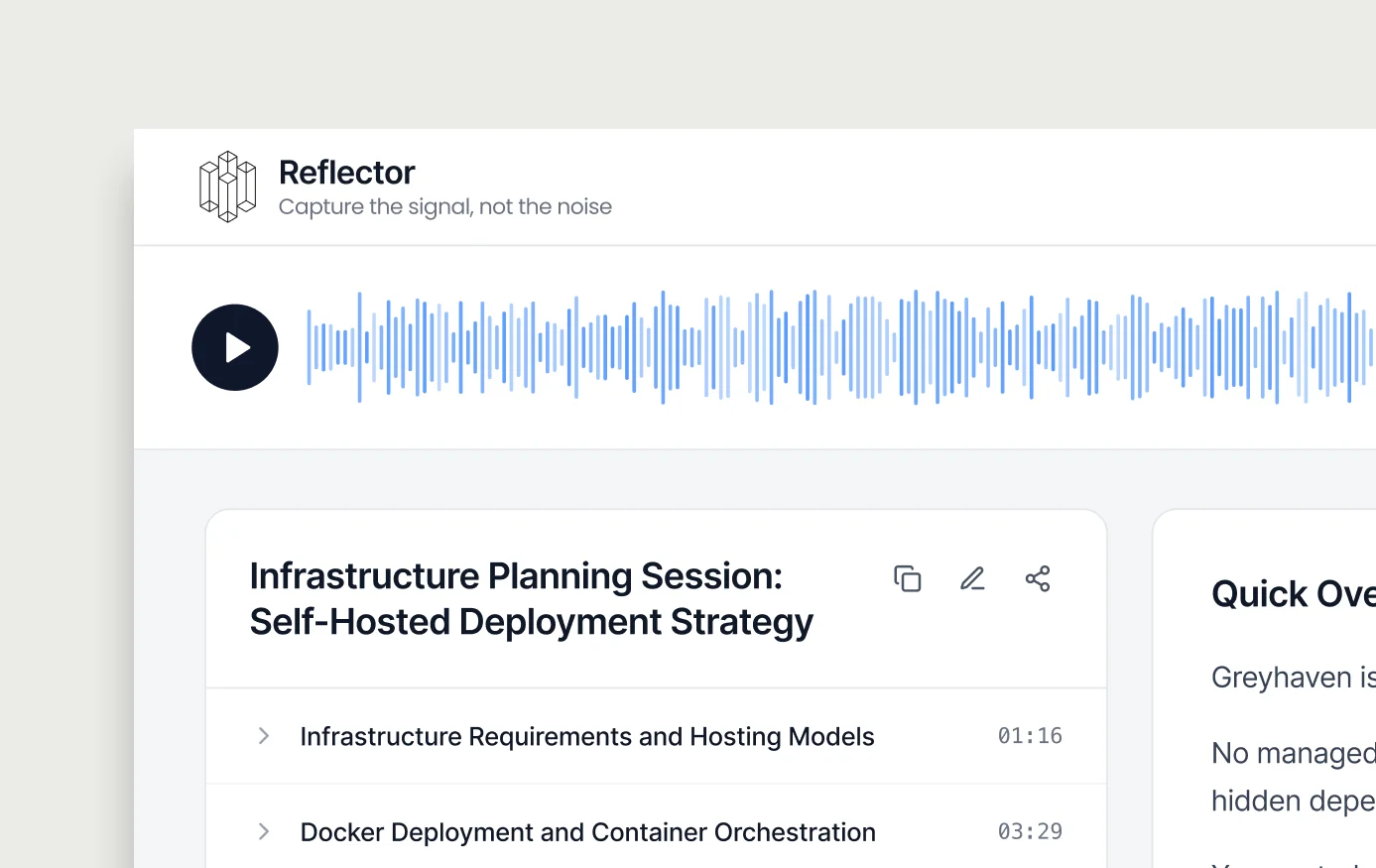
Reflector: Infrastructure for Meetings, by Greyhaven
Most organizations run on meetings. Strategy gets debated there. Decisions get made there. Context lives there. And yet...
Big Media, Big Conflicts of Interest, Part 1: The Consolidation Craze & Illusion of Choice
Six companies control 90% of what you read, watch, and hear. Here's why that's dangerous.

Leading Change: Why Transformation Efforts Fail
Businesses hoping to survive over the long term will have to remake themselves into better competitors at least once along the way. These efforts have gone under many banners: total quality management, reengineering, rightsizing, restructuring, cultural change, and turnarounds, to name a few. In almost every case, the goal has been to cope with a new, more challenging market by changing the way business is conducted. A few of these endeavors have been very successful. A few have been utter failures. Most fall somewhere in between, with a distinct tilt toward the lower end of the scale. John P. Kotter is renowned for his work on leading organizational change. In 1995, when this article was first published, he had just completed a ten-year study of more than 100 companies that attempted such a transformation. Here he shares the results of his observations, outlining the eight largest errors that can doom these efforts and explaining the general lessons that encourage success. Unsuccessful transitions almost always founder during at least one of the following phases: generating a sense of urgency, establishing a powerful guiding coalition, developing a vision, communicating the vision clearly and often, removing obstacles, planning for and creating short-term wins, avoiding premature declarations of victory, and embedding changes in the corporate culture. Realizing that change usually takes a long time, says Kotter, can improve the chances of success.

Crossing the River by Feeling the Stones - Simon Wardley
The Fractal Organization
The world of management is in crisis - the old remedies no longer work and organizations are failing at an increasing rate. Although many talk of 'joined up thinking', few offer practical guidance on how to achieve this in organizations. <b><i>The Fractal Organization</i></b> sets down the practical implications of a well tested systemic approach to building organizations that are capable of surviving and flourishing in these turbulent times. <p>"An excellent read…Many organizations fail at the mercy of their own ignorance. The author has done an excellent job in making ‘the science of effective organization’ accessible to management, providing them with a new knowledge to deal with the uncertainties that the markets place upon them."<br /><b>Stephen J. Brewis, Business Architect, British Telecom</b></p> <p>"...one of the most interesting, thorough and rigorous guides to management that I have ever read, … introduces new insights in every chapter… carries a credibility which acts as a counterbalance to the sometimes difficult message which he conveys which is that a lot of mainstream management practice is at best ineffective and at worst downright destructive. I would recommend this book to anyone interested in management or systems thinking."<br /><b>Penny Marrington</b>, <b>Course Chair, Systems Group, Open University</b></p> <p>"In my opinion this book manages to present sound academic theory that is relevant and helpful to the practitioner in the business. I experienced several A-HA moments."<br /><b>Pauline Marsh, Strategy Director, CS&S International, BAE SYSTEMS</b></p> <p>"The insights of the Viable System Model have been open only to a select few for much too long. Hoverstadt has gone furthest in bringing these ideas to a wider audience…Management books have too often been serious but not practical, or practical but not serious. This book is both brilliantly serious and practical, and often entertaining too."<br /><b>Professor Peter Kawalak, Manchester Business School</b></p> <p>"Integrates mainstream management ideas with the systems ideas underpinning the VSM, and flows and reads well. As a starting point for developing understanding of the VSM in today's world this book improves greatly on all books that have gone before, I would certainly recommend it to colleagues, clients, and students."<br /><b>Dr. Robin Asby, Course Chair, Communication and Systems, Open University</b></p>
REINVENTING ORGANIZATIONS
Based on three years of research, the book Reinventing Organizations describes the emergence of a new management paradigm, a radically more soulful, purposeful and powerful ways to structure and run businesses and non-profits, schools and hospitals.

Why "Solutions" Fail | Dave Snowden
Opinion | The New Power Structure (Published 2018)
New organizations are forming and succeeding in an age of distrust.

And I did an episode where I explain what I'm interested in -- orgs that have some 1) form of sharing, 2) some transparency about their finances, 3) a non-growth goal in the form of knowing when they are sufficient, and 4) #multisolving. buzzsprout.com/2396702/episodes/16595444-the…

The Four Factors for Organizations - Future Mending Radio
www.buzzsprout.com