Rethink Science with Bayesianism
Bayesian Thinking in Everyday Life
More than 200 years ago, Thomas Bayes came up with a brilliant idea that has helped shape the world today, called Bayes Theorem. This…

QBism: Quantum Theory as a Hero's Handbook
This paper represents an elaboration of the lectures delivered by one of us (CAF) during "Course 197 -- Foundations of Quantum Physics" at the International School of Physics "Enrico Fermi" in Varenna, Italy, July 2016. Much of the material for it is drawn from arXiv:1003.5209, arXiv:1401.7254, and arXiv:1405.2390. However there are substantial additions of original material in Sections 4, 7, 8 and 9, along with clarifications and expansions of the older content throughout. Topics include the meaning of subjective probability; no-cloning, teleportation, and quantum tomography from the subjectivist Bayesian perspective; the message QBism receives from Bell inequality violations (namely, that nature is creative); the import of symmetric informationally complete (SIC) quantum measurements for the technical side of QBism; quantum cosmology QBist-style; and a potential meaning for the holographic principle within QBism.

Guest post: If you’re going to critique science, be scientific about it
Loren K. Mell Editor’s note: This post responds to a Feb. 13 article in The Atlantic, “The Scientific Literature Can’t Save Us Now,” written by Retraction Watch cofounders Adam Marcus and Ivan Oran…

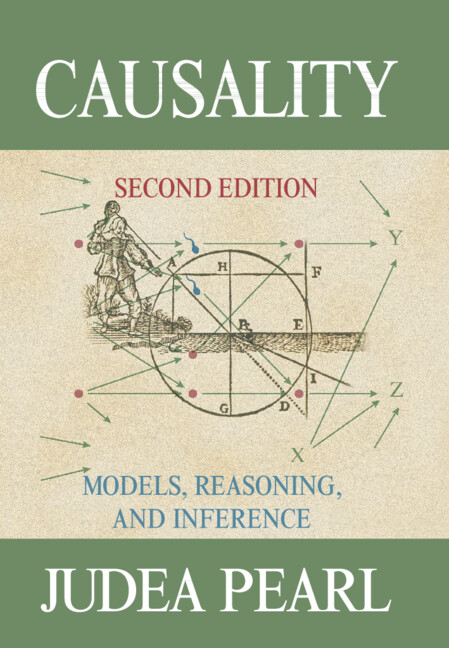
Causality
Written by one of the preeminent researchers in the field, this book provides a comprehensive exposition of modern analysis of causation. It shows how causality has grown from a nebulous concept into a mathematical theory with significant applications in the fields of statistics, artificial intelligence, economics, philosophy, cognitive science, and the health and social sciences. Judea Pearl presents and unifies the probabilistic, manipulative, counterfactual, and structural approaches to causation and devises simple mathematical tools for studying the relationships between causal connections and statistical associations. Cited in more than 2,100 scientific publications, it continues to liberate scientists from the traditional molds of statistical thinking. In this revised edition, Judea Pearl elucidates thorny issues, answers readers' questions, and offers a panoramic view of recent advances in this field of research. Causality will be of interest to students and professionals in a wide variety of fields. Dr Judea Pearl has received the 2011 Rumelhart Prize for his leading research in Artificial Intelligence (AI) and systems from The Cognitive Science Society.
The Scientist Who Scrambled Darwin’s Tree of Life (Published 2018)
How the microbiologist Carl Woese fundamentally changed the way we think about evolution and the origins of life.

Speculations on the Future of the Scientific Method
The following essay was published 20 years ago (January, 2006) on my blog The Technium. I edited the intro here, but the speculations are basically unchanged.

Prior Modeling
In Bayesian inference the prior model provides a valuable opportunity to incorporate domain expertise into our inferences. Unfortunately this opportunity often becomes a contentious issue in many fields, and this potential value is lost in the debate. In this case study I will discuss the challenges of building prior models that capture meaningful domain expertise and some practical strategies for ameliorating those challenges as much as possible.
A Bayesian Truth Serum for Subjective Data
Subjective judgments, an essential information source for science and policy, are problematic because there are no public criteria for assessing judgmental truthfulness. I present a scoring method for eliciting truthful subjective data in situations ...

Re-Engineering Wimsatt for Limited Beings
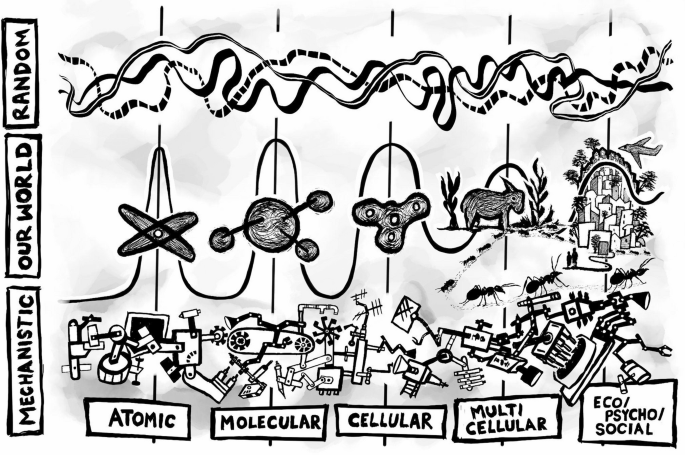
Science is the best way to produce facts about reality. The best, at least, that limited human beings have devised so far. Yet, not even scientists quite seem to understand how scientific knowledge is generated. This is not only a philosophical but also a practical problem, as our misunderstandings affect the quality of our research and limit the directions it can take. In light of this, it may be good if we reflected a bit more on how we do science — to become better researchers through philosophy. Here, I provide an accessible introduction to a philosophical approach that achieves precisely this: William Wimsatt’s multi-perspectival realism. It disabuses us of widespread but misleading myths and idealizations about science, such as the idea that everything in the world can be reduced to a fundamental level, or that we can approach a “view from nowhere” — complete and objectively detached knowledge of the world. Wismatt proposes an alternative view based on his thorough studies of actual research practice. It cuts deeply into the layered yet messy structure of reality, and the improvised but potent tools we have available, as limited and evolved beings, to explore it. Wimsatt reframes science as an irregular yet adaptive process rather than a cumulative repository of unalterable facts. His philosophy provides a workable and grounded middle way between radical skepticism and naïve belief in the objective truth of science. It explains how knowledge is conceptually constructed by humans, but still connects us to reality in a trustworthy way. We need such a new view of science, not only to improve our research practices and outcomes but, more generally, to gain a more realistic understanding of ourselves, the world, and our place and role within it.
JBS Haldane-A Dialectical Account of Evolution
THIS paper requires a preliminary apology. It is written in Spain, and as the writer is taking a very minor part in the defence of Madrid he is unable to consult many works of reference. Readers to whom practice is as important as theory will excuse any inadequacy in citations.
Convergence · Gathering open science · Montreal, June 16–18, 2027
Three days in Montreal for the people rethinking how science is created, shared, funded, published, measured, and used. June 16–18, 2027.

The Alien Space of Science: Sampling Coherent but Cognitively...
Scientific discovery is constrained not only by what is true, but by what is cognitively available to the researchers currently exploring a field. Many directions are coherent in light of the...
Against theory-motivated experimentation: Can random experimental choice lead to better theories?
Scientists must choose which among many experiments to perform. We study the epistemic success of experimental choice strategies proposed by philosophers of science or executed by scientists themselves. We develop a multi-agent model of the scientific process that jointly formalizes its core aspects: active experimentation, theorizing, and social learning. We find that agents who choose new experiments at random develop the most informative and predictive theories of the world. The agents aiming to confirm, falsify theories, or resolve theoretical disagreements end up with an illusion of epistemic success: they develop promising accounts for the data they collected, while misrepresenting the ground truth that they intended to learn about. Agents experimenting in these theory-motivated ways acquire less diverse or less representative samples from the ground truth that also turn out to be easier to account for. Random data collection, on the other hand, combines virtues of diverse and representative sampling from a target scientific domain which enables cumulative development of the successful theoretical accounts of it. We suggest that randomization, already a gold standard within experiments, is also beneficial at the level of experiments themselves.

Science has been in a “replication crisis” for a decade. Have we learned anything?
Bad papers are still published. But some other things might be getting better.

Synthetic philosophy
In this essay, I discuss Dennett’s From Bacteria to Bach and Back: The Evolution of Minds (hereafter From Bacteria) and Godfrey Smith’s Other Minds: The Octopus and The Evolution of Intelligent Life (hereafter Other Minds) from a methodological perspective. I show that these both instantiate what I call ‘synthetic philosophy.’ They are both Darwinian philosophers of science who draw on each other’s work (with considerable mutual admiration). In what follows I first elaborate on synthetic philosophy in light of From Bacteria and Other Minds; I also explain my reasons for introducing the term; and I close by looking at the function of Darwinism in contemporary synthetic philosophy.