

For archived content, please refer to the National Diet Library's Web Archiving Project (WARP).
A contributory citizen science project reveals the impact of dietary keys to microbiome health in Spain
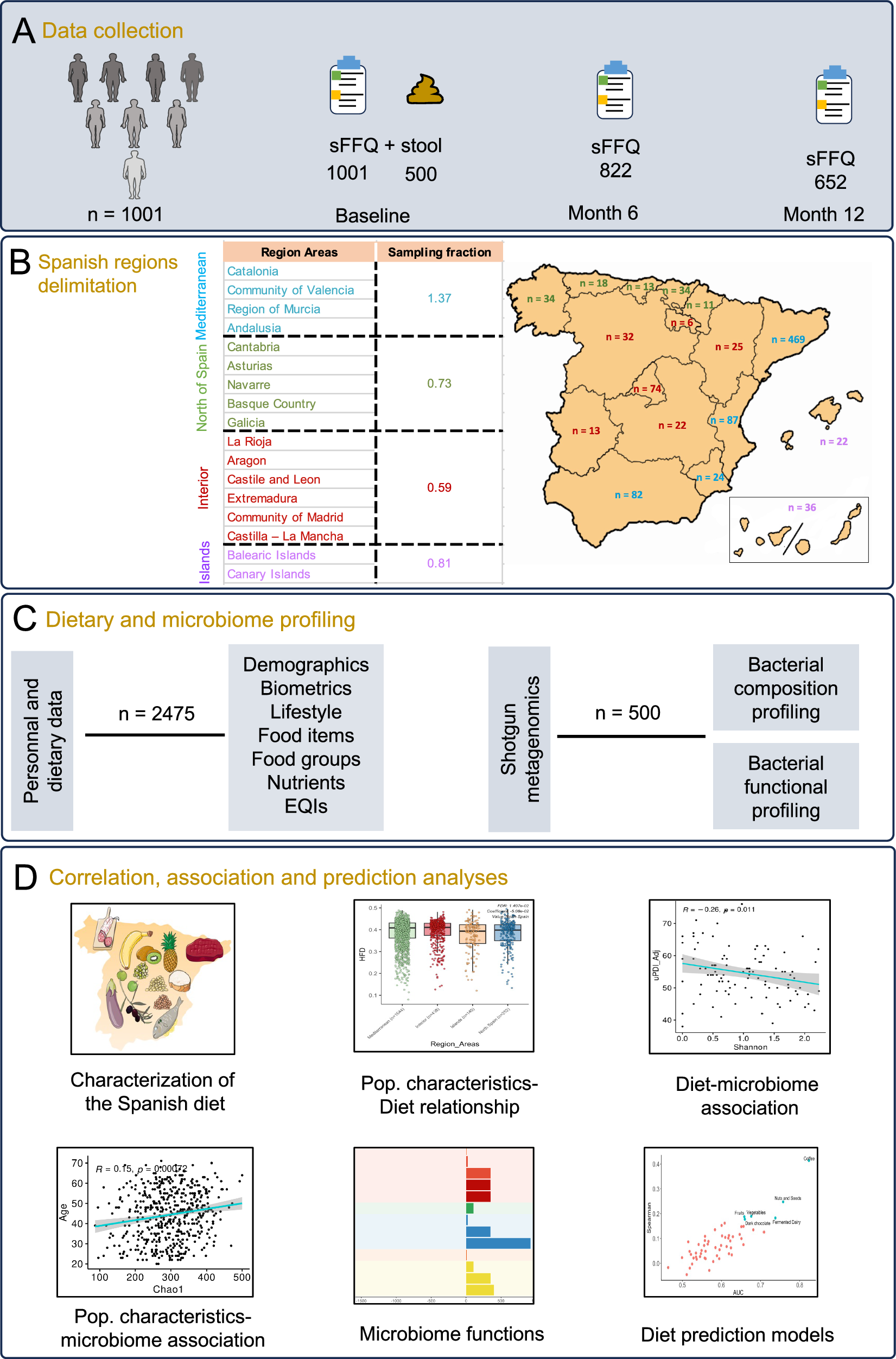
Low consumption of whole grains, fruits, and vegetables has been identified as dietary risks for non-communicable diseases such as inflammatory bowel diseases (IBDs). We explore how individual and lifestyle factors influence these risks by shaping gut microbiome composition. 1001 healthy participants from all Spanish regions provided personal and dietary data at baseline, six, and twelve months, yielding 2475 responses. Gut microbiome data were analyzed for 500 healthy participants and 321 IBD patients. Our findings reveal that adherence to national dietary guidelines—characterized by diets rich in nuts, seeds, fruits, and vegetables—was associated with greater microbial diversity and reduced IBD-related dysbiosis. Finally, we observed variations in dietary patterns and microbiome diversity and composition across age groups, genders, regions, seasons, and transit time. This study is among the first to uncover dietary intake associated with IBD-related dysbiosis and to propose an interactive website for participants (https://manichanh.vhir.org/POP/en).
Death of the calorie
For more than a century we’ve counted on calories to tell us what will make us fat. Peter Wilson says it’s time to bury the world’s most misleading measure

HOME
We are committed to growing year-round, ecologically sound, nutrient dense food for our local community.
The Sifter - A Food History Research Tool
The Sifter is a public database, free to all users. It is a tool for finding and comparing historical and contemporary writing on food and food-related topics. It is overseen by an advisory board composed of members from The Oxford Symposium on Food and Cookery as well as other friends of food history. As with Wikipedia, the Sifter will be populated by its users. All entries will have an English translation, enabling users to search languages they cannot read. Soon, we will have over 100 languages represented. Registered users will be able to make corrections and add new information. Future releases will include a data visualization component. We also plan to include more resources linking to digitized photographs, artworks, television and film. With the aid of this tool, it is our hope that what has been invisible will come into focus.
Open-sourced food production – the future of urban diets?
Scientists are developing open-source technologies that reward locally grown foods, cutting down on shipping and improving nutrition
PubPeer - Efficacy of oral folinic acid supplementation in children wi... | Ioana A. Cristea | 13 comments
Over the last week, I have privately been in contact with several friends and collaborators over the *SINGLE* study that was cited by the FDA in supporting the label extension of leucovorin for autism spectrum disorders. https://lnkd.in/dHpfCt_9 https://lnkd.in/dYWbHXyY Given the enormous importance of this study, and the fact that the results look too good to be true and there are various signals I would have thought would have raised a sleuth eyebrow (for example, Table 1 where all categorical values in each group except for 1 differ by exactly one unit), I am very surprised that until now the only Pubpeer comments are by two MDs and by myself, pointing to some inconsistencies between tables and figures. https://lnkd.in/duFQDccr I have also formally asked the authors for the individual participant data. Perhaps given this is not some random wacky study about how much food can one eat in a fast-food or some obscure paper citing another obscure retracted paper, but the SINGLE study that now underpins the retrospective post-marketing approval of an entire treatment, the very large community of people who want to correct science ASAP particularly when findings have huge policy implications could join me in scrutinizing this study to make sure findings are reliable and that the data are correct and analyzed correctly. | 13 comments on LinkedIn

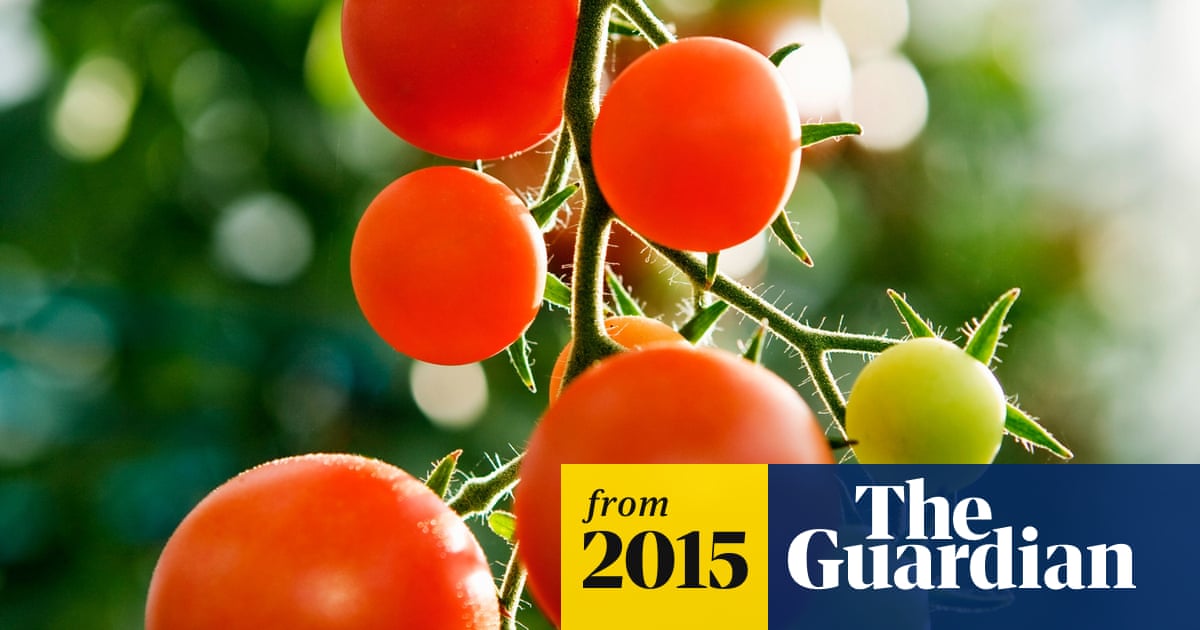
Least resistance weight loss
The weight-loss industry preys on scientific naivete, often conflating good nutrition with the caloric deficit necessary to lose weight.
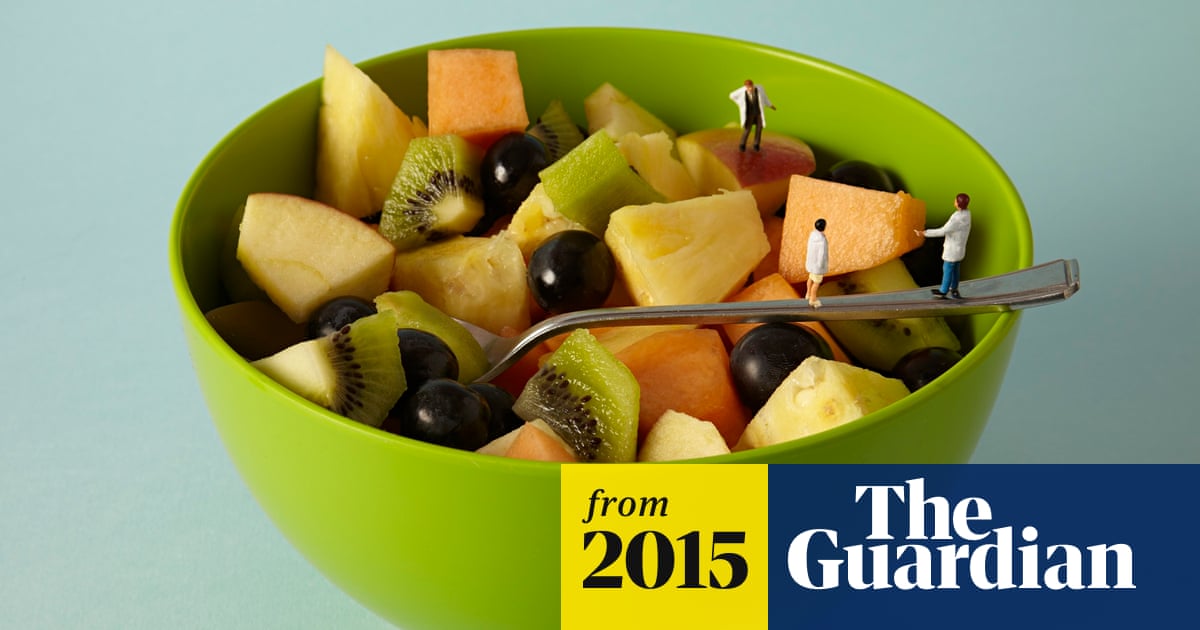
Inside the food industry: the surprising truth about what you eat
Think you eat only healthy, unprocessed foods? Think again. Joanna Blythman went undercover and discovered that even your fruit salad is not what it seems
Seven Theses from Feeding the Machine
New Book – Publication 18 July 2024 (UK) / 8 August 2024 (US)

Dietary Habits Related to Food Packaging and Population Exposure to PFASs
Abstract Background: Per- and polyfluoroalkyl substances (PFASs) are common industrial and consumer product chemicals with widespread human exposures that have been linked to adverse health effects. PFASs are commonly detected in foods and food-contact materials (FCMs), including fast food packaging and microwave popcorn bags. Objectives: Our goal was to investigate associations between serum PFASs and consumption of restaurant food and popcorn in a representative sample of Americans. Methods: We analyzed 2003–2014 serum PFAS and dietary recall data from the National Health and Nutrition Examination Survey (NHANES). We used multivariable linear regressions to investigate relationships between consumption of fast food, restaurant food, food eaten at home, and microwave popcorn and serum levels of perfluorooctanoic acid (PFOA), perfluorononanoic acid (PFNA), perfluorodecanoic acid (PFDA), perfluorohexanesulfonic acid (PFHxS), and perfluorooctanesulfonic acid (PFOS). Results: Calories of food eaten at home in the past 24 h had significant inverse associations with serum levels of all five PFASs; these associations were stronger in women. Consumption of meals from fast food/pizza restaurants and other restaurants was generally associated with higher serum PFAS concentrations, based on 24-h and 7-d recall, with limited statistical significance. Consumption of popcorn was associated with significantly higher serum levels of PFOA, PFNA, PFDA, and PFOS, based on 24-h and 12-month recall, up to a 63% (95% CI: 34, 99) increase in PFDA among those who ate popcorn daily over the last 12 months. Conclusions: Associations between serum PFAS and popcorn consumption may be a consequence of PFAS migration from microwave popcorn bags. Inverse associations between serum PFAS and food eaten at home—primarily from grocery stores—is consistent with less contact between home-prepared food and FCMs, some of which contain PFASs. The potential for FCMs to contribute to PFAS exposure, coupled with concerns about toxicity and persistence, support the use of alternatives to PFASs in FCMs. https://doi.org/10.1289/EHP4092
The Website Obesity Crisis
This is the text version of a talk I gave on October 29, 2015, at the Web Directions conference in Sydney. [53 minute video].
Nikhil Krishnan on Twitter / X
yeah there used to be a company called Eureka that powered these types of observational, more lifestyle style studies (here's an example looking at coffee's effect on different biomarkers/conditions)https://t.co/urQRvTVTb7I think it can work if you have enough people in…— Nikhil Krishnan (@nikillinit) September 14, 2025
Epic diarrhea outbreak has 40% of Americans avoiding fruits and veggies
Kennedy has focused on nutrition but has neglected food safety, critics say.
Nut intake and hyperuricemia risk in young adults
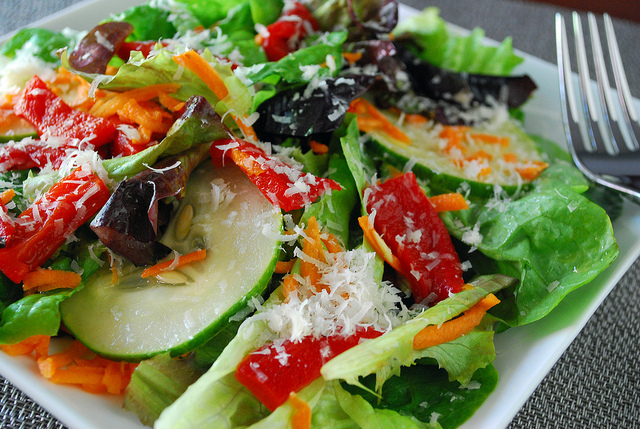
Objective:The relationship between dietary nut intake and hyperuricemia risk remains unclear. The aim of this study was to investigate the relationship between different nut intake and hyperuricemia risk with a cross-sectional study.Design:A semi-quantitative FFQ was adopted to collect dietary information. Biochemical and anthropometric parameters were measured by standard methods. Multivariate-adjusted logistic regression models were implemented to analyse the relationship between individual nut intake and hyperuricemia risk.Setting:Qingdao University in Shandong Province, China.Participants:During 2018–2019, a total of 14 056 undergraduates (6862 males and 7194 females) aged 15–25 years participated in the study.Results:After adjusting for multiple confounding factors, compared with the lowest quartile, the highest quartile intakes of pine nut (95 % CI (0·51, 0·98)) was significantly associated with 29 % reduction in hyperuricemia risk, the highest quartile intake of walnut (OR = 0·78; 95 % CI (0·58, 1·05)) was marginally negatively associated with hyperuricemia risk.Conclusions:The present study showed that the relationships between intakes of different nuts and hyperuricemia risk were different. Increased dietary intakes of walnut and pine nut are negatively associated with the hyperuricemia.
ATmospheric status monitors uptime

downorjustme
Server Status
Atmosphere Status
Uptime monitor

Arabica Social status

Graze Social Status
status.northsky.social