

The rapid advancement of Artificial Intelligence (AI) is reshaping the landscape of scientific inquiry. This article examines the challenges confronting modern science, including knowledge fragmentation, diminishing returns of current paradigms, and the disconnect between science and society. It explores how AI offers solutions enhancing collaboration and integrating knowledge—as well as considers the possible “darker side” of using AI in research. However, the advent of AI in science not only enhances scientific research but also redefines the role of human researchers and fosters a new paradigm of human understanding. By embracing these transformations, a more cohesive and responsive scientific enterprise can emerge.
Artificial intelligence and illusions of understanding in scientific research
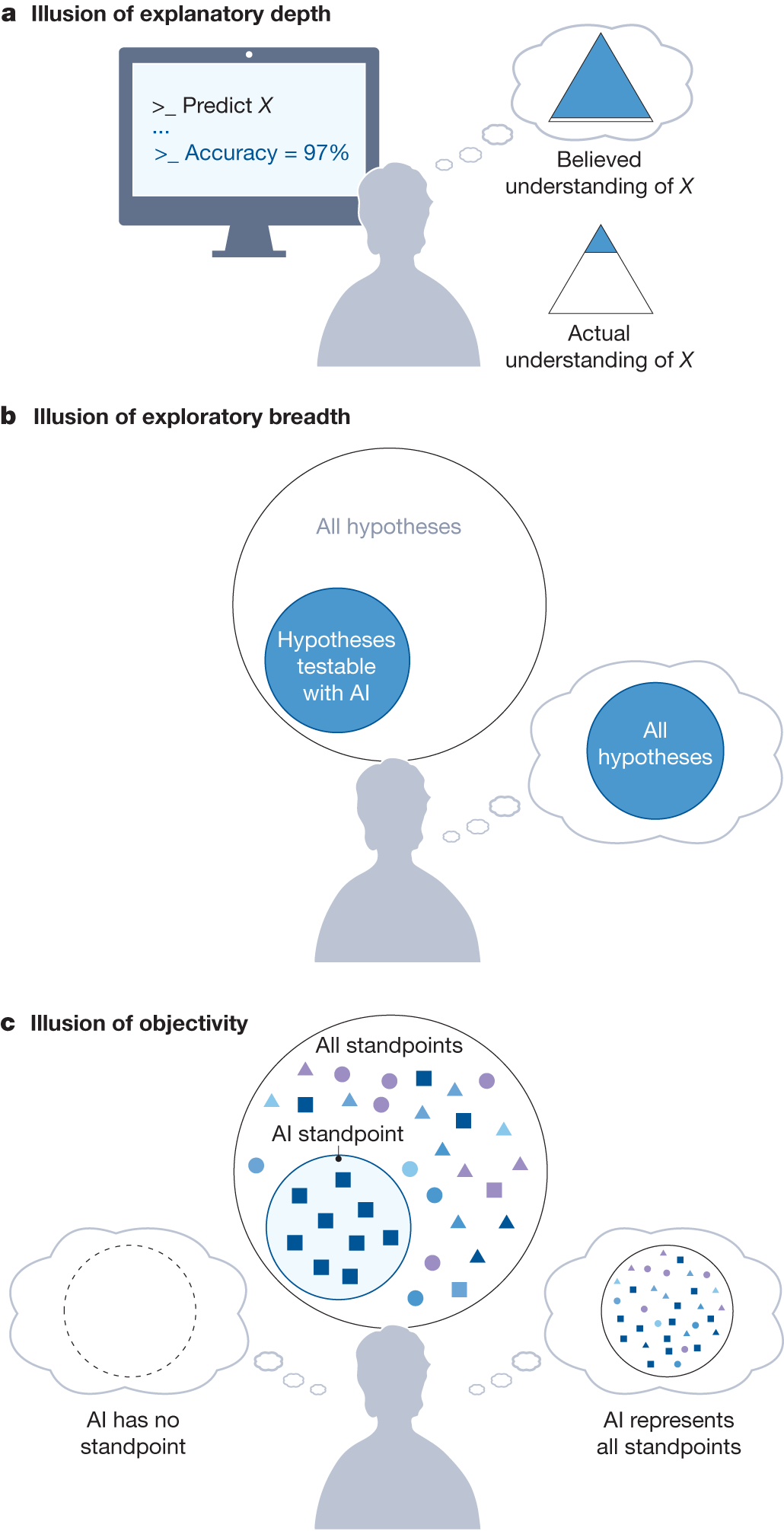
Scientists are enthusiastically imagining ways in which artificial intelligence (AI) tools might improve research. Why are AI tools so attractive and what are the risks of implementing them across the research pipeline? Here we develop a taxonomy of scientists’ visions for AI, observing that their appeal comes from promises to improve productivity and objectivity by overcoming human shortcomings. But proposed AI solutions can also exploit our cognitive limitations, making us vulnerable to illusions of understanding in which we believe we understand more about the world than we actually do. Such illusions obscure the scientific community’s ability to see the formation of scientific monocultures, in which some types of methods, questions and viewpoints come to dominate alternative approaches, making science less innovative and more vulnerable to errors. The proliferation of AI tools in science risks introducing a phase of scientific enquiry in which we produce more but understand less. By analysing the appeal of these tools, we provide a framework for advancing discussions of responsible knowledge production in the age of AI.
Charting AI’s Role in Scientific Discovery — Renaissance Philanthropy – A brighter future for all through science, technology, and innovation
Renaissance Philanthropy, with support from Google.org , is conducting a landscape study of AI integration in scientific research — and we want your perspective.

Deep Research, information vs. insight, and the nature of science
What AI will accelerate in the scientific process, what it cannot do, and how we can prepare for new manners of scientific investigation.
Artificial intelligence tools expand scientists’ impact but contract science’s focus
Nature - Artificial intelligence boosts individual scientists’ output, citations and career progression, but collectively narrows research diversity and reduces collaboration, concentrating...

AI has supercharged scientists—but may have shrunk science
Analysis of 41 million papers finds that although AI expands individual impact, it narrows collective scientific exploration
Building Collective Intelligence Networks for Flourishing Scientific Communities
Scientific communities are straining under mounting challenges—knowledge fragmentation, outdated publication processes, institutional erosion and funding cuts—that threaten our capacity to address urgent global problems. Traditional scientific process
AI is turning research into a scientific monoculture
Generative AI deserves scientific attention. But the rush to study it is producing a feedback loop of topical and methodological convergence, flattening scientific imagination and crowding out the pluralism needed to keep research adaptive, resilient, and intellectually generative.

AI for science needs reasoning, not just data
AI agents that can model the human process of research will accelerate discoveries in science.

Rethinking AI for Science Funding
As science stands at an inflection point, how do we organize capital to shape the future of discovery?
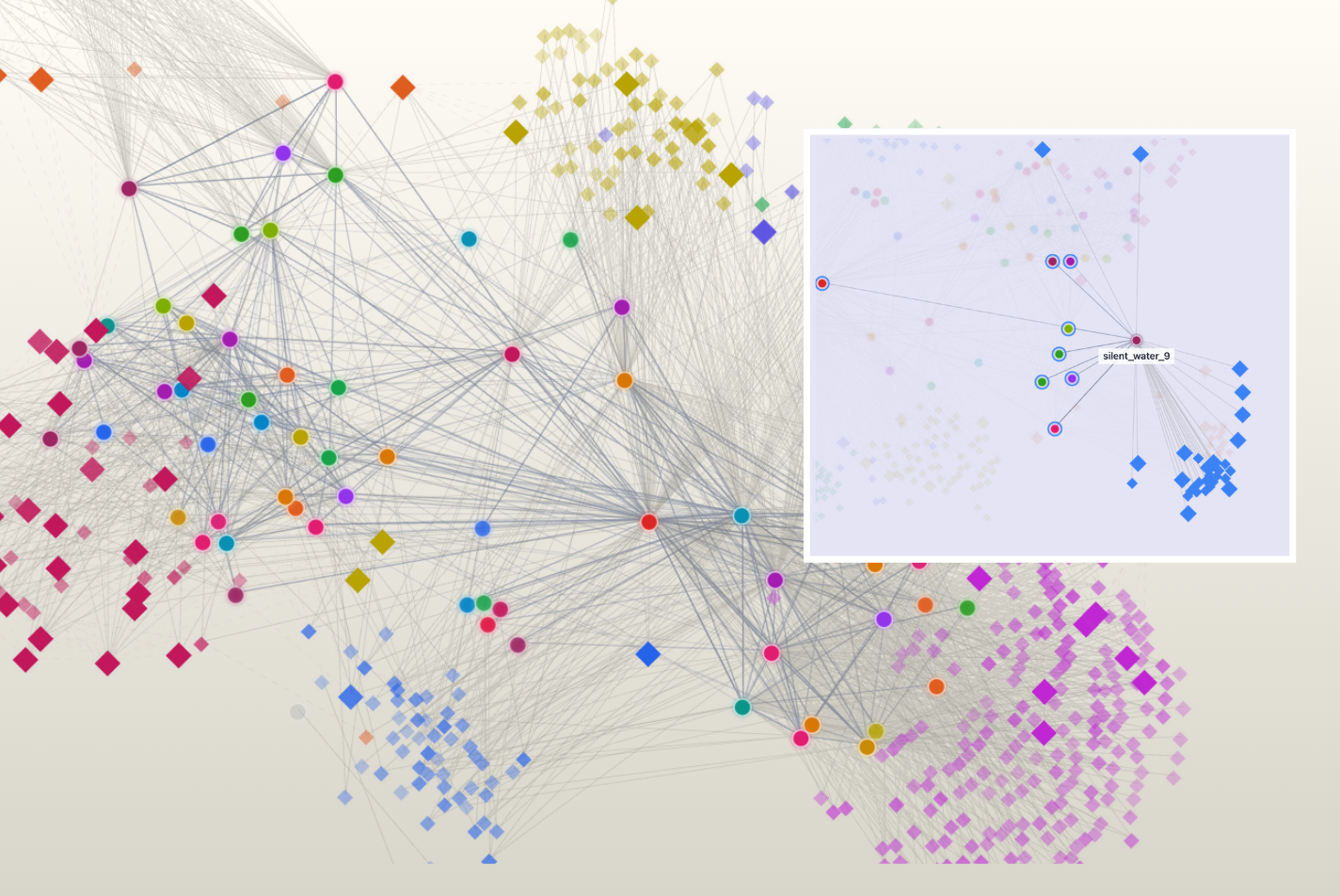
Kempner Researchers Create Social Network for “AI Scientists” to Collaborate - Kempner Institute
Science rarely advances exclusively through lone researchers. Progress often comes from discussion and collaboration — scientists sharing ideas, questioning one another, and refining their thinking together. Now, a team of […]
From Genius Science to Scenius Science - Cosmik Labs
Why personal AI tools might not be all we need to revolutionize science
How AI Agents are transforming scientific discovery
AI agents are starting to reshape science, from proposing novel hypotheses to writing code. Learn what comes next for scientists and policymakers.

Field Theory: AI as Social Science Question, Object & Tool
Uses of advanced artificial intelligence are changing how societies organize labor, govern, produce knowledge, and make meaning. In light of these developments, this essay argues that AI models, tools, and systems pose three interrelated imperatives for social science: they demand renewed attention to social theories of how technology, human experience, and social order are entangled; they require study as objects of inquiry in their own right; and they offer capabilities that may transform—or upend—the practice of social investigation itself. From Weber’s analysis of rationalization to Du Bois’s study of technology and inequality to contemporary scholarship on algorithmic governance, the essay examines what social science distinctively offers: the capacity to historicize the apparently unprecedented, to trace connections across scales, and to center those most affected by technological change. It identifies how algorithmic systems are remaking the distribution of opportunity and risk as a central task of social inquiry and asks what futures social science might help bring into being.

Remarkable how over a decade ago @michaelnielsen.bsky.social pointed the way towards solving long standing issues plaguing science to this day (issues that are all the more relevant in the age of AI mediated science)

Ronen Tamari
This is why @atproto.science is so relevant rn This compilation of essays indicates that scientists are most frustrated by insufficient “community tools and resources... Essential infrastructure for sharing, maintaining and building on existing work and data is also badly underdeveloped." >
Want to do something? Scholars: get organized. Join @aaup.org. Everyone: call your congresspeople. Tell them to defend science. Tell them to regulate the AI industry. Support @standupforscience.net I’m not giving up and neither should you. /end
