

Reading by Tim Foley:
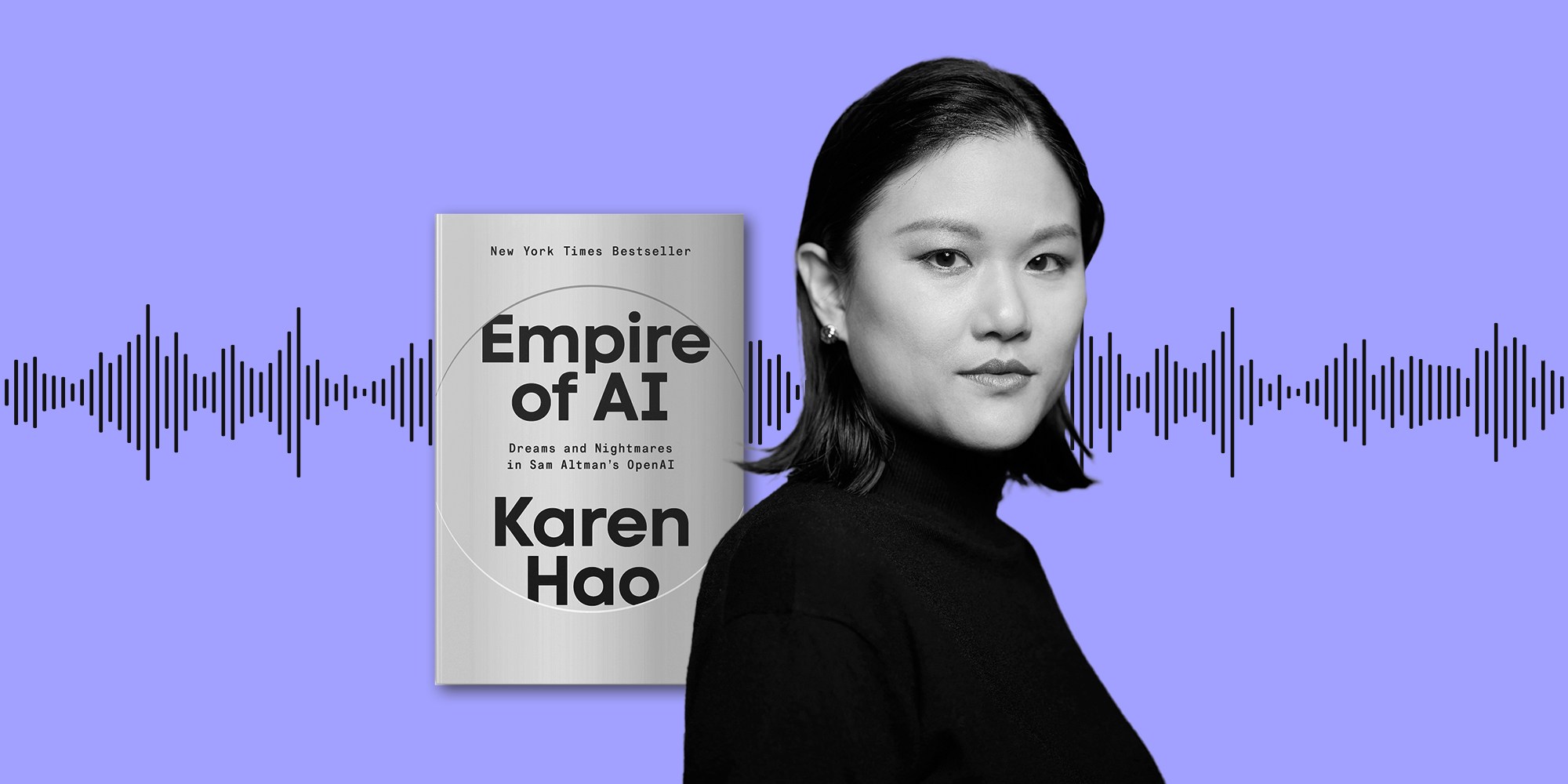
AI’s Imperial Agenda
“Empire of AI” author Karen Hao on how Silicon Valley’s young AI companies parallel colonial empires of old.
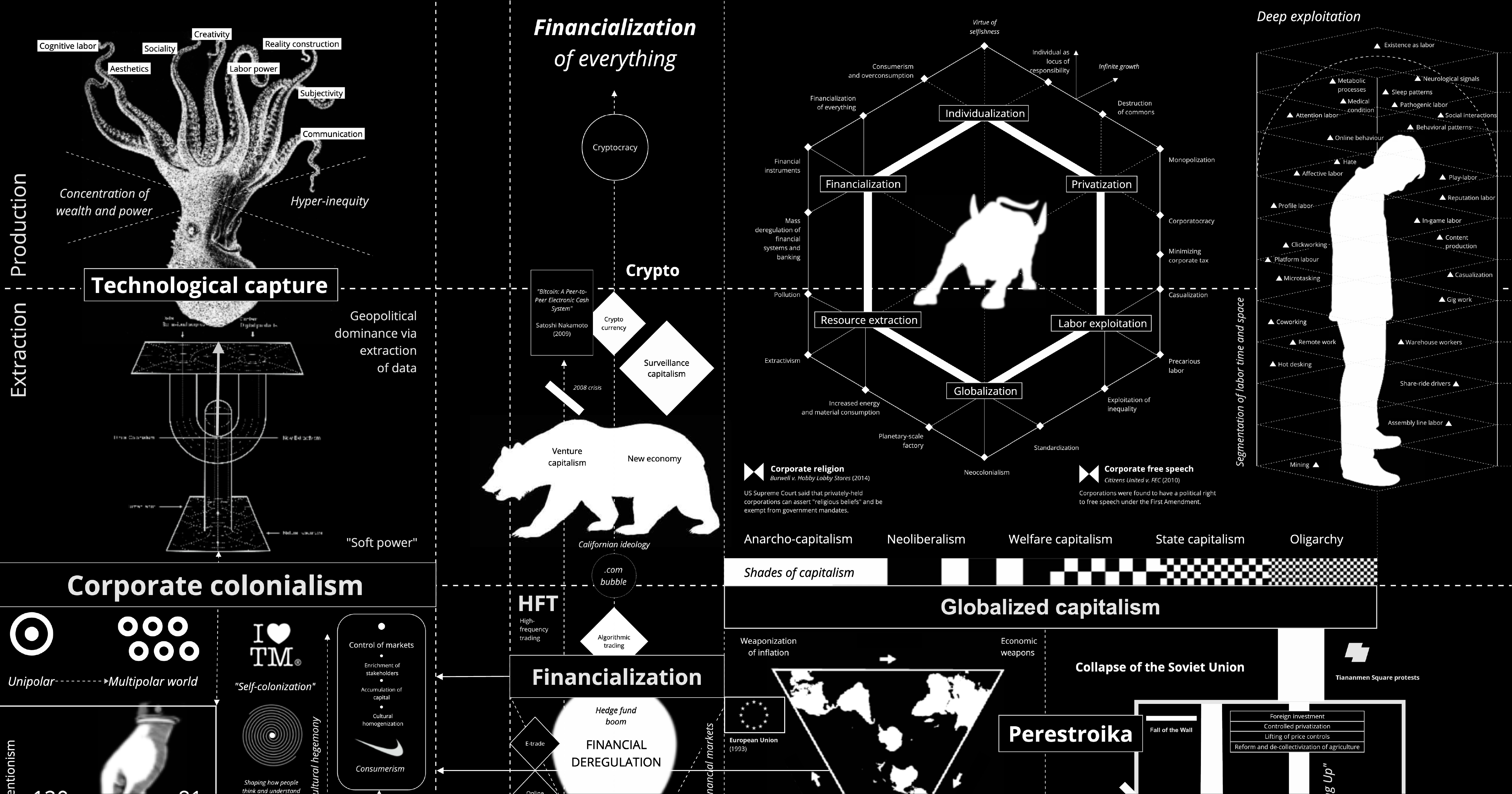
Calculating Empires: A Genealogy of Technology and Power since 1500
Explore how technical and social structures co-evolved over five centuries in this large-scale research visualization.
Sex, AI, and the Apocalypse - Ian Duncan
How a community devoted to thinking clearly incubated salvation stories, abusive experiments, race science, and an affection for autocracy, and why that history matters now that its alumni are asking for the public trust on AI.

Imperial State Capitalism
A new geopolitics is shaping the development of AI and the energy transition.

The rise of AI ‘civilizations’ and the fall of corporate responsibility
The internet fights over anthropomorphism around the Hugging Face hack.


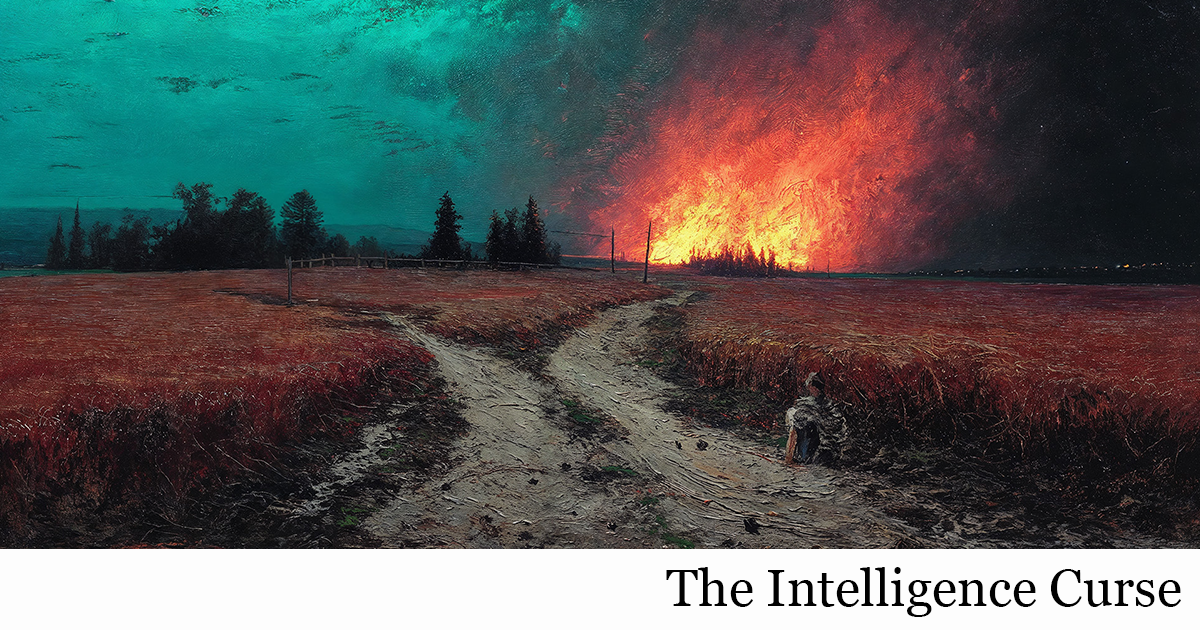
The Intelligence Curse
This series examines the incoming crisis of human irrelevance and provides a map towards a future where people remain the masters of their destiny.
afra wang on Twitter / X
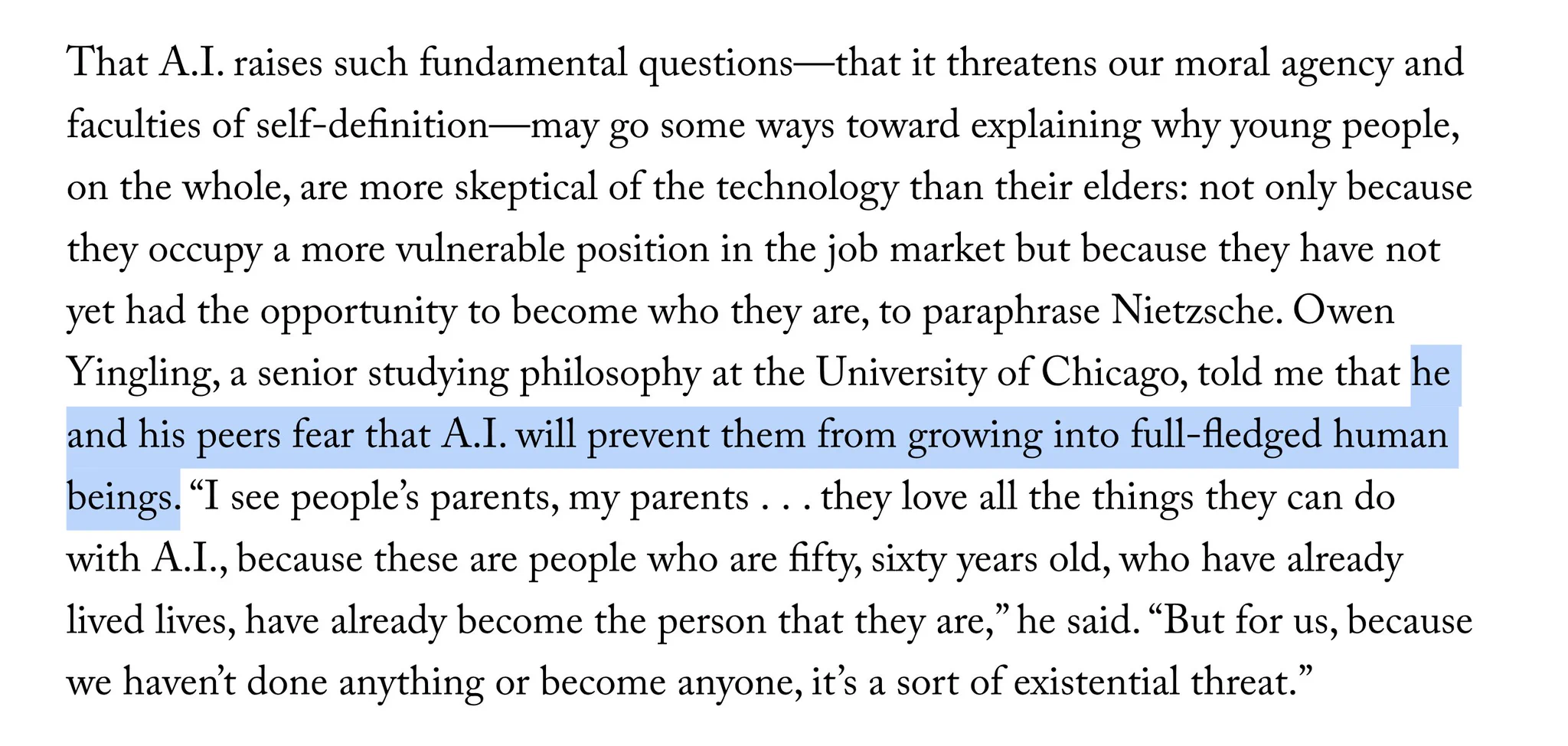
a great @NewYorker essay by Becca Rothfeld on the humanistic reasons behind the anti-AI movement: AI is arriving too early in young people’s lives, and they fear it will prevent them from growing into fully fledged humans—in a sense, an existential threat.… pic.twitter.com/LgqL4TgJEJ— afra wang (@afrazhaowang) October 9, 2026
On the Death of Amazon’s Writing Culture
How AI has turned what was once a superpower into a liability.

Human Life in a Post-AGI World - Google DeepMind Talk
Tyler Cowen at Google DeepMind on life after AGI: rebuilding every institution, the rise of "AI maniacs," and why the future will be drenched in meaning.
Large AI models are cultural and social technologies – Henry Farrell
Debates about artificial intelligence (AI) tend to revolve around whether large models are intelligent, autonomous agents. Some AI researchers and commentators speculate that we are on the cusp of creating agents with artificial general intelligence (AGI), a prospect anticipated with both elation and anxiety. There have also been extensive conversations about cultural and social consequences of large models, orbiting around two foci: immediate effects of these systems as they are currently used, and hypothetical futures when these systems turn into AGI agents perhaps even superintelligent AGI agents.

A Microsoft researcher sent some goats on a mission in Age of Empires II to make a point about LLMs | IBM
A Microsoft researcher built a working neural network out of Age of Empires II goats to show that human-like AI traits are a property of the chat window, not the technology beneath it.

AI Influence Level (AIL) v1.0
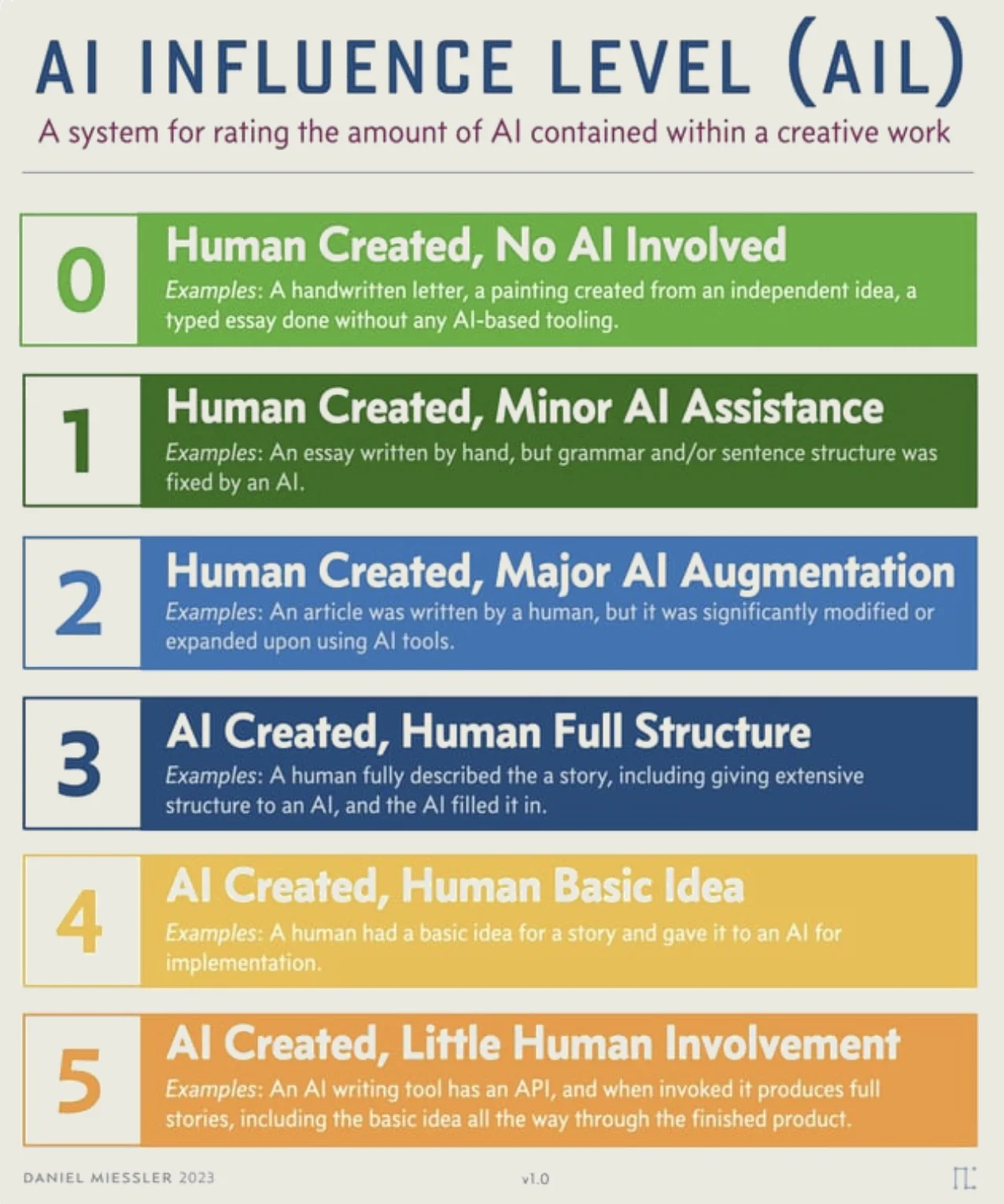
Humans care who created things. Especially art. They especially care when the origin is in question, and more again when the origin might not be human. AI is yi
Was the Iran War Caused by AI Psychosis? | House of Saud
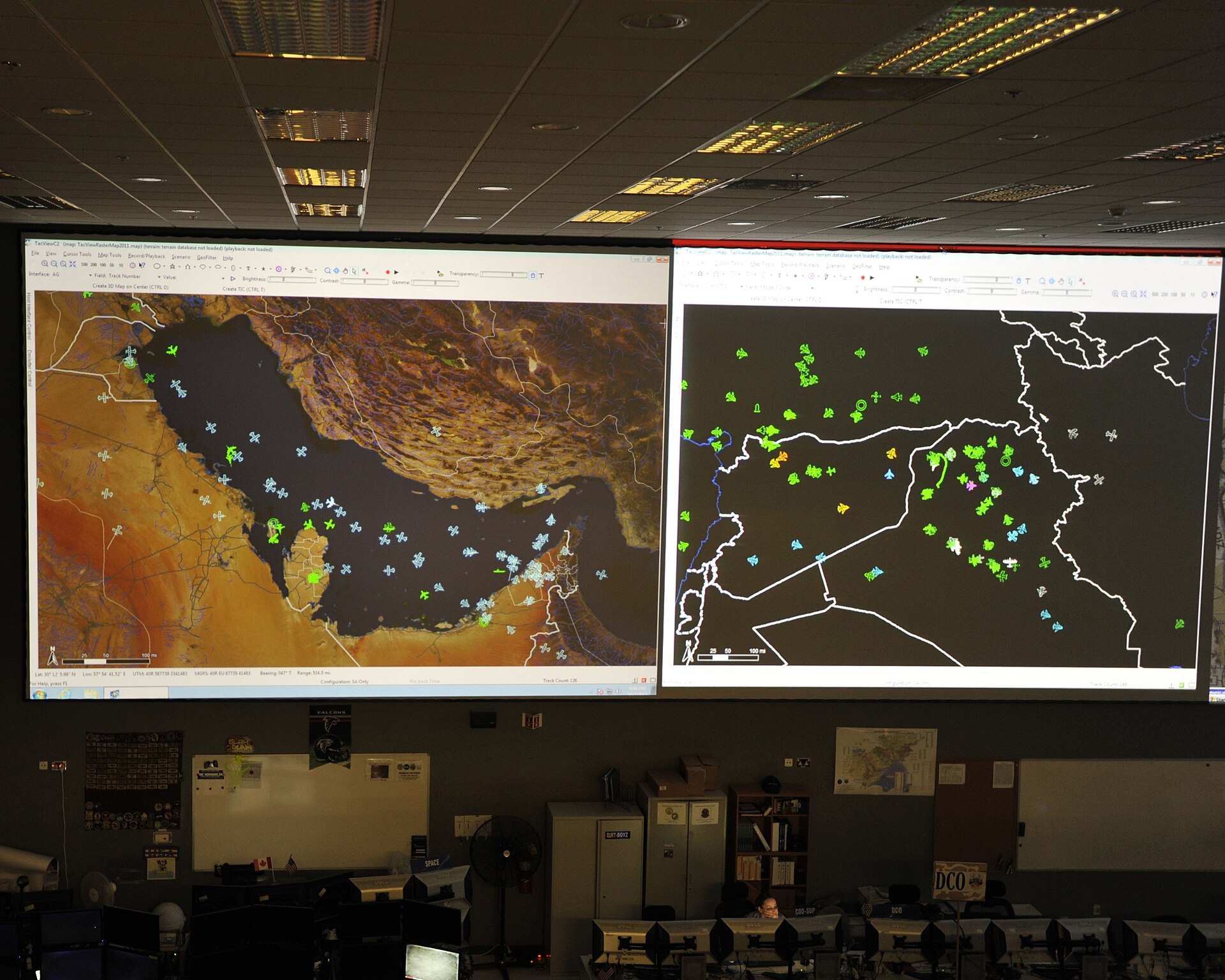
AI sycophancy, RLHF bias, and Ender's Foundry simulations shaped Operation Epic Fury. 7 planning assumptions failed in 23 days as the Iran war defied every AI prediction.
The AI future where humans get paid to be creative