

Helping teachers with today’s technology An ICT Media Publication December 2012 / Issue 59 www. ictforeducation. co. uk Digital creators Developing skills to build a digitally literate planet Making time Blended learning and the hybrid...
Notes from my Beginner Computer Literacy Class Part 1 - Alex’s Writing Journal
Helping the uninitiated navigate this brave new digital world
Advancing Women & Technology: Empowering Futures Through Digital Skills: 2025: News and Resources: About Us: Center of Excellence for Women & Technology: Indiana University Bloomington
In today’s fast-paced digital world, technology isn’t just a career path-it’s a compelling tool for empowerment.


Use of technology in classrooms has been a disaster for students [column]
Schools and other educational facilities should reduce their use of technology in the classroom. According to a 2021 paper published by Northwestern College, tech in schools has led to increased

Edufuturists
Edufuturists bring a bold, innovative approach to education, challenging the status quo and advocating for personalised learning experiences that develop critical skills. We inspire educators and learners alike to embrace technology, foster real-world relevance, and promote lifelong learning for a rapidly changing future.
Norway Abandons Ed-Tech, Embraces Books
A massive revolt against educational technology in the classroom is under way, especially in certain European nations. Education leaders in some countries have concluded that Ed-tech is the primary…

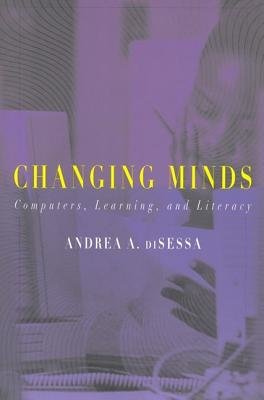
Changing Minds: Computers, Learning, and Literacy
An impassioned guide to how computers can fundamentally change how we learn and think.Andrea diSessa's career as a scholar, technologist, and teacher has b
Academia: What Was "Digital Literacy"?
Short Shelf Lives Make For Bad Curricular Planning
Web literacy & mobile for development
Within the decade, fully half the planet will have access to a smartphone. The hardware is undergoing commoditization and network coverage is expanding faster…
» Apple, Carmen Sandiego, and the Rise of Edutainment The Digital Antiquarian
If there was any one application that was the favorite amongst early boosters of personal computing, it was education. Indeed, it could sometimes be difficult to find one of those digital utopianists who was willing to prioritize anything else — unsurprisingly, given that so much early PC culture grew out of places like The People’s Computer Company, who made “knowledge is power” their de facto mantra and talked of teaching people about computers and using computers to teach with equal countercultural fervor. Creative Computing, the first monthly magazine dedicated to personal computing, grew out of that idealistic milieu, founded by an educational consultant who filled a big chunk of its pages with plans, schemes, and dreams for computers as tools for democratizing, improving, and just making schooling more fun. A few years later, when Apple started selling the II, they pushed it hard as the learning computer, making deals with the influential likes of the Minnesota Educational Consortium (MECC) of Oregon Trail fame that gave the machine a luster none of its competitors could touch. For much of the adult public, who may have had their first exposure to a PC when they visited a child’s classroom, the Apple II became synonymous with the PC, which was in turn almost synonymous with education in the days before IBM turned it into a business machine. We can still see the effect today: when journalists and advertisers look for an easy story of innovation to which to compare some new gadget, it’s always the Apple II they choose, not the TRS-80 or Commodore PET. And the iconic image of an Apple II in the public’s imagination remains a group of children gathered around it in a classroom.
Learning Platforms for K-12 Schools | Discovery Education
Looking for k-12 learning platforms for schools? Discover K–12 curricula and resources that support in-class, online, and blended learning to keep students and teachers connected.

Awana Digital • Co-developing Technology for Social Justice
Awana Digital works in solidarity with Indigenous peoples to use technology to defend their rights and fight climate change.
Webmaker Whitepaper
“[O]ur world changed in April 1993 when the Mosaic 1.0 browser was released to the general public. We need new forms of education. We need to reform our learning institutions, concepts, and modes of assessment for our age. Now, anyone with access to the World Wide Web can go far beyond the passive consumer model to contribute content on the Web. We can customize and remix, alone or in collaboration with others, located anywhere on the Web. That Do-It-Yourself potential for connected, participatory, improvisational learning requires new skills, what many are calling new “literacies”.”
Federated Education: New Directions in Digital Collaboration
by Mike Caulfield. Keynote delivered at NWACC 11/6/2014. Part 1: Sputnik I’m going to start this keynote by stealing a story from Steven Johnson, a historian of technology. Johnson uses the i…
Thoughts on Cyberpositionality: The Construction of Digital Communities in Digital Spaces, Damien Patrick Williams
I found Rebecca Monteleone, Martin Perez Comisso, and Elma Hajric’s “Cyberpositionality: Sociotechnical Location in the Digital Age” (2024) to be an extremely timely and important article which can…
