


Halving your cancel rate doubles the number of customers your business has. Even if you run a subscription business forever, you will not have infinite customers. Instead you reach a steady-state number.
Make one customer happy
Find one customer that is funny and motivating to work with, and learn about all their problems, select one and solve it. Simple.
Are Self‐Service Customers Satisfied or Stuck?
This paper investigates the impact of self‐service technology (SST) usage on customer satisfaction and retention. Specifically, we disentangle the distinct effects of satisfaction and switching costs as drivers of retention among self‐service customers. Our empirical analysis examines 26,924 multi‐channel customers of a nationwide retail bank. We track each customer's channel usage, overall satisfaction, and retention over a 1‐year period. We find that, relative to face‐to‐face service, customers who use self‐service channels for a greater proportion of their transactions are either no more satisfied, or less satisfied with the service they receive, depending on the channel. However, we also find that these same customers are predictably less likely to defect to a competitor if they are heavily reliant on self‐service channels characterized by high switching costs. Through a mediation model, we demonstrate that, when self‐service usage promotes retention, it does so in a way that is consistent with switching costs. As a robustness check, we examine the behavior of channel enthusiasts, who concentrate transactions among specific channels. Relative to more diversified customers, we find that self‐service enthusiasts in low switching cost channels defect with greater frequency, while self‐service enthusiasts in high switching cost channels are retained with greater frequency.

Double Mental Discounting: When a Single Price Promotion Feels Twice as Nice
This research finds that when a single gain has strong associations with multiple costs, consumers often mentally deduct that gain from perceived costs multiple times. For example, with some price promotions (e.g., spend $200 now and receive a $50 gift card to spend in the future), consumers mentally deduct the value of the price promotion from the cost of the first purchase when they receive the promotion, as well as from the cost of the second purchase when they use the promotion. Multiple mental deductions based on a single gain result in consumers' perceptions that their costs are lower than they actually are, which can trigger higher expenditures. This mental accounting phenomenon, referred to as “double mental discounting,” is driven by the extent to which gains feel associated, or coupled, with multiple purchases. This article also documents methods to decouple promotional gains from purchases, thus mitigating double mental discounting.
Google's TPU Paradox
Why the massive Anthropic deal ($50-80 billion over six years) is a map to a thousand-customer problem.

Why Negative Churn is Such a Powerful Growth Mechanism
Discover how negative churn drives exponential SaaS growth: analysis shows 5% negative churn can double revenue vs standard 5% churn rates in startups.

Improving Customer Compatibility with Tradeoff Transparency
Through a large-scale field experiment with 393,036 customers considering opening a credit card account with a nationwide retail bank, we investigate how providing transparency into an offering’s tradeoffs affects subsequent rates of customer acquisition and long-run engagement. Although we find tradeoff transparency to have an insignificant effect on acquisition rates, customers who were shown each offering’s tradeoffs selected different products than those who were not. Moreover, prospective customers who experienced transparency and subsequently chose to open an account went on to exhibit higher-quality service relationships over time. Monthly spending was 9.9% higher and cancellation rates were 20.5% lower among those who experienced transparency into each offering’s tradeoffs. Increased product use and retention accrued disproportionately to customers with prior category experience: more-experienced customers who were provided transparency spent 19.2% more on a monthly basis and were 33.7% less likely to defect after nine months. Importantly, we find that these gains in engagement and retention do not come at the expense of customers’ financial well-being: the probability of making late payments was reduced among customers who experienced transparency. We further find that the positive effects of tradeoff transparency on engagement and retention were attenuated in the presence of a promotion that provided financial incentives to choose particular offerings. Taken together, these results suggest that providing transparency into an offering’s tradeoffs may be an effective strategy for informing customer choices, leading to better outcomes for customers and firms alike. This paper was accepted by Vishal Gaur, operations management. Funding: Funding for this research, apart from the costs Commonwealth Bank of Australia internally incurred to support the experiment, was provided by Harvard Business School. R. W. Buell has received compensation from Commonwealth Bank of Australia in the past for executive education teaching. Supplemental Material: The online appendix and data files are available at https://doi.org/10.1287/mnsc.2024.4985 .

Why You Should Ignore Customer Feedback Sometimes
We’ve heard time and time again that one of the best ways to make sure your customers are happy with your products is to listen to what they tell you.

Pluralistic: When your ISP pays you (03 Oct 2025) – Pluralistic: Daily links from Cory Doctorow
Except, some people do love their ISPs. Across America more than 400 community-owned fiber networks, serving more than 700 communities, bring joy and satisfaction to their customers:
App subscriptions were always inevitable
The future will be paid for in small increments

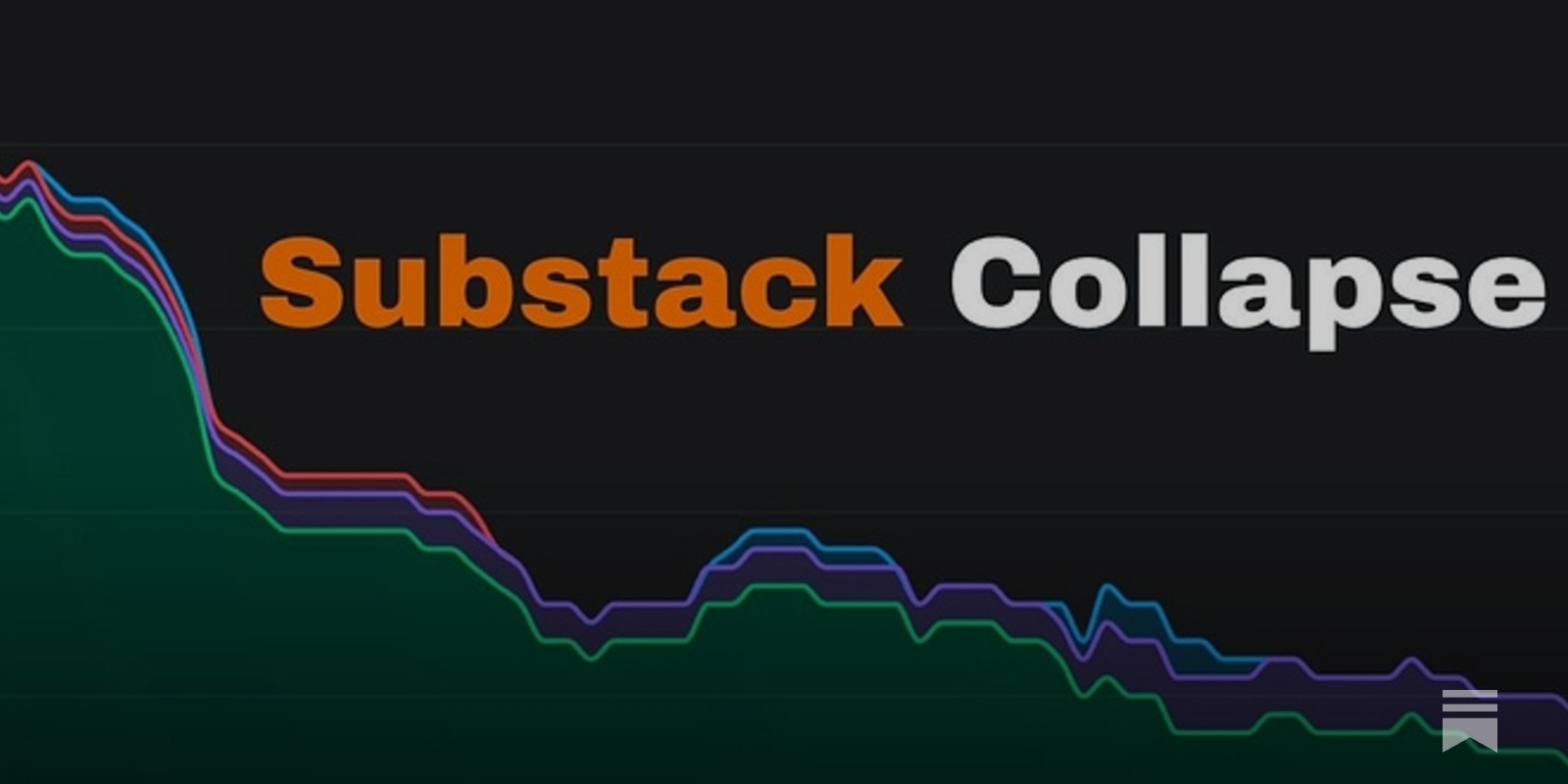
The Real Reason that Substack is Collapsing
The Subscription Model Has Maxed Out
Revenue Models (2026): 19 Different Ways to Make Money [B2B & B2C] - Gust de Backer
So many different revenue models... But, which one fits your business? Over the past few decades, many new revenue models have proven to be profitable. That's why I'm going to show you 16 different revenue models so you can evaluate if there might be a better way to monetize the value you deliver to your customer. Let's start... What is…

Yielding to Temptation: Self‐Control Failure, Impulsive Purchasing, and Consumer Behavior
Abstract. Self-control is a promising concept for consumer research, and self-control failure may be an important cause of impulsive purchasing. Three caus

What to do if you get cancelled online.
Keep your cool, minimize the damage, and only make amends to those you owe it to.

Thanks to California, a news site (or other business) now has to let you cancel your subscription online
Power to the people (who hate talking on phones).
Unshrouding: Evidence from Bank Overdrafts in Turkey
ABSTRACT Lower prices produce higher demand… or do they? A bank's direct marketing to holders of “free” checking accounts shows that a large discount on 60% APR overdrafts reduces overdraft usage, especially when bundled with a discount on debit card or autodebit transactions. In contrast, messages mentioning overdraft availability without mentioning price increase usage. Neither change persists long after the messages stop. These results do not square easily with classical models of consumer choice and firm competition. Instead, they support behavioral models where consumers underestimate and are inattentive to overdraft costs, and firms respond by shrouding overdraft prices in equilibrium.
