


A small town west of Montreal has decided to officially recognize trees as living beings with rights of their own, in what an environmental organization describes as a first in Quebec and Canada.
Protect our Living Legends - Woodland Trust
Many of our oldest and most special trees are not legally protected. Urge Government to change the law and prevent further tragedy.
Trees for Cities | Trees for Cities
We are the only charity working at a national scale to improve lives by creating greener cities.

Public trees
The public tree dataset includes a listing of public trees on boulevards and public trees in parks, in the City of Vancouver and provides data on tree coordinates, species and other related characteristics. Private trees are not included in the inventory.Tree records that do not have coordinates data will not show up in the list. Data currencyThe dataset refreshes daily on weekdays. Tree attributes are updated on a regular basis but it may be several years between updates for some attributes. Priorities and resources determine how fast a change in reality is reflected in the data. The coordinates were originally provided by the 2016 Geospatial Data for City of Vancouver Street Trees project. Data accuracyTree attributes are updated on a regular basis but it may be several years for some attributes. Note: 0 value in latitude and longitude fields mean there is no related information available Websites for further informationStreet Tree BylawCity trees
TreeKIT: Measuring, Mapping, and Collaboratively Managing Urban Forests
As cities across the United States expand their stock of street trees to address a range of environmental sustainability goals, municipal foresters are increasingly turning to volunteers to supplement their tree care efforts. TreeKIT is a small non-profit organization that helps city dwellers collaboratively measure, map, and manage urban forests. Using TreeKIT’s mapping methods, volunteers are able to create spatially accurate inventories of street trees. In the process, volunteers learn to identify street trees and develop an effective appreciation for their local urban forest. The following article describes the TreeKIT mapping methods and ongoing efforts to scale these techniques for large, synchronous street tree census initiatives.
Crown shyness: are trees social distancing too? | Natural History Museum
If you look up in some forests, you might notice conspicuous gaps between the trees' branches. © Pongpawan Sethanant/ Shutterstock
Autonomous Forest | LAS Art Foundation
Autonomous Forest is a living work of art and a new techno-legal entity that reimagines ecological regeneration
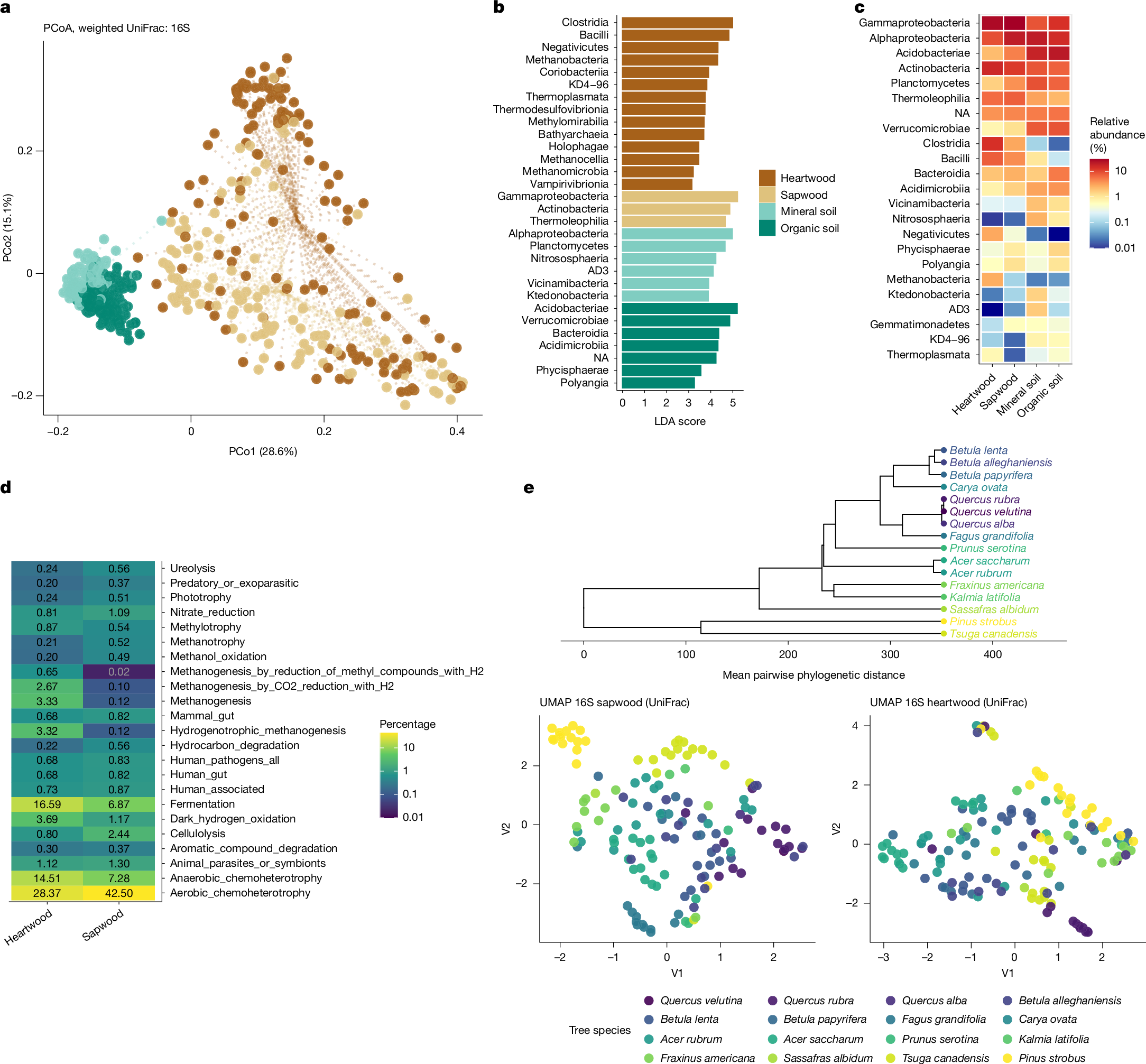
A diverse and distinct microbiome inside living trees
Nature - Microbiome analyses of living trees show that a single tree can host approximately one trillion bacteria, with microbial communities distinctly partitioned between heartwood and sapwood...
Canopy | The UK umbrella group of tree campaigners
Canopy is the national coalition of grassroots tree campaigners and campaign groups. By coming together we can have a louder voice in the fight to save our trees and green spaces.

tree.fm – Tune Into Forests From Around The World 🌳🔈
People around the world recorded the sounds of their forests, so you can escape into nature, while in lockdown or unable to travel. Use this site to chill, meditate or do some digital shinrin-yoku.

Who owns nature ?
International policies for the protection of the Environment rest on a very specific conception of nature, which appeared in Europe during the Enlightenment. This conception is far from being shared by all the peoples of the earth, who value different cosmological principles. According to Philippe Descola, the preservation of biodiversity can only become fully effective if it takes into account this plurality in the understanding of nature. At the instigation of international (…)
Urban problems: nature-based solutions and a Green New Deal everywhere
Nature-based Solutions with localised Green New Deals could save our settlements, and provide a just transition to a low-carbon society

What if our cities were designed for wildlife as well as people?
New research argues urban planning must recognise animals, plants and ecosystems as fellow inhabitants of our cities.
First Nation Profiles
First Nations people refers to Status and Non-Status ‘Indian’ peoples in Canada. More than one million people in Canada identify themselves as an Aboriginal person, or 4% of the population (as of 2006). Fifty-three percent are registered Indians, 30% are Métis, 11% are Non-status Indians and 4% are Inuit. Over half (54%) of Aboriginal people live in urban areas.

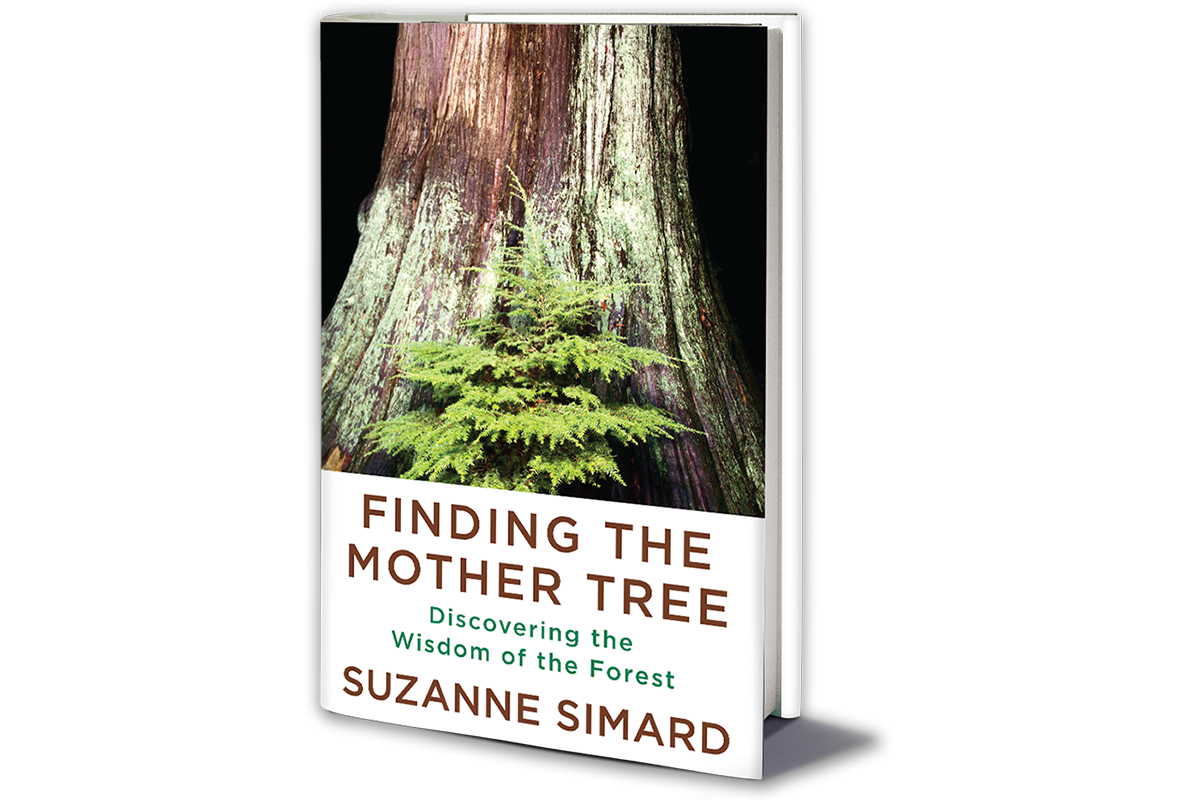
Finding the Mother Tree by Suzanne Simard
The upcoming book from Suzanne Simard, the world’s leading forest ecologist who forever changed how people view trees and their connections to one another.
On whose land?
I am once again asking Canadian journalists to ask the most basic-ass question of on whose land will these be built? How is it that every other major industry must consider Indigenous rights but with tech it's like meh.
