


A new study has found a decrease in deep sleep was associated with a higher risk of dementia. A growing body of research points to clear links between deep sleep and memory formation, but also the possibility of dire consequences when someone’s sleep quality erodes over time.
'Sleep should be prescribed': what those late nights out could be costing you
Leading neuroscientist Matthew Walker on why sleep deprivation is increasing our risk of cancer, heart attack and Alzheimer’s – and what you can do about it
Bad sleep 'dramatically' alters body
A run of poor sleep can have a dramatic effect on the internal workings of the human body, say UK researchers.

Sleep as a Competitive Advantage
Too many of us live by the myth that one less hour of sleep gives us one more hour of productivity, Tony Schwartz writes in the Life@Work column. In reality, lost sleep not only leaves us more fatigued, but also takes a toll on our cognitive capacity.

Sleep as a Competitive Advantage
Too many of us live by the myth that one less hour of sleep gives us one more hour of productivity, Tony Schwartz writes in the Life@Work column. In reality, lost sleep not only leaves us more fatigued, but also takes a toll on our cognitive capacity.
Sleep's memory role discovered
Scientists in China and the US use advanced microscopy to discover exactly how a good night's sleep improves learning and memory.

Sleep Deficit: The Performance Killer
Reprint: R0610B Companies today glorify the executive who logs 100-hour workweeks, the road warrior who lives out of a suitcase in multiple time zones, and the negotiator who takes a red-eye to make an 8 AM meeting. But to Dr. Charles A. Czeisler, the Baldino Professor of Sleep Medicine at Harvard Medical School, this kind of corporate behavior is the antithesis of high performance. In fact, he says, it endangers employees and puts their companies at risk. In this interview, Czeisler describes four neurobiological functions that affect sleep duration and quality as well as individual performance. When these functions fall out of alignment because of sleep deprivation, people operate at a far lower level of performance than they would if they were well rested. Czeisler goes on to observe that corporations have all kinds of policies designed to protect employees—rules against smoking, sexual harassment, and so on—but they push people to the brink of self-destruction by expecting them to work too hard, too long, and with too little sleep. The negative effects on cognitive performance, Czeisler says, can be similar to those that occur after drinking too much alcohol: “We now know that 24 hours without sleep or a week of sleeping four or five hours a night induces an impairment equivalent to a blood alcohol level of .1%. We would never say, ‘This person is a great worker! He’s drunk all the time!’ yet we continue to celebrate people who sacrifice sleep for work.” Czeisler recommends that companies institute corporate sleep policies that discourage scheduled work beyond 16 consecutive hours as well as working or driving immediately after late-night or overnight flights. A sidebar to this article summarizes the latest developments in sleep research.
This Is What Happens to Your Body on No Sleep
In short, nothing good—and just one bad night can trigger a cascade of side effects

Dementia risk may increase if you’re eating these foods, study says | CNN
Eating ultraprocessed foods such as hot dogs, French fries, sodas, cookies and ice cream could set you on the road to cognitive decline, a new study revealed, but there is a way to overcome the negative impact.

Opinion | Rethinking Sleep (Published 2012)
It’s not the quantity of sleep that restores and refreshes, but the quality.

Why Sleep Deprivation Eases Depression
Glial activity reveals how sleep deprivation elevates mood

Study Reveals a Surprising Cause of Cognitive Decline—and the Key to Reversing It
Researchers pinpoint a lone protein that speeds up the dysfunction of an aging brain. Eliminating it, they claim, can reverse the damage. But there are big hurdles before a treatment is approved.

The brain functional connectome is robustly altered by lack of sleep
Sleep is a universal phenomenon necessary for maintaining homeostasis and function across a range of organs. Lack of sleep has severe health-related consequences affecting whole-body functioning, yet no other organ is as severely affected as the brain. The neurophysiological mechanisms underlying these deficits are poorly understood. Here, we characterize the dynamic changes in brain connectivity profiles inflicted by sleep deprivation and how they deviate from regular daily variability. To this end, we obtained functional magnetic resonance imaging data from 60 young, adult male participants, scanned in the morning and evening of the same day and again the following morning. 41 participants underwent total sleep deprivation before the third scan, whereas the remainder had another night of regular sleep. Sleep deprivation strongly altered the connectivity of several resting-state networks, including dorsal attention, default mode, and hippocampal networks. Multivariate classification based on connectivity profiles predicted deprivation state with high accuracy, corroborating the robustness of the findings on an individual level. Finally, correlation analysis suggested that morning-to-evening connectivity changes were reverted by sleep (control group)-a pattern which did not occur after deprivation. We conclude that both, a day of waking and a night of sleep deprivation dynamically alter the brain functional connectome.
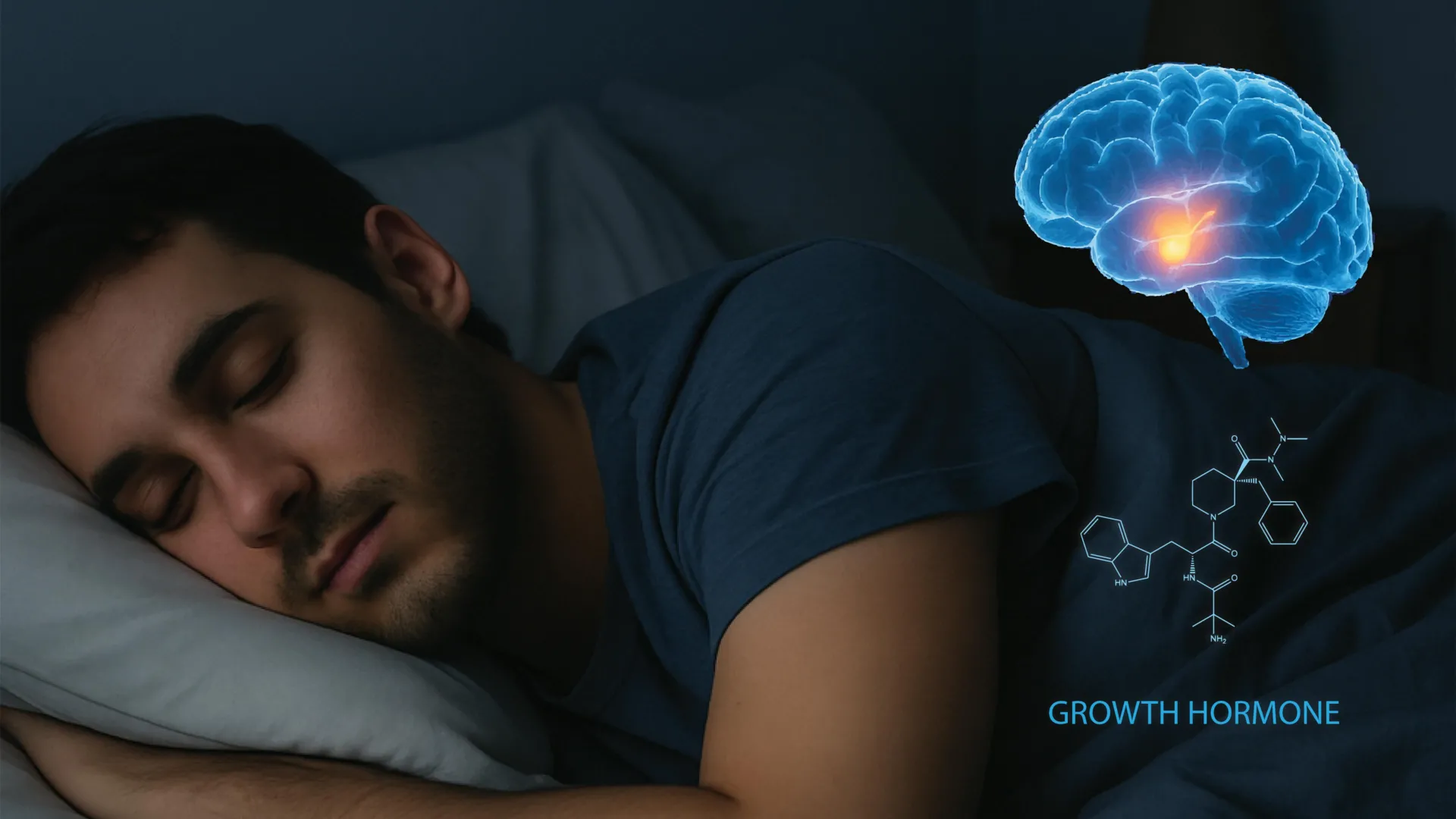
Scientists discover how deep sleep builds muscle, burns fat, and boosts the brain
Scientists have discovered a surprising two-way relationship between sleep and growth hormone, revealing how the brain carefully balances physical recovery with wakefulness. The findings could help explain why poor sleep harms metabolism and brain health, potentially opening the door to new treatments for sleep and neurological disorders.
How Exercise Might "Clean" the Alzheimer's Brain
Hints at potential treatments for age-related dementia and memory loss

Creatine found to improve cognitive performance during sleep deprivation | Hacker News
Although, I could see this being beneficial in fields where labour is scarce (e.g.: the medical field), I fear it could lend towards a "sleep deprivation is okay, just take creatine" rationale in other fields.
Down From the Trees, Humans Finally Got a Decent Night’s Sleep (Published 2015)
Humans sleep more deeply but for shorter periods than other primates’ habits, a study finds. The pattern may have helped humans evolve more powerful brains.
