


The right to vote, better representation and election integrity.
Opinion | Give ranked voting a shot. Our democracy would benefit.
Ranked-choice voting empowers the majority by allowing voters to order their choices.

How Approval Voting and Ranked Choice Voting Are Different | Center for Election Science
How Approval Voting and Ranked Choice Voting Are Different


BallotReady: Where you go before you vote
Your go-to source for nonpartisan election information. Register to vote, explore the entire ballot, find your polling place, and more, all in one place.
What is Approval Voting? | Center for Election Science
What is Approval Voting?

The Dispersion of Power: A Critical Realist Theory of Democracy
Abstract The Dispersion of Power is an urgent call to rethink centuries of conventional wisdom about what democracy is, why it matters, and how to make it better. Drawing from history, social science, psychology, and critical theory, it explains why elections do not and cannot realize the classic ideal of popular rule, and why prevailing strategies of democratic reform often make things worse. Instead, Bagg argues, we should see democracy as a way of protecting public power from capture—an alternative vision that is at once more realistic and more inspiring. Despite their many shortcomings, real-world elections do prevent the most extreme forms of tyranny, and are therefore indispensable. In dealing with the vast inequalities that remain, however, we cannot rely on standard solutions such as electoral reform, direct democracy, deliberation, and participatory governance. Instead, Bagg shows, protecting and enriching democracy requires addressing underlying inequalities of power directly. In part, this entails substantive policies attacking the advantages of wealthy elites. Even more crucially, deepening democracy requires the organization of oppositional, countervailing power among ordinary people. Neither task is easy, but historical precedents exist in both cases—and if democracy is to survive contemporary crises, leaders and citizens alike must find ways to revive and reinvent these essential democratic practices for the twenty-first century.

An Examination of Ranked Choice Voting in the United States, 2004-2022
From the perspective of social choice theory, ranked-choice voting (RCV) is known to have many flaws. RCV can fail to elect a Condorcet winner and is susceptible to monotonicity paradoxes and the spoiler effect, for example. We use a database of 182 American ranked-choice elections for political office from the years 2004-2022 to investigate empirically how frequently RCV's deficiencies manifest in practice. Our general finding is that RCV's weaknesses are rarely observed in real-world elections, with the exception that ballot exhaustion frequently causes majoritarian failures.

STAR Voting
We should be able to vote our conscience, our votes should never be wasted, and our elections should accurately reflect the will of the people. It's not rocket science. It's Star Voting.

Verifying information about elections
We can help you check the facts behind election information you receive.

Permissioned Data Shapes: Polls - Nick's Blog
A poll is a space, a ballot is an address, and read_self is the ballot screen: voters cast and change their own votes while no voter's client can read anyone else's.
Hands Off Our Vote - Elections 2026
Hands Off Our Vote Messaging guidance for protecting our vote in the 2026 midterm elections Introduction The regime now in office has us in what’s known formally as competitive authoritarianism; the narrative and organizing strategies we’ve used in the past to ensure votes can be cast and coun...

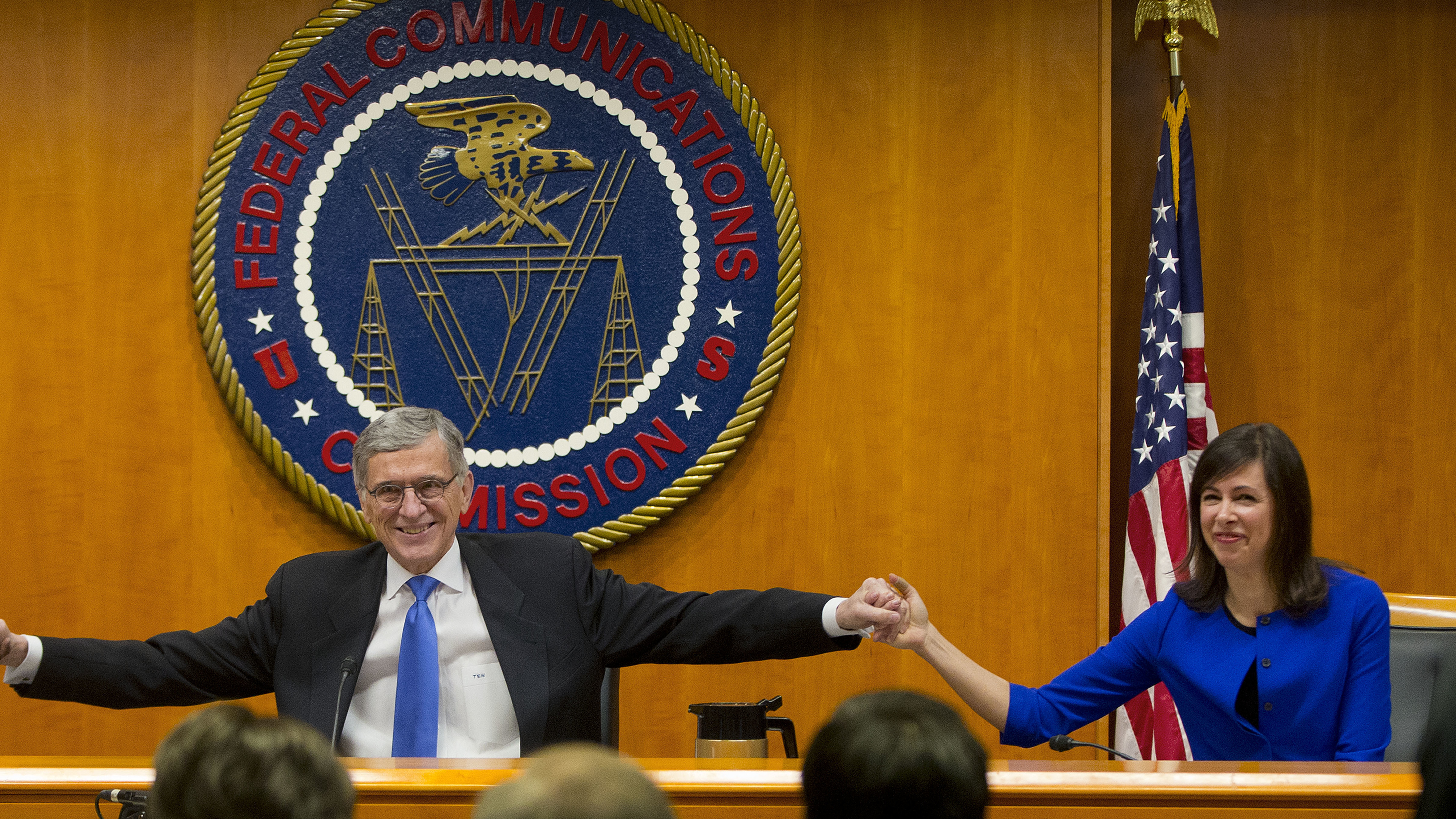
FCC Vote Means Internet Providers Need Permission To Share Your Data
Internet service providers will have to ask consumers before collecting and selling their data. However, the new rules do not apply to Google, Facebook and other tech giants.
The Median Voter Theorem is a Clarity Trap
What the Democratic party needs - what it demands - is bold, persistent experimentation
Voter ID Has Damaged Trust in UK Elections, Study Finds
Young people, low-income and trans voters were among the groups hardest hit by the policy imposed by the last Conservative Government, academics found
