In this study, Supekar, Menon, and colleagues shed light on a longstanding question about the nature of brain connectivity aberrations in autism. Using functional neuroimaging data, they demonstrate that the brains of children with autism are hyperconnected in ways that are related to the severity of social impairment exhibited by these children. They replicate these findings in two additional cohorts of children, challenging current theories of brain connectivity in autism and providing unique insights into the brain mechanisms underlying the disorder.
Is AI on the Spectrum? Exploring the Parallels Between Artificial Intelligence and Autism Spectrum Disorder
An in-depth analysis of the similarities between AI behaviors and traits observed in Autism Spectrum Disorder, and how AI is being utilized in autism research and support.
Welcome: Mapping the Architecture of Autistic Cognition
Most people experience their minds as opaque.

Beyond Deficits:
The FCLA-SFGA Model and a Paradigm Shift in Autism Understanding
Is AI on the Spectrum?
Some key traits of generative AI bear a striking similarity to autism spectrum disorder. Why does this matter?

Autistic Burnout and Liminal Sleep Threshold: Hypnopompic and Hypnagogic Experiences
Explore the possible link between Autistic burnout and liminal sleep states such as hypnopompic and hypnagogic experiences through a neuroqueer lens.

Two Realities: Native Modes, Learned Social Systems, and the Foundations of Autistic Cognition
Part 1: The Architecture Overview
Research Evidence Supporting the FCLA-SGFA Modes Framework
Comprehensive Literature Review: Mapping Autistic Cognitive States to the Six Modes
Stimming as High-Precision System:
The Phenomenology of Autistic Self-Regulation and Its Value to Humanity

Recognizing and Releasing Internalized Neurotypical Features:
A Guide for Autistic People

Alexithymia Reframed:
Understanding Autistic Emotional Architecture as Overlay, Not Fusion

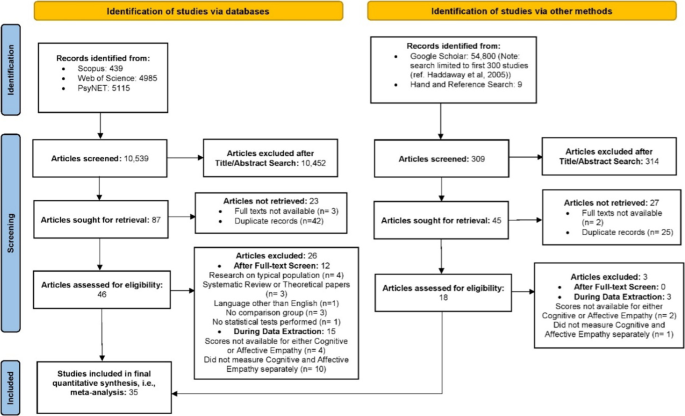
Cognitive and Affective Empathy in Autism Spectrum Disorders: A Meta-analysis
Research has consistently shown that individuals with Autism Spectrum Disorder (ASD) exhibit Empathy deficits. The aim of this study was to systematically review and meta-analyze the research conducted in the domain of cognitive and affective Empathy in Autism. The author also attempted to see the influence of moderators, such as age, culture, and measure-used, on the effect sizes. To fulfill the objective, the meta-analysis was performed on 35 studies that fulfilled the inclusion criteria with the help of the Meta-essentials, which is a free excel meta-analysis tool that facilitates the integration of effect sizes from various studies. The results indicated that the ASD group differs significantly from typically developing (TD) group in both cognitive and affective empathy. The effect size for cognitive empathy was very large (1.26), whereas, for affective empathy, the effect size was medium (0.58). Further, there was a significant moderating effect of the type of measure used on cognitive empathy. However, there are a few limitations of the present meta-analysis. Firstly, it does not shed light on how symptom severity in Autism influences empathy. Secondly, all the possible moderating variables influencing empathy could not be considered. Lastly, the generalizability of the findings may be limited owing to the limitations present in the included studies themselves. The present meta-analysis has implications for conceptualizing cognitive and affective empathy appropriately, and developing appropriate measures to assess empathy in the Autism population.
Autistic Burnout vs. Depression | Neurodivergent Insights
Dr Megan Anna Neff explains the difference between autistic burnout and depression. Overlapping signs, root causes, and why withdrawal can be a valid response.
Wenn Struktur und Grenzen schaden: Das PDA-Profil in der Autismus-Spektrum-Störung
Der Autismus-Verband Deutschland definiert die Autismus-Spektrum-Störung als „Störungen der Informations- und Wahrnehmungsverarbeitung, die sich auf die Entwicklung der sozialen Interaktion, der Kommunikation und des Verhaltensrepertoires auswirken“ (Autismus Deutschland e.V., 2022). Zumeist benötigen Menschen mit dieser Diagnose viel Struktur und vorhersehbare Rahmenbedingungen, um die Vielzahl an Reizen und Umweltinformationen ordnen und angemessen verarbeiten zu können. Hierfür werden nicht s

Stimming as Temporal Awareness
Why Autistics Aren't Odd, Just More Attuned to the Human System Clock

The FCLA-SFGA Modes: A Comprehensive Architecture of Autistic Cognitive States
Understanding the Six Operational Modes of the Fixed-Coordinate Layered Architecture and Spatial-Field Generative Architecture